
North Vietnam is the only region in the country with four distinct seasons, which means the “best” time to visit genuinely shifts depending on what your client wants to see. A traveler chasing Sapa’s golden rice terraces needs a different departure window than one hoping to photograph Ha Giang’s buckwheat flowers or cruise Halong Bay under clear skies. In this guide, Viet Dan Travel will break down North Vietnam’s weather month by month and flags the booking windows that matter most when you’re allocating group space for agency clients.
1. Quick Answer: North Vietnam by Travel Goal
| Client Priority | Recommended Months | Why |
| Overall best weather (dry, mild, clear skies) | March–April and September–November | Lowest rainfall, comfortable temperatures, best visibility for Halong Bay and mountain scenery |
| Sapa golden rice terraces | Early September–early October | Terraces turn amber just before harvest |
| Sapa “water-pouring” terraces (mirror effect) | May–June | Fields are flooded ahead of transplanting |
| Ha Giang buckwheat flowers | Late October–November | Pink-and-white blooms cover the Dong Van Karst Plateau |
| Budget-conscious groups, fewer crowds | July–August | Hot and humid, but lower rates and thinner crowds |
| Winter/moody photography | December–February | Cool, misty, sometimes foggy in the highlands; requires warm layers |
2. North Vietnam’s Climate: What Makes It Different
Unlike Central and South Vietnam, which stay warm year-round, North Vietnam experiences a genuine four-season cycle because of its subtropical monsoon climate and mountainous terrain. This is a key differentiator to communicate to clients coming from source markets like India, the Middle East, or the Gulf, where a “cold season” abroad can be an unfamiliar concept. Hanoi, Halong Bay, and the Red River Delta see hot, humid summers and genuinely cool, sometimes chilly winters, while the northwestern highlands around Sapa and Ha Giang can dip close to freezing at night in December and January.
3. Season-by-Season Breakdown
3.1. Spring (March–April): The Balanced Choice
Spring brings mild temperatures, lighter rainfall, and blooming countryside, making it one of the two peak windows for North Vietnam. Trekking trails around Sapa stay firm and walkable, and Halong Bay cruises benefit from clearer visibility without the intense heat of summer. This is a strong recommendation for first-time visitors and for MICE groups that need reliable, comfortable conditions for outdoor components of an itinerary.
3.2. Summer (May–August): Hot, Humid, and Value-Driven
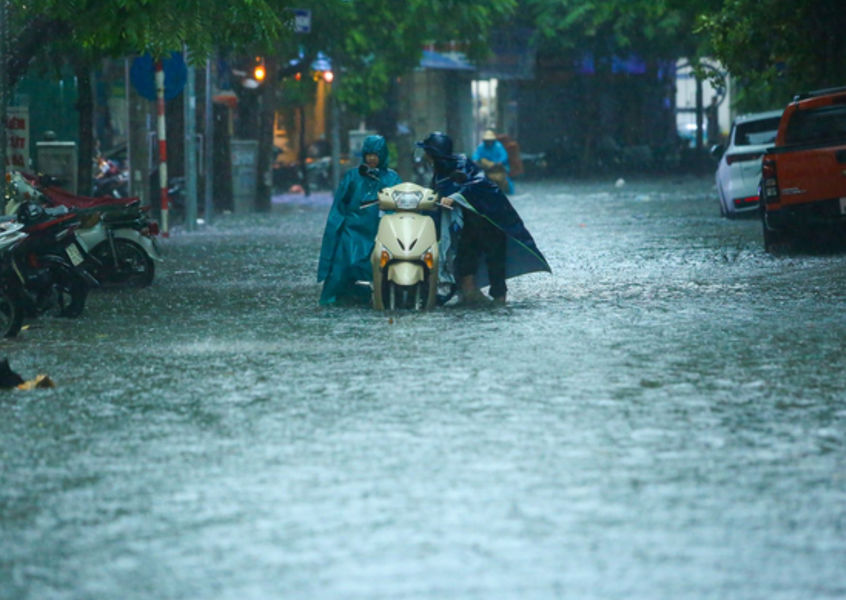
Summer is Vietnam’s hottest and most humid stretch in the north, with occasional heavy downpours, particularly in July and August. It’s not the top recommendation for heat-sensitive travelers, but it works well for budget-conscious groups and clients who prioritize lower rates and thinner crowds over ideal weather. This is also when Sapa’s rice terraces enter their “water-pouring” phase in May–June, when flooded paddies create a striking mirror effect across the hillsides, an underused selling point for photography-focused itineraries.
3.3. Autumn (September–November): The Photographer’s Season
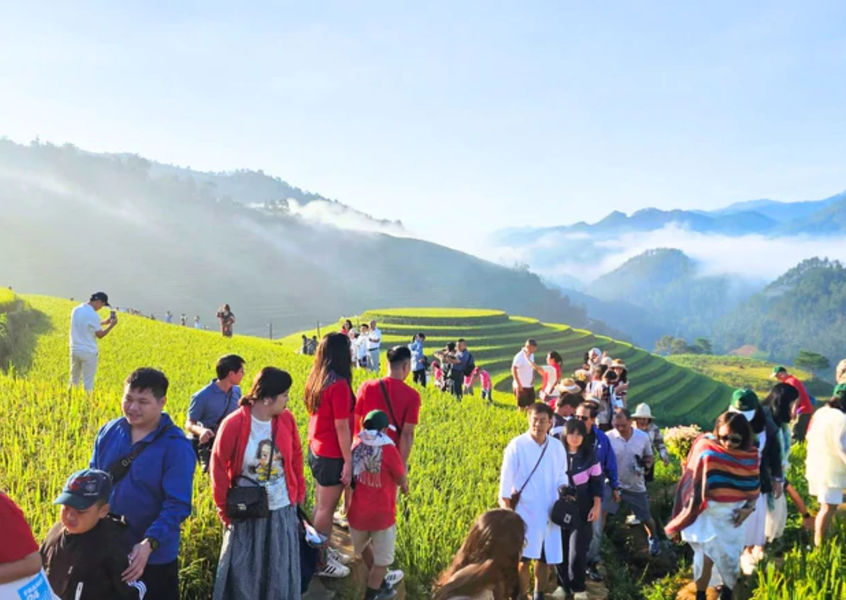
Autumn is widely considered the single best season for North Vietnam, combining cool temperatures, clear skies, and dramatic seasonal scenery. September and early October bring the golden rice harvest across Sapa, Mu Cang Chai, and the eastern Ha Giang loop, when entire hillsides turn amber just before farmers bring in the crop. From late October through November, the Dong Van Karst Plateau in Ha Giang shifts into buckwheat flower season, with pink-and-white blooms blanketing the rocky highlands and drawing both domestic and international photographers. Because this window overlaps peak international arrivals, it’s also North Vietnam’s highest-demand season for hotels, cruise cabins, and private transport, so it deserves the earliest booking lead time on your calendar.
3.4. Winter (December–February): Cool, Atmospheric, and Underrated
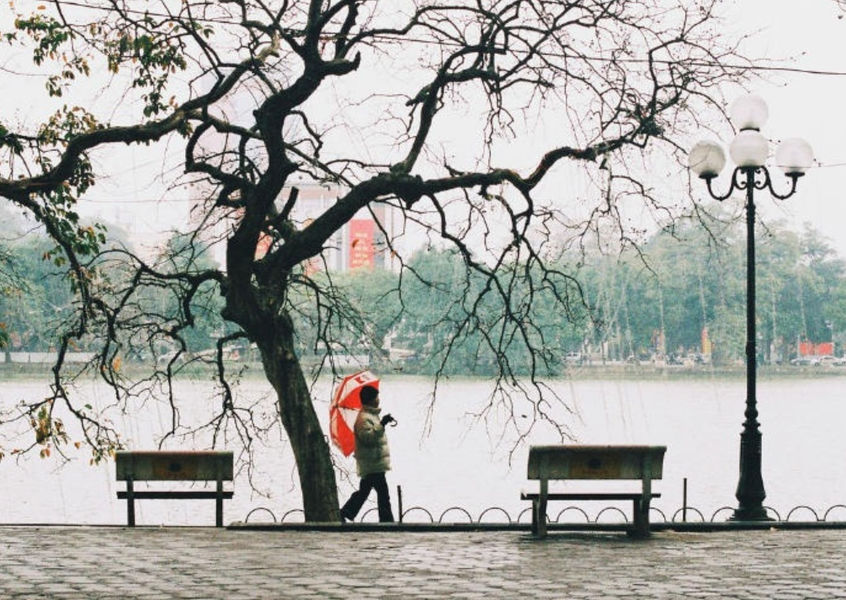
Winter in North Vietnam is genuinely cold by regional standards, with overnight temperatures in the highlands sometimes dropping to near freezing and persistent fog in Sapa and Ha Giang. It’s not typically the first recommendation for first-time travelers, but it appeals strongly to repeat visitors and photographers drawn to the moody, misty light. Clients need to pack proper warm layers, something worth flagging explicitly for travelers from tropical or desert source markets who may not own cold-weather gear.
4. Hanoi Weather by Month
| Month | Avg. Temp (°C) | Conditions | Best For |
| Jan–Feb | 14–19 | Cool, damp, occasional drizzle | Cultural touring, Tet experience |
| Mar–Apr | 19–25 | Mild, increasingly sunny | Trekking, Halong Bay, general sightseeing |
| May–Aug | 27–33 | Hot, humid, brief heavy rains | Value travel, water-pouring Sapa terraces |
| Sep–Oct | 24–29 | Warm, drier, clearer skies | Rice harvest, Halong Bay, photography |
| Nov | 20–25 | Cool, dry, crisp | Buckwheat flowers, ideal all-round conditions |
| Dec | 16–20 | Cool, occasional fog in highlands | Atmospheric photography, quieter season |
Note: highland areas such as Sapa and Ha Giang run several degrees cooler than Hanoi year-round, especially at night.
5. Tet Nguyen Dan: A Critical Booking Window to Flag
Tet Nguyen Dan (Vietnamese Lunar New Year) falls on February 6, 2027, with the official public holiday period expected to run for roughly a week around that date. For any group or FIT itinerary touching North Vietnam in early-to-mid February 2027, agents should plan around several operational realities:
- Many family-run restaurants, local guides, and smaller shops close for several days around the holiday
- Domestic flights and trains sell out weeks in advance as Vietnamese families travel home
- Hotel rates in Hanoi and northern hubs typically rise, and availability tightens fast
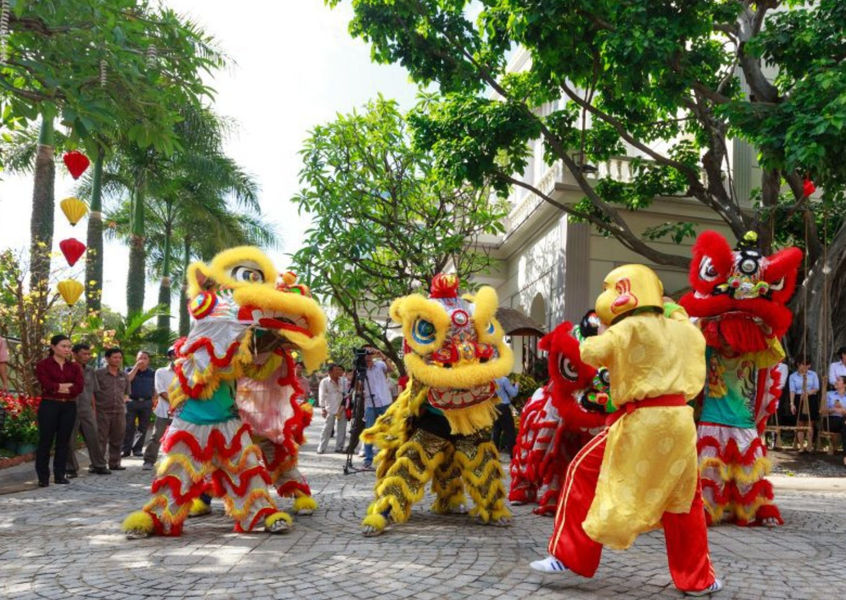
- Streets and markets are vibrant with flowers, lanterns, and festive decorations, which can be a strong selling point for clients interested in cultural immersion rather than a purely relaxed itinerary
Because dates shift each year on the lunar calendar, always confirm the current year’s Tet dates before finalizing quotes for late January through mid-February departures.
6. Booking Lead Times: A B2B Perspective
For travel agents and tour operators packaging North Vietnam into client itineraries, weather isn’t the only variable that matters, availability is. Here’s how demand typically maps onto the seasons above:
- September–November (peak): Book group hotel blocks, Halong Bay cruise cabins, and Sapa homestays at least 3–4 months ahead. This is North Vietnam’s highest-demand window across nearly every source market.
- March–April (secondary peak): Strong demand from European and Australian markets timing their spring travel; 2–3 months’ lead time is generally sufficient.
- December–February (excluding Tet week): Moderate demand, easier availability, but confirm Tet dates early since rates and availability shift sharply around the holiday itself.
- May–August: Lowest demand and most flexible availability, useful for last-minute group fills or price-sensitive client segments.
7. FAQ
What is the single best month to visit North Vietnam?
October is often cited as the standout month, combining comfortable daytime temperatures, dry conditions, the tail end of the golden rice harvest, and the early buckwheat bloom in Ha Giang.
Is North Vietnam too cold to visit in winter?
It can feel cold to travelers from tropical climates, particularly at night in the highlands, but Hanoi and the lowlands remain manageable with proper layering, and winter offers a quieter, more atmospheric alternative to the autumn peak.
When should agents recommend against travel to North Vietnam?
July and August bring the heaviest rainfall and highest humidity, and Tet week itself (subject to the annual lunar date) requires careful planning around closures and inflated last-minute pricing.
Does the best time to visit North Vietnam differ from the best time for Central or South Vietnam?
Yes. North Vietnam has four distinct seasons, while Central Vietnam is shaped by a typhoon-prone wet season from roughly August to November, and South Vietnam stays warm and relatively consistent year-round, which is worth factoring in for multi-region itineraries.