
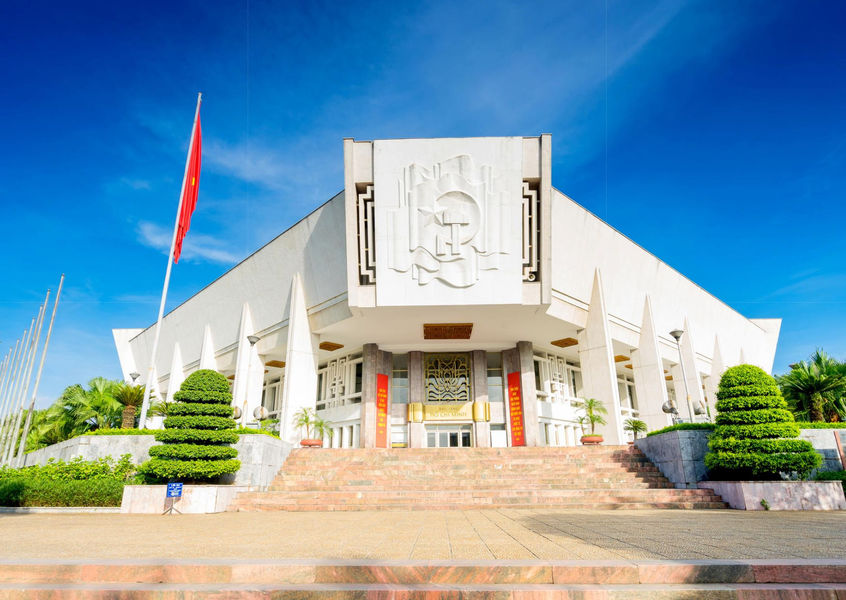
Planning a Hanoi itinerary that includes a stop at the Ho Chi Minh Museum? This guide covers everything a travel agent, tour operator, or MICE planner needs: exact location, 2026 opening hours, entrance fees, what is inside, and how to build group logistics around it. The Ho Chi Minh Museum sits inside the Ho Chi Minh Complex in Ba Dinh District and is dedicated entirely to the life and legacy of Vietnam’s founding president.
1. Quick Facts: Ho Chi Minh Museum
| Detail | Information |
| Full name | Ho Chi Minh Museum (Bảo tàng Hồ Chí Minh) |
| Location | 19 Ngoc Ha Street, Ba Dinh District, Hanoi |
| Part of | Ho Chi Minh Complex (with the Mausoleum, Presidential Palace, One Pillar Pagoda) |
| Opened | May 19, 1990, marking the 100th birthday of President Ho Chi Minh |
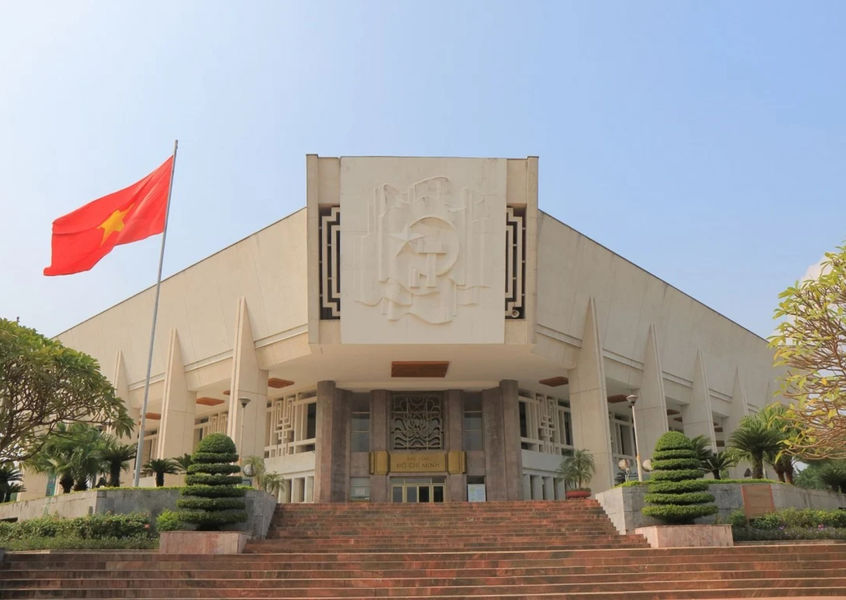
| Architecture | Lotus-flower-shaped building, three floors, Soviet-influenced design |
| Entrance fee (2026) | Approximately 40,000 VND (around USD 1.6 / INR 140) for foreign visitors; free or discounted for Vietnamese citizens and students |
| Closed | Monday and Friday afternoons (verify same week, schedules shift seasonally) |
| Recommended visit time | 1 to 1.5 hours |
| Nearest international airport | Noi Bai International Airport (HAN), about 45 minutes by road |
| Languages on display | Vietnamese, English, French |
2. Opening Hours and Entrance Fees
Reported hours vary slightly between sources, which is common for state-run museums in Vietnam where schedules shift by season. The most consistent pattern reported across current listings is:
| Season | Morning | Afternoon |
| April to October | 7:30 AM to 10:30 AM | 1:30 PM to 4:00 PM |
| November to March | 8:00 AM to 11:00 AM | 2:00 PM to 4:00 PM |
The museum is generally closed on Monday afternoons and Friday afternoons, with some listings citing full-day closures on those days. Given the inconsistency between sources, DMCs should treat this as a starting reference only and reconfirm the exact schedule with a local guide or the museum directly before locking in a group itinerary, particularly for MICE programs with tight timing.
Entrance fees for foreign visitors are commonly listed at 40,000 VND per adult, with discounts for students and children. As with hours, pricing for state museums in Vietnam is periodically revised, so this figure should be treated as an estimate pending on-the-ground confirmation for large group bookings.
3. All Sites Inside the Ho Chi Minh Complex and What to Do
The Ho Chi Minh Complex is not a single building but a cluster of six connected sites spread across roughly 14 hectares in Ba Dinh District. For DMCs building a half-day Hanoi block, it helps to brief clients on all six upfront so expectations are set correctly (several sites are exterior-viewing only, not walk-in museums).
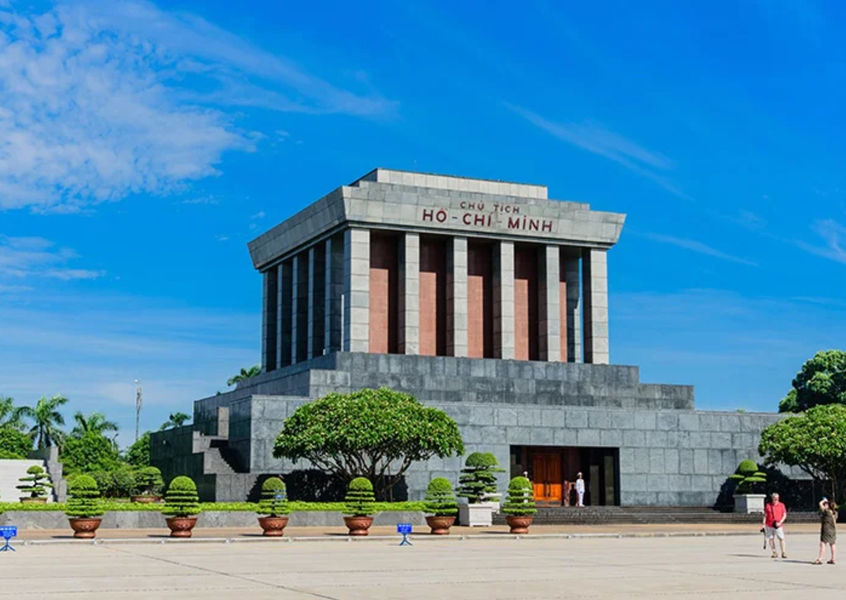
3.1. Ho Chi Minh Mausoleum
- Address: Ba Dinh Square, Hung Vuong Street
- Best for: History-focused travelers and first-time Hanoi visitors
- What visitors should do: View President Ho Chi Minh’s embalmed body in the viewing chamber; maintain silence and a slow single-file walk as directed by soldiers on duty; no photography inside the chamber, no hands in pockets, no talking
- Time needed: 15 to 20 minutes including queue time
This is the most solemn stop in the complex and has the strictest rules of any site here. The Mausoleum closes for roughly two months a year for maintenance (exact dates vary annually), so it is the first schedule to confirm before finalizing any group itinerary around this cluster.
3.2. Presidential Palace (exterior)
- Address: 2 Hung Vuong Street
- Best for: Architecture photography and a quick cultural contrast stop
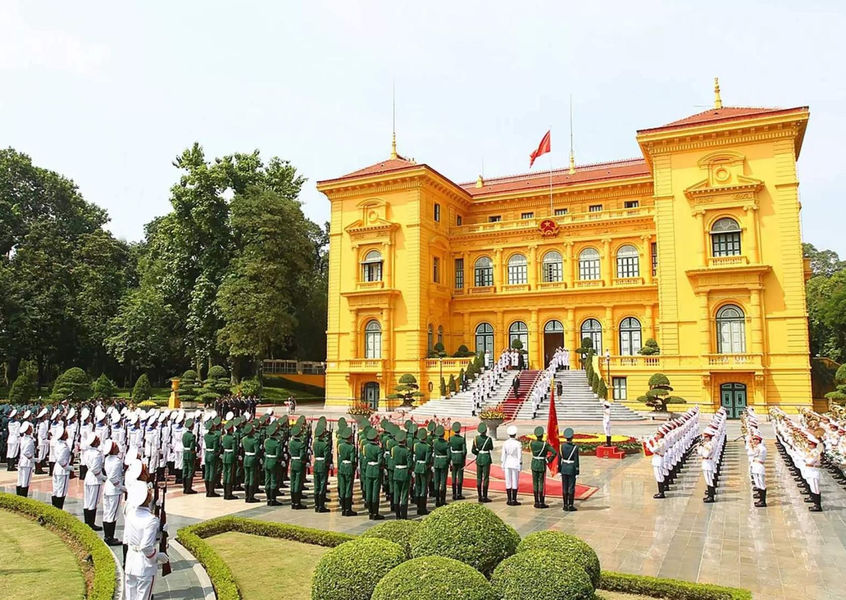
- What visitors should do: Photograph the mustard-yellow French colonial facade from the garden path; the interior is not open to visitors, so this is a five-to-ten-minute photo stop rather than a full visit
- Time needed: 10 minutes
Built between 1900 and 1906 as the residence of the French Governor-General of Indochina, the palace was offered to Ho Chi Minh as his official residence after independence, but he chose not to live there, opting instead for the modest stilt house nearby. That decision is the reason the palace today functions purely as a photographed landmark and reception venue rather than a lived-in presidential residence, and guides often use this contrast to introduce the next stop.
3.3. Ho Chi Minh’s Stilt House and Carp Pond
- Address: Inside the Presidential Palace gardens, near House No. 54
- Best for: Travelers interested in Ho Chi Minh’s personal life and daily habits, rather than politics
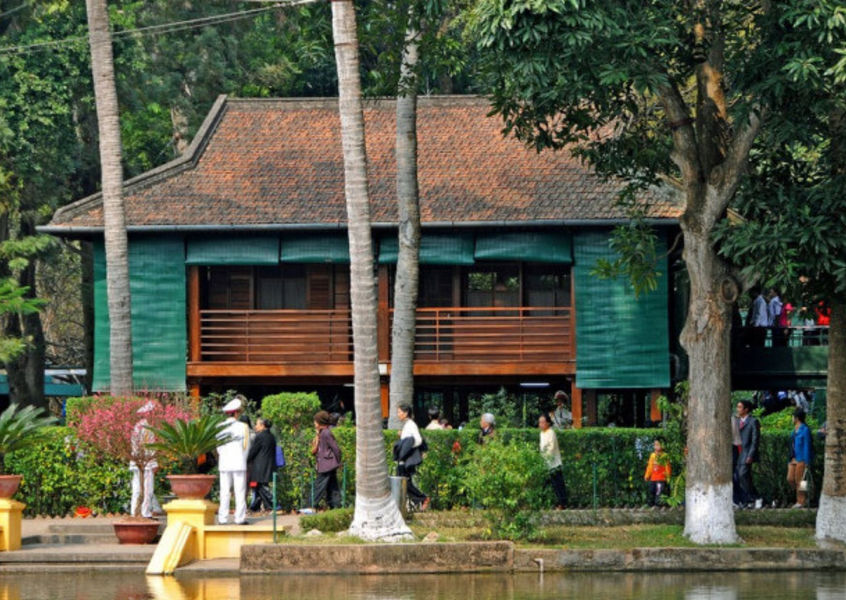
- What visitors should do: View the two-story wooden stilt house from the walking path (interior not open to the public); pause at the adjacent carp pond, where feeding the fish was part of Ho Chi Minh’s daily routine; walk the shaded boulevard known as Mango Alley connecting the gardens
- Time needed: 20 to 30 minutes for a relaxed walk through the grounds
Built in 1958 on the far side of the garden pond, the stilt house was Ho Chi Minh’s home and workspace for the last eleven years of his life, deliberately built in the style of the ethnic minority houses he lived among during the independence struggle. The surrounding fruit orchard and carp pond, which he tended and fed personally, are often cited by guides as the moment in the tour where visitors connect most directly with him as a person rather than a historical figure.
3.4. One Pillar Pagoda
- Address: Adjacent to the Ho Chi Minh Museum, on Chua Mot Cot Street
- Best for: A quick cultural and architectural add-on, good for photo stops
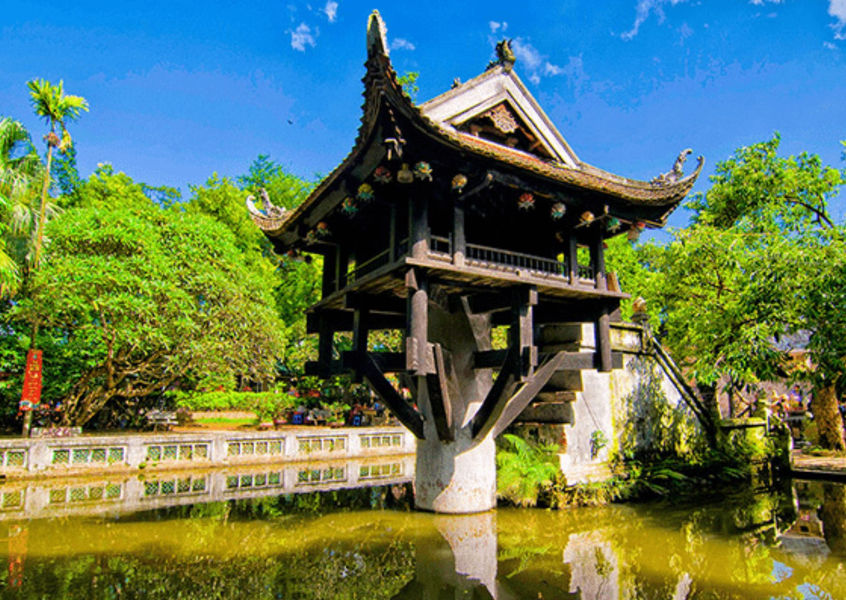
- What visitors should do: View the small wooden pagoda built on a single stone pillar in the middle of a lotus pond, said to date back to the 11th century under the Ly Dynasty; walk around the pond for photos rather than entering (the structure is very small)
- Time needed: 10 to 15 minutes
According to tradition, this pagoda was built in 1049 by Emperor Ly Thai Tong after a dream in which he saw the Bodhisattva Avalokiteshvara seated on a lotus flower, and the wooden structure standing on a single stone column was designed to resemble that lotus rising from the water. Though the current structure is a mid-20th-century reconstruction rather than the original, it remains one of Vietnam’s most recognized religious landmarks and a quick, high-value photo stop between the palace grounds and the museum.
3.5. Ho Chi Minh Museum
- Address: 19 Ngoc Ha Street
- Best for: Groups wanting the deepest historical context of the whole complex
- What visitors should do: Follow the eight chronological exhibition sections with a guide; allow extra time if the group wants full context on the symbolic exhibit design
- Time needed: 45 minutes to 1.5 hours (see full guide above)
Opened in 1990 to mark the centenary of Ho Chi Minh’s birth, this is the only site in the complex built specifically as a museum rather than a preserved historical residence, which is why it holds the largest concentrated collection of documents, photographs, and personal artifacts related to his life. For groups working through the complex in sequence, it typically serves as the closing chapter that ties together what was seen at the Mausoleum, the palace grounds, and the stilt house.
3.6. Ba Dinh Square
- Address: In front of the Mausoleum, along Hung Vuong Street
- Best for: A wide-angle group photo stop and a moment of historical context
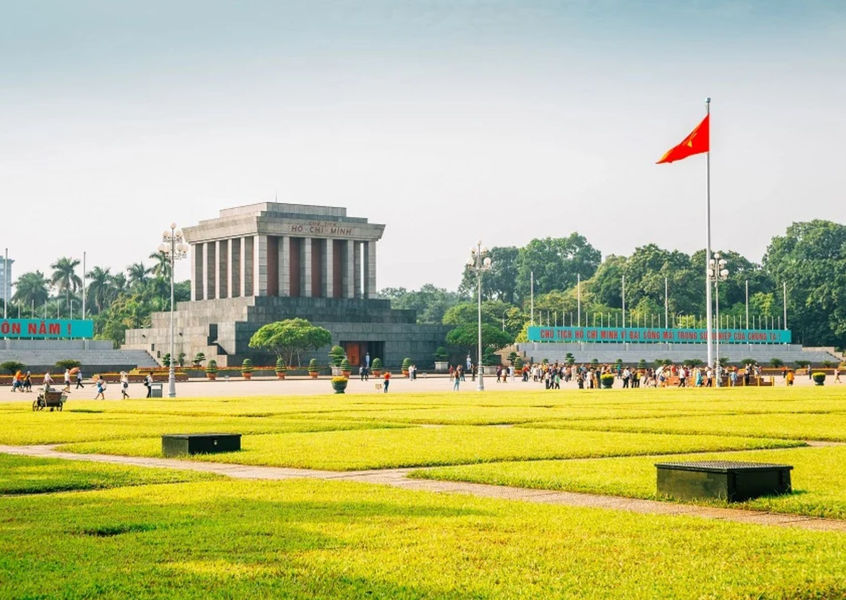
- What visitors should do: Take in the square where Ho Chi Minh read the Declaration of Independence in 1945; good spot for a group photo with the Mausoleum in the background before or after the viewing queue
- Time needed: 5 to 10 minutes
This is the site where Ho Chi Minh read Vietnam’s Declaration of Independence on September 2, 1945, an event that gives the square its ongoing role as the country’s ceremonial and political center. Today it also hosts the flag-raising and flag-lowering ceremony each morning and evening, which some operators build into early-morning group itineraries as an optional add-on for clients interested in seeing it.
Suggested Half-Day Sequence for Groups
For a standard MICE or FIT group itinerary, the typical operator sequence runs: Mausoleum first thing in the morning while queues are shortest, followed by Ba Dinh Square for photos, then the Presidential Palace exterior and stilt house gardens at a relaxed pace, then the One Pillar Pagoda, and the Ho Chi Minh Museum last since it has the most flexible hours of the group. Building the itinerary in this order also respects the Mausoleum’s early closing time, which is the tightest constraint of the six sites.
4. Group Visit Logistics for Tour Operators and MICE Planners
This is where planning for agency and DMC clients differs meaningfully from FIT travel:
- Group size and permits: Larger delegation groups, especially official or corporate groups, may need advance notice submitted through a local ground handler. Build this into the booking window rather than confirming on short notice.
- Guide requirement in practice: English and French signage inside the museum is limited in several sections. For MICE groups or VIP delegations where narrative quality matters, always pair the visit with a licensed English-speaking guide rather than a self-guided walk-through.
- Dress code: As with the adjacent Mausoleum, modest dress is expected: covered shoulders and knees. This is worth flagging to corporate clients in pre-trip materials, since business-casual travel wear does not always meet the standard.
- Photography restrictions: Certain rooms restrict photography. For corporate or incentive groups planning content capture during the visit, confirm restricted zones with the guide at the start of the visit rather than mid-tour.
- Sequencing with the Mausoleum: Because the Mausoleum has separate, shorter operating windows and a queue system, Vietnam DMC typically schedule the Mausoleum visit first (earliest morning slot) and the museum second, rather than the reverse.
- Best timing to avoid crowds: Early morning slots, particularly on weekdays, see noticeably lighter foot traffic than mid-morning on weekends, which matters for groups on a tight half-day Ba Dinh block.
5. Notes for Indian Market Agents
For itineraries built for Indian travel agents and their clients, a few practical points are worth including in pre-departure notes:
- Vietnam offers e-visa access for Indian passport holders, and Noi Bai International Airport (HAN) has direct or one-stop connections from major Indian cities, making Hanoi a workable entry point for a northern Vietnam itinerary that includes this museum.
- Vegetarian and Jain dining options are limited immediately around Ba Dinh Square, so DMCs typically route lunch to a pre-vetted vegetarian-friendly restaurant in the Old Quarter rather than assuming availability near the complex itself.
- Because the site carries significant political and historical weight in Vietnam, briefing the Indian delegation or corporate groups briefly on etiquette expectations (dress code, respectful conduct, no loud conversation inside exhibition halls) ahead of arrival helps the visit run smoothly.
6. Frequently Asked Questions
Is the Ho Chi Minh Museum the same as the museum in Ho Chi Minh City?
No. The Ho Chi Minh Museum is located in Hanoi and is dedicated to President Ho Chi Minh’s life. The Museum of Ho Chi Minh City is a separate institution in Saigon covering the city’s general history.
How much time should a tour itinerary allow for this museum?
Most operators allow 1 to 1.5 hours, longer if a corporate or VIP group is being guided in detail through the exhibits.
Can large groups visit without advance notice?
Independent travelers generally do not need advance booking, but tour operators handling delegation-sized or MICE groups should coordinate through a local ground handler in advance to confirm access and guide availability.
What should be paired with a museum visit in the same itinerary block?
The Ho Chi Minh Mausoleum, the Presidential Palace exterior, and the One Pillar Pagoda are all within the same complex and are typically scheduled together as one half-day block.
Is the museum wheelchair accessible for older or mobility-limited travelers?
The museum has multiple floors; accessibility varies by section, so DMCs handling clients with mobility needs should confirm current accessibility provisions directly with the site ahead of the visit.