

Six days is one of the most requested trip lengths for Vietnam, yet it is also the length that gets planned wrong most often, agents try to fit Hanoi, Ha Long Bay, Hoi An and Ho Chi Minh City into a single week and end up with a client who spent more time in transit than on the ground. This guide breaks down what a realistic 6-day Vietnam itinerary actually looks like, with three tested route options, day-by-day structures, and the logistics an agent needs to package the trip correctly. Whether the request comes from a leisure client, a honeymoon couple, or a small corporate group, the routing logic below applies the same way. Vietnam’s geography, not the calendar, is what should decide the itinerary.
1. Is 6 Days Enough to Explore Vietnam?
Six days is enough to properly cover one region of Vietnam, or one region plus a short extension, but it is not enough to cover the whole country without rushing. Vietnam stretches roughly 1,650 kilometers from north to south, and moving between regions requires either a domestic flight (around 1.5 to 2 hours) or a long overland transfer, both of which eat into sightseeing time. Travel agents packaging a 6-day trip should plan around one of these two structures:
| Structure | What it looks like | Best for |
| Single-region deep dive | One region (North, Central, or South) with 2 to 3 base cities | First-time visitors, clients who dislike frequent hotel changes, families with children |
| Region plus short extension | One core region plus a 1 to 2 night add-on nearby | Clients who want variety without a rushed schedule |
Trying to combine three regions (Hanoi, Da Nang, Ho Chi Minh City) inside 6 days is technically possible but leaves very little room for delays, and it is generally better suited to a 7 to 8 day itinerary instead.
2. 3 Sample 6-Day Vietnam Itineraries
Each of the three routes below is built around Vietnam’s natural geographic clusters, so transfer times stay short and the pace stays realistic for most travelers.
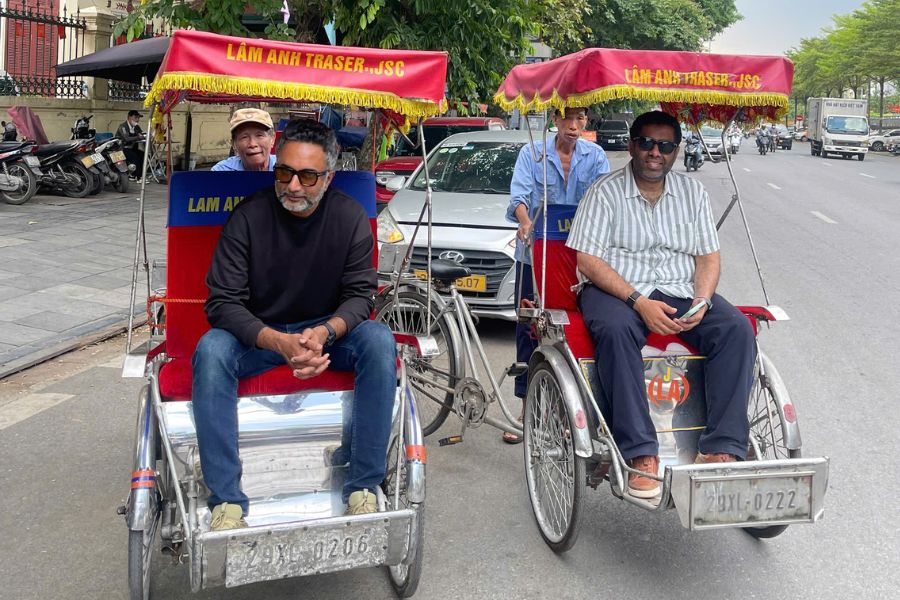
2.1. Route 1: North Vietnam Highlights (Hanoi, Ha Long Bay, Ninh Binh)
This route is the most requested 6-day itinerary for Vietnam because it combines a capital city, a UNESCO natural wonder, and a rural landscape without a single domestic flight.
| Day | Location | Activities | Overnight |
| Day 1 | Hanoi | Arrival, Old Quarter walking tour, Hoan Kiem Lake, street food tasting | Hanoi |
| Day 2 | Hanoi | Temple of Literature, Ho Chi Minh Mausoleum area, One Pillar Pagoda | Hanoi |
| Day 3 | Ha Long Bay | Transfer from Hanoi (about 2.5 hours by road), board an overnight cruise, kayaking or swimming | Overnight cruise |
| Day 4 | Ha Long Bay to Ninh Binh | Morning cruise activities, disembark, transfer to Ninh Binh (about 2.5 hours) | Ninh Binh |
| Day 5 | Ninh Binh | Trang An or Tam Coc boat tour, Hoa Lu ancient capital, Mua Cave viewpoint | Ninh Binh |
| Day 6 | Ninh Binh to Hanoi | Return transfer to Hanoi, departure | Departure |
2.2. Route 2: Central Vietnam Heritage (Da Nang, Hoi An, Hue)
This route suits clients who prioritize beaches, UNESCO heritage sites, and imperial history over the pace of a big city.

| Day | Location | Activities | Overnight |
| Day 1 | Da Nang | Arrival, Dragon Bridge, My Khe Beach | Da Nang |
| Day 2 | Da Nang | Ba Na Hills and Golden Bridge, Marble Mountains | Da Nang |
| Day 3 | Hoi An | Transfer from Da Nang (about 45 minutes), Ancient Town walking tour, lantern-lit evening market | Hoi An |
| Day 4 | Hoi An | Basket boat ride in Cam Thanh coconut village, cooking class | Hoi An |
| Day 5 | Hue | Transfer from Hoi An (about 2.5 to 3 hours through Hai Van Pass), Imperial Citadel, Perfume River | Hue |
| Day 6 | Hue | Royal tombs (Khai Dinh or Minh Mang), departure via Hue or transfer back to Da Nang airport | Departure |
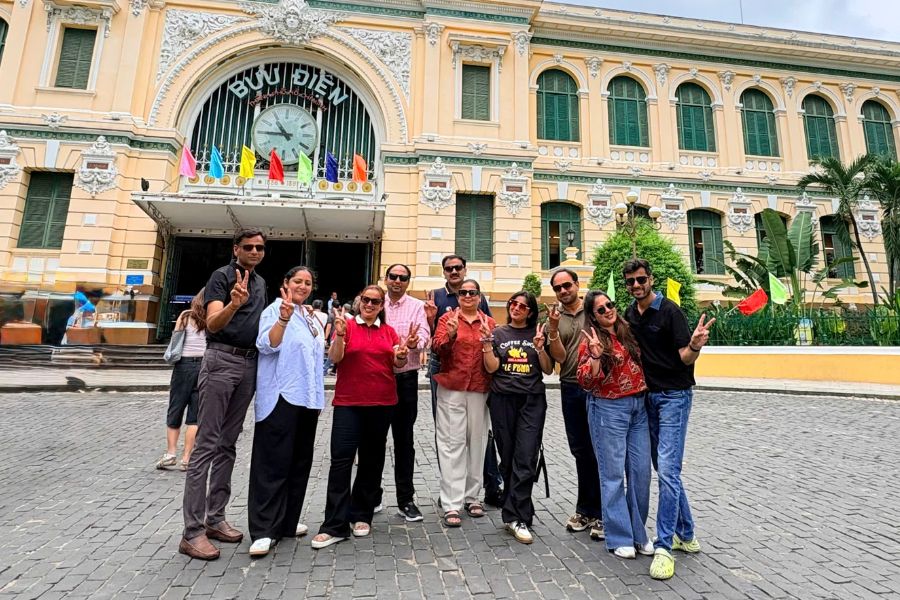
2.3. Route 3: South Vietnam Discovery (Ho Chi Minh City, Mekong Delta, Cu Chi Tunnels)
This route works well for clients interested in modern Vietnamese history, river culture, and a fast-paced city base.
| Day | Location | Activities | Overnight |
| Day 1 | Ho Chi Minh City | Arrival, Notre Dame Cathedral, Central Post Office, Ben Thanh Market | Ho Chi Minh City |
| Day 2 | Ho Chi Minh City | Cu Chi Tunnels day trip, War Remnants Museum | Ho Chi Minh City |
| Day 3 | Mekong Delta | Transfer to My Tho or Ben Tre (about 1.5 to 2 hours), floating market, canal boat ride | Mekong Delta or return to HCMC |
| Day 4 | Mekong Delta or Can Tho | Cai Rang floating market (early morning), coconut candy workshop, local homestay experience | Can Tho or HCMC |
| Day 5 | Ho Chi Minh City | Return transfer, Jade Emperor Pagoda, Bitexco Skydeck sunset | Ho Chi Minh City |
| Day 6 | Ho Chi Minh City | Free morning for shopping, departure | Departure |
3. How to Choose the Right Route for Your Client
Matching the client profile to the route reduces the back-and-forth during the sales process. The table below summarizes which route fits which type of traveler.
| Client profile | Recommended route | Why |
| First-time visitor wanting classic Vietnam | Route 1, North Vietnam Highlights | Combines the two most requested experiences: Hanoi’s Old Quarter and Ha Long Bay |
| Beach and heritage lovers | Route 2, Central Vietnam Heritage | Shortest transfer times, coastal setting, UNESCO sites in Hoi An and Hue |
| History-focused or river culture clients | Route 3, South Vietnam Discovery | Strong Vietnam War history content plus a distinct Mekong Delta river experience |
| Honeymoon or slower-paced couples | Route 2, Central Vietnam Heritage | Fewer hotel changes, resort-friendly base in Hoi An or Da Nang |
| MICE or small corporate groups | Route 1, North Vietnam Highlights | Hanoi has the strongest meeting and event infrastructure of the three |
4. Estimated Cost for a 6-Day Vietnam Tour
Pricing for a 6-day Vietnam tour typically starts from around 450 USD to 650 USD per person for a mid-range group tour, and can rise to 900 USD or more per person for a private, higher-end itinerary with a boutique cruise cabin and 4-star hotels. Luxury versions with 5-star hotels, private guides, and premium Ha Long Bay cruises can exceed 1,200 USD per person. These figures are starting-from estimates only and vary by season, group size, hotel category, and cruise class, so agents should always confirm exact net rates with the DMC before quoting a client.
5. Booking Logistics Travel Agents Should Know
A few operational details matter more for a 6-day itinerary than for longer trips, since there is less buffer time to absorb delays.
- Ha Long Bay cruise cabins need to be confirmed 4 to 6 weeks ahead during peak season (October to April), since cabin inventory is limited compared to hotel rooms.
- Domestic flights are only needed for Route 2 or Route 3 if the client is flying in and out of a different city than the tour ends in, so confirm the client’s international flight routing before finalizing the itinerary.
- Group size affects vehicle type and guide-to-client ratio; groups above 15 travelers usually need a second vehicle for Ninh Binh’s Trang An boat rides, since boats seat only 2 to 4 people.
- Visa requirements vary by nationality; many source markets, including India, qualify for Vietnam’s e-visa valid up to 90 days, but agents should verify current rules for each client’s passport before booking.
6. Frequently Asked Questions
Is 6 days enough for a first trip to Vietnam?
Yes, 6 days is enough to properly experience one region of Vietnam, such as the North Vietnam Highlights route covering Hanoi, Ha Long Bay, and Ninh Binh, without a rushed pace.
Can I combine North and South Vietnam in 6 days?
It is possible but not recommended, since the transfer alone (a 2-hour flight plus airport time) consumes nearly a full day, leaving very little time for sightseeing in either region.
What is the best 6-day Vietnam itinerary for a honeymoon?
The Central Vietnam Heritage route (Da Nang, Hoi An, Hue) is generally the best fit, since it has fewer hotel changes and more resort-style accommodation options than the other two routes.
Do I need a domestic flight for a 6-day Vietnam trip?
Not for Route 1 (North Vietnam Highlights), since Hanoi, Ha Long Bay, and Ninh Binh are all connected by road. Routes 2 and 3 may need a domestic flight only if the client’s international arrival and departure cities differ.
What is the best time of year for a 6-day Vietnam tour?
North Vietnam is most pleasant from October to April, Central Vietnam from February to August, and South Vietnam is warm year-round with a rainy season from May to October that rarely disrupts a short itinerary.
Ready to package a 6-day Vietnam itinerary for your clients? Viet Dan Travel handles the ground logistics, cruise cabin allocations, and route planning behind every one of these itineraries, so your agency can offer a seamless, expertly guided experience. Get in touch with our team to request tailored quotes and net rates for your next Vietnam program.