Every year, travel agents sign contracts with a Vietnam DMC that look professional on paper and only find out the truth when clients are already on the ground. Before that happens to your agency, here are 8 red flags to identify an unreliable Vietnam DMC partner before you commit.
1. Why choosing the wrong Vietnam DMC puts your agency at risk
For travel agents, a Vietnam DMC is not just a vendor; they are an operational extension of your brand in a country where you have no boots on the ground. When trouble occurs, such as a missed airport transfer in Hanoi or a guide who doesn’t speak the language your client expected, your agency takes the blame, not the DMC.
The real risks for B2B travel agents operating Vietnam tours include the following:
- Client-facing refund demands that cut directly into your margin.
- Negative reviews online that damage your agency’s credibility in your home market
- Loss of repeat bookings from clients who expected a seamless experience
- Legal exposure if a DMC fails to deliver contracted services
It is fair to say that Vietnam’s inbound tourism industry has grown rapidly and, with it, the number of companies calling themselves DMCs. Not all of them have the infrastructure, staffing, or professional standards to be a reliable B2B partner. The checklist below will help you tell the difference.

2. 8 Red flags when choosing a Vietnam DMC
2.1. No Verifiable VNAT License
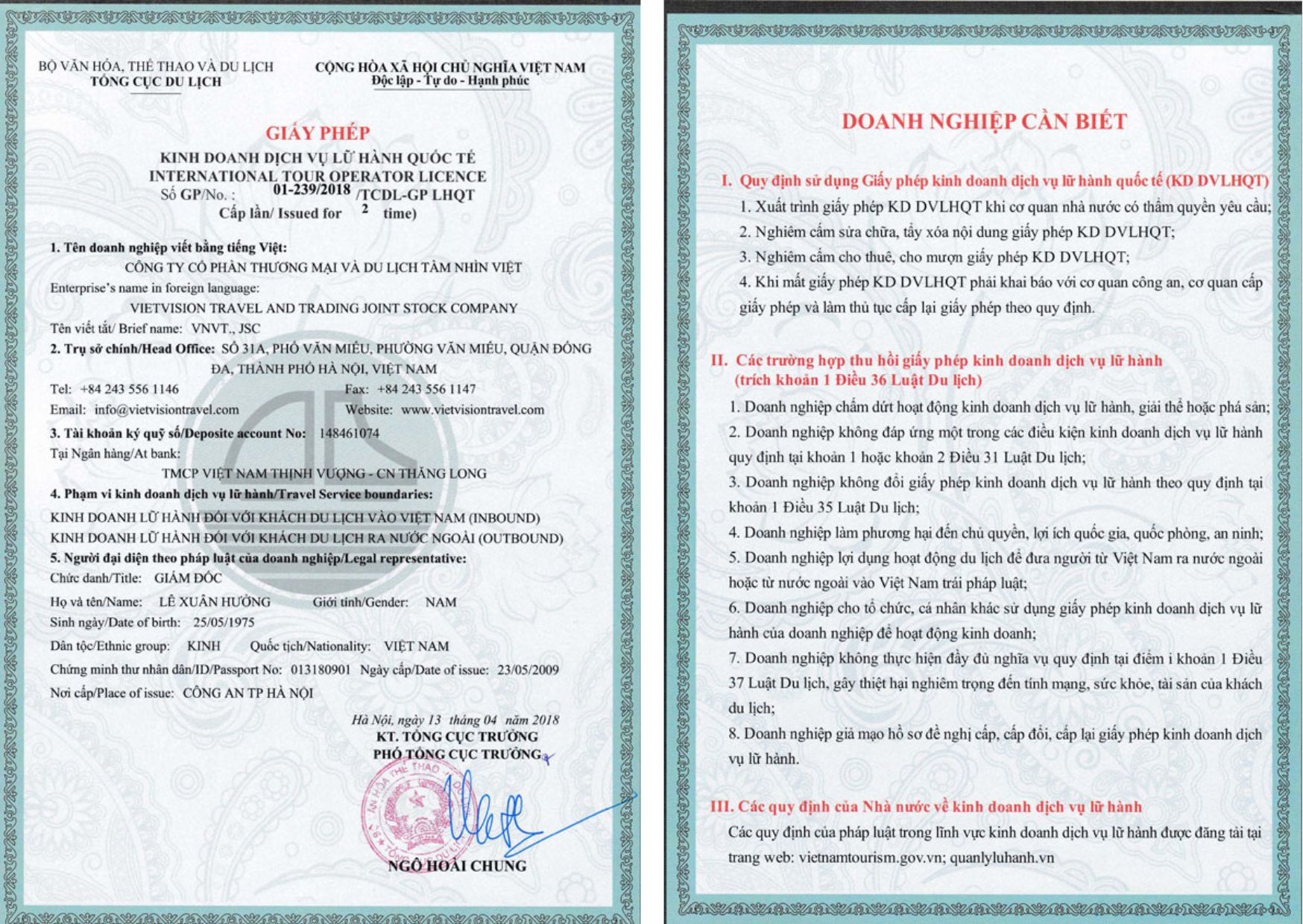
All legitimate inbound tour operators in Vietnam are required to hold a license issued by the Vietnam National Administration of Tourism (VNAT). This is not optional criteria but a legal requirement under Vietnamese law. Indian tour operators and travel agents partnering with Vietnam DMC for pilgrimage tours, incentive groups, or leisure GIT programs should treat VNAT licensing as a non-negotiable first filter.
A company without a VNAT inbound tourism operating license is not permitted to legally arrange tours for international visitors inside Vietnam. Operating without one is a compliance risk for the DMC and, by extension, a legal exposure for any international agency partnering with them.
What to do: Ask for the license number directly. A licensed DMC will provide it without hesitation. Cross-check it against the VNAT’s official directory or ask for a scanned copy of the certificate. If a DMC deflects this question, that is your answer.
2.2. Suspiciously Low Pricing (Price Dumping)
In the Vietnam travel industry, a price that seems significantly below market rate is almost always a sign of one of three things: unqualified guides, unvetted suppliers, or a bait-and-switch model where the quoted price escalates after commitment.
Vietnam’s tourism market has a well-documented issue with price dumping (price dumping is where some operators undercut the market deliberately to win contracts and then recover margin by substituting lower-quality suppliers, skipping optional services, or charging supplements once the group is already in-country).
The calculation a professional travel agent should run: If a DMC quotes you 30–40% below what three other reputable Vietnam DMCs quoted for an identical program, ask them to break down the cost line by line. A legitimate DMC will comply immediately.

2.3. Vague or Copy-Paste Itineraries
A B2B DMC’s core product is the itinerary and, specifically, the ability to build a custom program that reflects your clients’ specific profile, travel style, and interest set.
If a Vietnam DMC’s first response to your RFP is a generic 10-day itinerary that looks like it was copy-pasted from a travel brochure, that is a signal. It means either:
They are too busy to give your inquiry proper attention
They lack the destination knowledge to customize meaningfully
They are not experienced in B2B operations and do not understand what agencies actually need
What a credible Vietnam DMC response looks like: Within the agreed turnaround time (typically 24-48 hours for B2B RFPs), you should receive a quote that addresses your group size, nationality, interests, budget bracket, accommodation preferences, and any specific requirements you raised. The itinerary-specific requirements you raised. The itinerary should reference actual hotels, specific routes, and meaningful experiences, not generic placeholder text.
2.4. Slow or Inconsistent Communication
For B2B travel partnerships that are managed remotely, communication speed and clarity are a direct proxy for operational reliability.
A DMC that takes four days to respond to an initial inquiry will take four days to respond to a crisis when your clients are on the ground.
Communication benchmarks for a reliable Vietnam DMC:
- Initial inquiry response: within 24 hours
- Quote for a standard group program: within 48 hours
- Emergency response during live operations: same day, ideally within hours.
Also watch for evasiveness. A DMC that answers questions with questions, provides only partial information, or consistently shifts the conversation away from specific commitments is showing you how they will behave when something goes wrong during a trip.
2.5. No Named Account Manager or No Permanent Staff
This red flag is particularly common among smaller Vietnam operators who position themselves as DMCs but actually operate as brokers. They are outsourcing everything to third-party suppliers and freelance guides with no internal accountability.
The risk for your agency: When your client’s group arrives in Vietnam, who is the single point of contact responsible for everything? If the answer is “whoever is available that day,” your clients are not being managed by a DMC; it means they are being handed off between freelancers who have no shared accountability.
A professional B2B Vietnam DMC will assign a named account manager to your agency from the first inquiry. That person knows your programs, your clients’ profiles, and your agency’s standards. They are reachable, accountable, and present throughout the relationship.
For travel agents sending MICE and incentive groups to Vietnam: Permanent, dedicated operations staff is non-negotiable for group travel. Programs with 40–150+ participants require a DMC that has permanent team members in both North Vietnam (Hanoi, Halong Bay, Sapa) and South Vietnam (Ho Chi Minh City, Mekong Delta), not freelancers recruited per trip.
2.6. Cannot Provide Client Reference or Case Studies
Any Vietnam DMC with legitimate B2B experience will have documented proof of that experience, such as client logos, case studies, verifiable testimonials, or references from international agencies willing to speak on their behalf.
A DMC that responds to a reference request with “we don’t share client information for privacy reasons” is raising a red flag. Privacy is a legitimate consideration, but it does not explain why a DMC with ten years of B2B operations cannot provide a single verifiable reference from an agency in your source market.
What to ask for: References from agencies based in your market (India, UAE, Europe), case studies that describe group size and program type, and participation in industry associations such as PATA (Pacific Asia Travel Association) or ASTA. Industry membership indicates that a DMC operates to standards set by a third-party organization and has been subject to some form of external vetting.

2.7. No Clear Cancellation and Payment Policy
This is the most consequential red flag on the list and the most frequently overlooked by agencies that are in a hurry to confirm a program. A professional Vietnam DMC operates with clearly documented terms: payment schedule, cancellation terms by notice period, force majeure provisions, and liability clauses. They are the framework that protects both parties when circumstances change.
Groups traveling from India to Vietnam frequently require flexibility around visa processing timelines, flight schedule changes, and group size fluctuations. Any DMC that cannot show you in writing how these scenarios are handled is not a partner you can trust with your clients.
Warning signs in the contract process:
- DMC asks for full payment upfront before services are confirmed.
- No written cancellation policy is provided (“we’ll handle it if it happens”)
- Teams are provided verbally rather than in a written agreement
- Contract language is vague about what “included” and “excluded” means.

2.8. They Also Sell Directly to End Customers (Channel Conflict)
This is a structural conflict of interest that many travel agents discover too late: their Vietnam DMC partner is simultaneously advertising Vietnam tour packages directly to consumers in the agent’s home market and competing directly with the agency that brought them the business.
A legitimate B2B DMC operates exclusively in the trade channel. It does not market directly to end travelers. It does not run consumer-facing campaigns in India, the UAE, or Europe that compete with the agencies it claims to serve.
Before signing a B2B agreement with any Vietnam DMC, check whether they have a consumer-facing website, a direct-booking system, or advertising in your market. If they do, ask directly whether they operate B2C in your territory. If the answer is yes or if the answer is ambiguous, you are potentially feeding a competitor.
3. What a Trustworthy Vietnam DMC actually looks like
In contrast to the red flags above, here is what you should see from a reliable B2B Vietnam DMC:
- Licensing: A current, verifiable VNAT inbound tourism operating license, provided on request without hesitation.
- Transparent pricing: Line-item quotes with clear inclusions and exclusions. Willingness to explain cost structures. Pricing that is competitive but not suspiciously below market.
- Responsive communication: A named account manager who responds to inquiries within 24 hours, is reachable across time zones, and is accessible via email, WhatsApp, and video calls.
- Permanent, experienced staff: A named account manager who responds to inquiries within 24 hours, is reachable across time zones, and is accessible via email, WhatsApp, and video call.
- Documented track record: An in-house operations team covers the key Vietnam destinations your clients will visit: Hanoi, Halong Bay, Hoi An, Da Nang, Ho Chi Minh City, and the Mekong Delta.
- Clear written agreement: References from agencies in your source market, case studies that describe actual group programs, and industry association memberships.
- Exclusive B2B focus: No direct-to-consumer sales in your market. Your agency relationship is protected, not competed against.
>>> Read more: What is Vietnam DMC? A Complete Guide for Travel Agencies
4. How does Viet Dan Travel address these red flags?
Viet Dan Travel was built specifically for small and medium-sized B2B travel agencies that need a reliable Vietnam DMC partner without the complexity of dealing with large operators that treat smaller agencies as low-priority accounts.
We operate exclusively in the B2B channel. We do not sell directly to consumers. We do not run advertising campaigns in India, the UAE, or any Western market that competes with the agencies we serve.
Our VNAT license is current and verifiable. Our pricing is transparent, line-item, and explained on request. Our account managers are permanent staff members with deep knowledge of Vietnam’s destinations and your clients’ source markets.

For travel agents from the Indian market building Vietnam programs for leisure groups, FIT travelers, MICE delegations, or pilgrimages, Viet Dan Travel provides the following:
- Tailor-made Vietnam tour packages designed around your clients’ specific profile
- Direct access to hotels, cruises, transportation, and restaurants across Vietnam.
- Dedicated B2B agent login portals with market-specific resources.
- Responsive communication across Indian time zones.
- Transparent contracts with clear terms for payment, cancellation, and optional contingencies.
To sum up, the red flags in this guide are not edge cases. They are patterns that experienced travel agents encounter regularly when working with the wrong Vietnam DMC. Choose your local DMC the way you would choose any long-term business partner: verify the credentials, check the references, read the contract, and watch how they communicate under pressure. Those early signals tell everything you need to know.
Ready to vet Viet Dan Travel DMC against this checklist? Contact our B2B team at Viet Dan Travel or submit an RFP through our agent portal. We’ll respond within 24 hours, and we’ll provide every piece of documentation you ask for.