
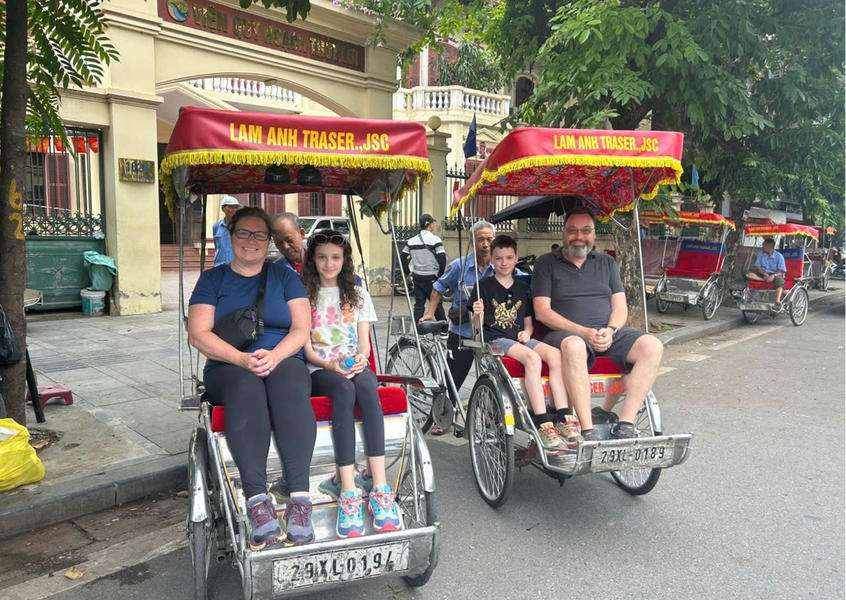
Vietnam welcomed more than 21 million international travelers in 2025, a record high that surpassed its pre-pandemic peak. The country ranks 41st out of 163 on the Global Peace Index, and the terrorism risk sits at a flat zero percent, which already puts it ahead of many popular destinations.
So, yes, Vietnam is safe for tourists. But “safe” doesn’t mean risk-free. Traffic is genuinely dangerous. Scams exist, food illness happens, and the experience varies depending on where you go, how you get around, and how prepared you are.
In this guide, Viet Dan Travel DMC gives you the comprehensive guide with common misconceptions and the practical knowledge to travel smarter.
1. Is Vietnam Safe for Tourists?
Before diving into specifics, here’s an honest summary across the risk categories tourists ask about most:
| Risk Category | Risk Level | What to Know |
| Violent crime | Very Low | Rare against tourists. Vietnam ranks #41 on the Global Peace Index |
| Petty theft / pickpocketing | Low–Medium | Most common in crowded markets and city centers |
| Scams (taxi, tours) | Medium | Fake taxis and overpriced tours easily avoided with Grab app and licensed operators |
| Traffic / road accidents | High | 20+ road deaths per 100,000 people annually, so you should cross roads carefully |
| Food safety | Low–Medium | Choose busy, reputable spots and wash fruit and vegetables |
| Natural disasters | Seasonal | Typhoon season May–November, mainly affecting Central and North Vietnam |
Key takeaway: Vietnam’s primary risks for tourists are not violent crime; they’re traffic, petty scams, and occasional food safety issues. All of them are manageable with the right knowledge.
2. Is Violent Crime a Real Concern in Vietnam?
It is fair to say that violent crime is not a real concern for foreign tourists. Vietnam maintains a courteous society where violent crime targeting tourists is uncommon. Violence in the streets is rare, and harassment, catcalling, or discrimination occurs infrequently. Most visitors complete entire trips without experiencing serious safety incidents or feeling genuinely threatened throughout their journeys.
Visitors who’ve explored Hanoi’s Old Quarter at midnight or wandered Hoi An’s lantern-lit streets after dark have repeatedly noted feeling safer than in their home cities in Europe or North America.
That said, a few things are worth knowing:
- Bag snatching on motorbikes: Thieves often operate on motor scooters in the most crowded parts of the largest cities and target tourists’ cellphones, purses, cameras, and backpacks. Keep your bag on the side away from the road, hold it close to your body, and avoid walking near traffic while looking at your phone.
- Don’t play expensive items: Flashy jewelry, visible camera equipment, and large amounts of cash attract the wrong attention in crowded areas.
- Stick to well-lit areas at night: As with any major city, dark alleys after midnight are best avoided, not because Vietnam is dangerous, but because basic street sense applies everywhere.
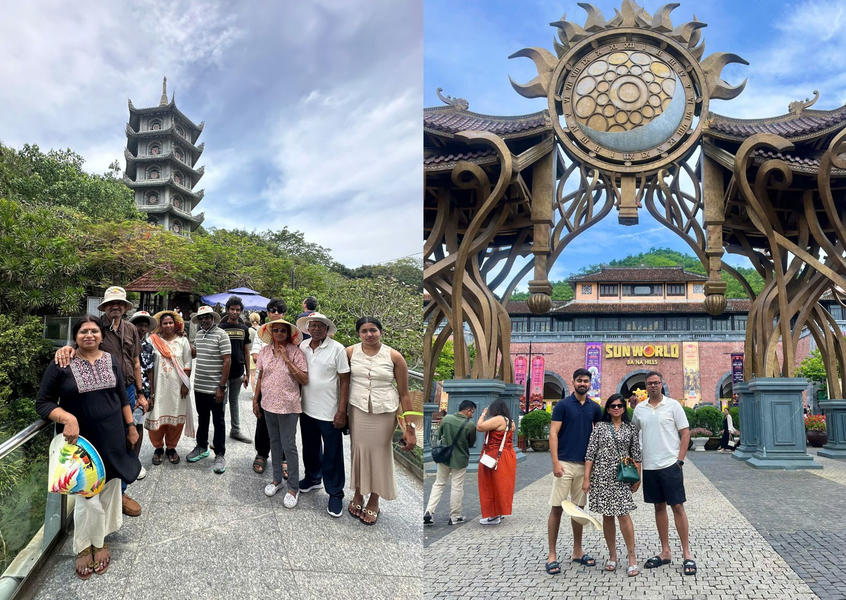
3. Common Scams in Vietnam and How to Avoid Them
Scams are the most frequently reported issue among tourists in Vietnam. None of them are violent, but they can be frustrating and expensive if you’re unprepared. Here’s what to watch for:
3.1. Transport Scams
- Fake or rigged-meter taxis: Unofficial taxis sometimes run meters that move faster than normal or quote a “fixed price” far above the actual rate. Use Grab, a reliable ride-hailing app, especially in busy cities. It’s safer than hailing a taxi off the street.
- Airport touts: Avoid anyone aggressively offering transport inside arrival halls. Use official taxi counters, your hotel’s pre-arranged transfer, or Grab from the pickup zone outside.
- Xe ôm (motorbike taxi): Always agree on the price before getting on. Better still, use Grab Bike for a fixed, app-tracked fare.
3.2. Tour and Ticket Scams
- Unlicensed “travel agencies”: Some storefronts sell tours as official operators but are unlicensed resellers with no accountability. Always book tours through trusted websites or your hotel. A verified DMC like Viet Dan Travel ensures licensed guides, properly insured vehicles, and fixed itineraries.
- Friendly “local guide” offers: Some people pretend to be guides and take you to overpriced shops where they get commission. Politely decline unsolicited guiding offers from strangers on the street.
3.3. Market and Money Scams
- Price inflations for foreigners: In markets like Ben Thanh (Ho Chi Minh City) or Dong Xuan (Hanoi), the opening price quoted to tourists is often three to five times higher than the real value. Always negotiate.
- Short-changing at markets: Count your money slowly before walking away and avoid handing over large bills for small purchases.
- ATM scams: If someone offers to assist while you’re withdrawing money, it’s likely a scam. Only use ATMs inside bank branches, during daytime, and never accept help from strangers.
Local tip from Viet Dan Travel DMC: The single best protection against scams is having a local contact who can pre-arrange your transfers, tours, and accommodation. When logistics are handled by a trusted operator, there’s almost nothing left for scammers to exploit.
4. Is Vietnam Safe for Solo Travelers?
4.1. Solo Female Travelers
Vietnam ranks among the safest destinations in Southeast Asia for women traveling solo. Statistics for violent crime against tourists are exceptionally low. Moreover, Vietnamese culture promotes respect for elders and women.
Solo women rarely experience catcalling or harassment from locals and can safely explore cities during day and night. You may get curious stares and questions about your age or relationship status. This is culturally normal curiosity, not threatening behavior.
Practical tips for solo female travelers:
- Use Grab for all rideshares: Avoid hailing unknown motorbikes.
- Dress modestly when visiting temples or rural villages: covering shoulders and knees shows respect and reduces unwanted attention.
- Stay in well-reviewed accommodations: Look for properties with consistent recent reviews mentioning helpful, responsive staff.
- Share your daily itinerary with someone you trust, especially when heading to remote areas like Ha Giang or Pu Luong.
- Don’t walk around with your phone out on busy streets. Use taxis or Grab after dark.
4.2. Solo Make Travelers and Backpackers
Vietnam is exceptionally backpacker-friendly. The hostel culture is strong in Hanoi, Hoi An, Ho Chi Minh City, and Da Nang, with a vibrant international community. Solo male travelers rarely face any security concerns beyond the scams covered above. The main risk, as with everyone: traffic and transport choices.
5. Traffic Safety: The risk no one should downplay
If there’s one area where Vietnam’s safety picture is genuinely more complex, it’s road safety.
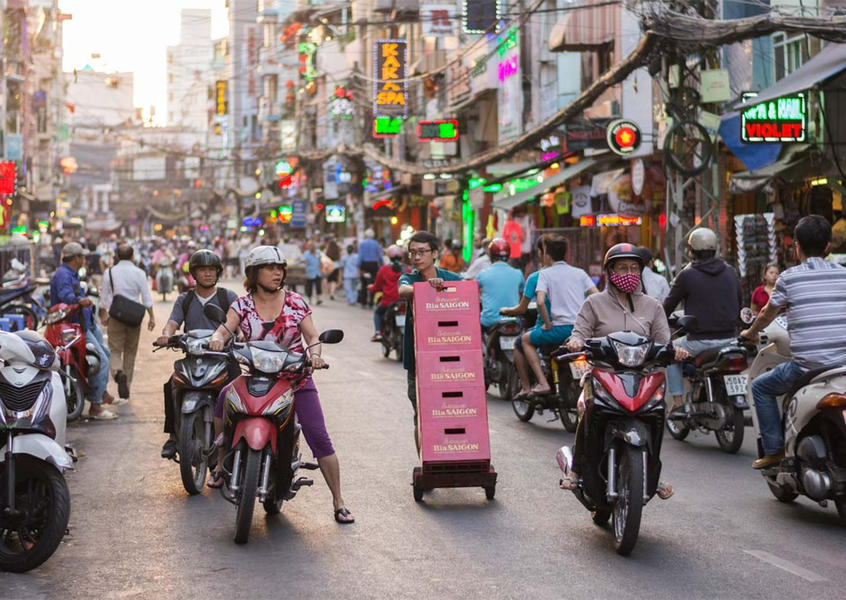
Vietnam reports over 20 road deaths per 100,000 people each year, largely due to dense motorbike traffic. For context, that’s roughly four times the rate of the United Kingdom. Therefore, you need to think carefully about how you get around.
5.1. Crossing the road
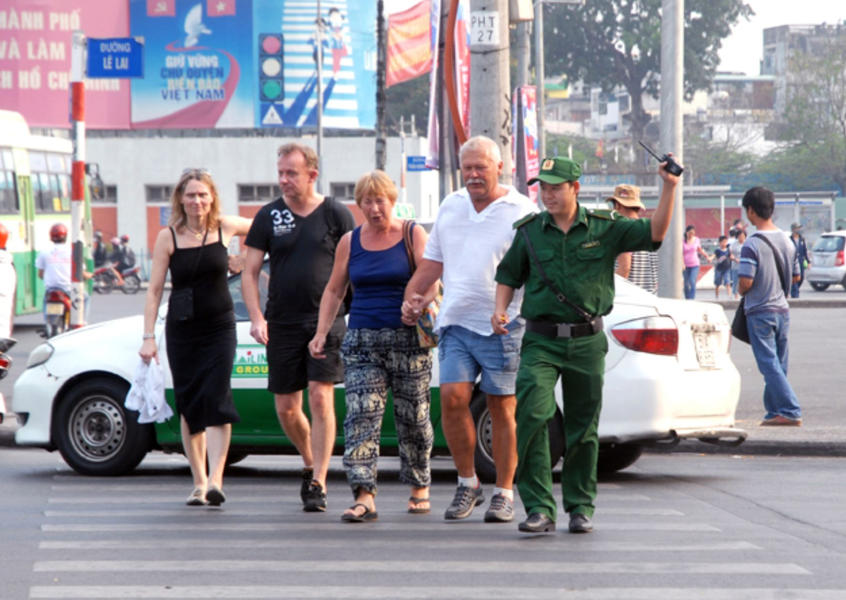
For first-time visitors, stepping into a busy Vietnamese street can feel surreal. The trick: walk slowly, steadily, and predictably. Motorbike riders are watching for your movement, therefore they’ll weave around you as long as you don’t stop suddenly or run. Hesitation is more dangerous than steady forward movement.
5.2. Renting a motorbike
Many tourists rent motorbikes to explore Vietnam independently. It’s exhilarating, and it’s also the source of a disproportionate number of tourist injuries and hospitalizations.
Our honest advice from years of operating tours in Vietnam:
Only ride a motorbike if you’re an experienced rider already familiar with high-traffic, low-rule environments.
- Always wear a helmet: required by law and available everywhere.
- Be extremely cautious on mountain roads in Sapa, Ha Giang, and the Central Highlands. The scenery is spectacular. The drops are fatal.
- Check your travel insurance policy carefully. Most standard policies exclude accidents on motorbikes.
5.3. Safer alternatives
The Grab app is the gold standard for city transport, metered, GPS-tracked, cashless, and accountable.
Domestic flights between Hanoi, Da Nang, and Ho Chi Minh City are fast, affordable, and safe. Vietnam’s aviation safety record has improved dramatically. The Civil Aviation Authority of Vietnam received a Category 1 rating from the FAA, confirming compliance with international safety standards.
Trains offer a scenic and relaxed way to travel between major cities. The newly completed Van Don–Mong Cai Expressway has reduced travel time from Hanoi to Ha Long Bay to just 2.5 hours on a modern, well-maintained highway.
6. Health and Food Safety in Vietnam
6.1. Food safety
Vietnamese street food is one of the great culinary experiences on the planet, and for the vast majority of travelers it’s completely safe. A few guidelines:
- Choose busy stalls: High turnover means fresher ingredients. A crowded street stall is often safer than a quiet “tourist restaurant.”
- Drink bottled or filtered water: Tap water is not safe to drink anywhere in Vietnam. Reputable hotels and restaurants use filtered water for cooking and ice.
- Wash fruit and vegetables, especially in rural areas and local markets where hygiene standards vary. In some remote areas and local markets, food processing and handling practices may not always meet the desired hygiene standards.
- Carry oral rehydration salts: Food illness happens to some travelers. Therefore, you should have salts on hand; speeds recovery significantly.
6.2. Healthcare
Hanoi and Ho Chi Minh City have international-standard hospitals (FV Hospital, Vinmec, and Family Medical Practice) accustomed to treating foreign patients. Healthcare quality drops significantly in rural areas, making comprehensive travel insurance with medical evacuation coverage essential, not optional.
Recommended vaccinations before visiting: Hepatitis A and B, and typhoid. Depending on your activities and regions: Japanese encephalitis and rabies.
6.3. Climate risks
Vietnam is an S-shaped, long, narrow country with dramatically varied weather. Typhoon season runs May through November, primarily affecting Central and Northern Vietnam. Tourism authorities have implemented enhanced safety measures at major attractions, particularly at UNESCO World Heritage sites like Ha Long Bay, where strict maritime safety regulations ensure secure cruising experiences. Always check weather conditions before booking coastal or bay activities.
7. Which parts of Vietnam are safest?
Vietnam is broadly safe throughout, but different destinations carry different risk profiles:
| Destination | Why it’s safe | Watch out for |
| Hoi An | Pedestrian Ancient Town, low crime, very tourist-friendly, excellent infrastructure | Flooding in October–November |
| Hanoi | Well-lit Old Quarter, strong tourist police presence, walkable | Motorbike bag snatching near busy streets |
| Ha Long Bay | UNESCO-regulated, strict maritime safety standards on licensed cruises | Unlicensed boat operators; choose carefully |
| Da Nang | Modern city, clean beaches, relatively low scam rates | Overpriced taxis near the airport |
| Ho Chi Minh City | Excellent infrastructure, large expat community, international services | Traffic density, bag snatching near Ben Thanh Market |
| Sapa / Ha Giang | Peaceful mountain areas, friendly ethnic minority communities | Altitude, cold weather, hazardous mountain roads |
Our local recommendation: For first-time visitors who want to ease into Vietnam with maximum comfort and minimal hassle, Hoi An is consistently the best starting point. Its partially pedestrianized Ancient Town, abundance of well-reviewed accommodation, and genuinely low scam environment make it an ideal base.
>>> Embark on our Da nang and Hoi An tour 4 days for an unforgettable experience.
8. Practical pre-tip safety checklist
Most of the problems tourists run into in Vietnam aren’t unforeseeable; they’re simply the result of arriving unprepared. A few things sorted before you board the plane will save you a lot of stress on the ground.
8.1. Apps download before you arrive
- Grab: for all rideshares and motorbike taxis. Accept no substitutes for urban transport.
- Google Maps (offline): download Vietnam maps before you go; data can be unreliable in rural areas.
- Google Translate: the camera translation feature works well for menus, signs, and pharmacy labels.
- XE Currency: for real-time VND exchange rates when withdrawing or exchanging money.
8.2. Money safety
- Withdraw cash from ATMs inside bank branches, not standalone street ATMs at night.
- You should carry a mix of cards and local cash. Many street food stalls and rural guesthouses are cash-only.
- Notify your bank before departure to avoid fraud blocks on your card.
Consider carrying a small decoy wallet with a minor amount of cash in crowded areas.
8.3. What to pack for safety
- Anti-theft crossbody bag with cut-proof straps and inward-facing zipped pockets.
- Copies of your documents that store digital copies of your passport, visa, and insurance policy in your email or cloud storage.
- Basic first aid kit including rehydration salts, antihistamines, and any prescription medications.
- Travel insurance documents allowing accessible offline use in case of emergency.
In conclusion, Vietnam is genuinely safe for the vast majority of tourists: first-time visitors, families, solo female travelers, senior travelers, budget backpackers, and luxury travelers alike. Violent crime targeting tourists is rare. Political stability is strong. The hospitality of Vietnamese people is extraordinary and consistent.
The real risks are traffic, petty scams, and occasional food illness. However, they are all manageable with the right preparation and a bit of local knowledge. And that local knowledge is exactly what makes the difference between an anxious trip and an unforgettable one.
Planning your Vietnam trip? Viet Dan Travel DMC is a locally operated destination management company based in Vietnam. We design private tours, group itineraries, airport transfers, and tailor-made experiences, all with licensed, vetted local guides and drivers who know every corner of this country. Whether you’re planning a two-week family holiday or a solo adventure through the north, we’ll handle the details so you can focus on the experience.