
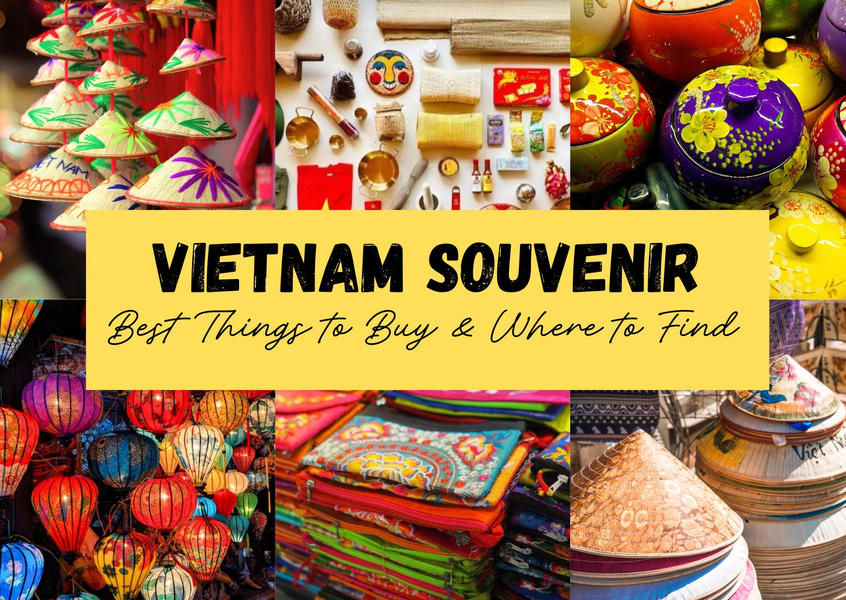
Every year, over 18 million international tourists visit Vietnam, and nearly all of them face the same last-minute panic: “What should I actually buy here?” If you’ve been scrolling through generic lists wondering which souvenirs are truly worth it (and which are tourist traps), this guide was written for you. As a Vietnam DMC with nearly 20 years of organizing tours across the country, we’ll show you exactly what to buy, where to find it, and how much to pay, so you leave with gifts people will actually remember.
The 15 Best Vietnam Souvenirs (With Prices and Where to Buy)
Food & Drink Souvenirs
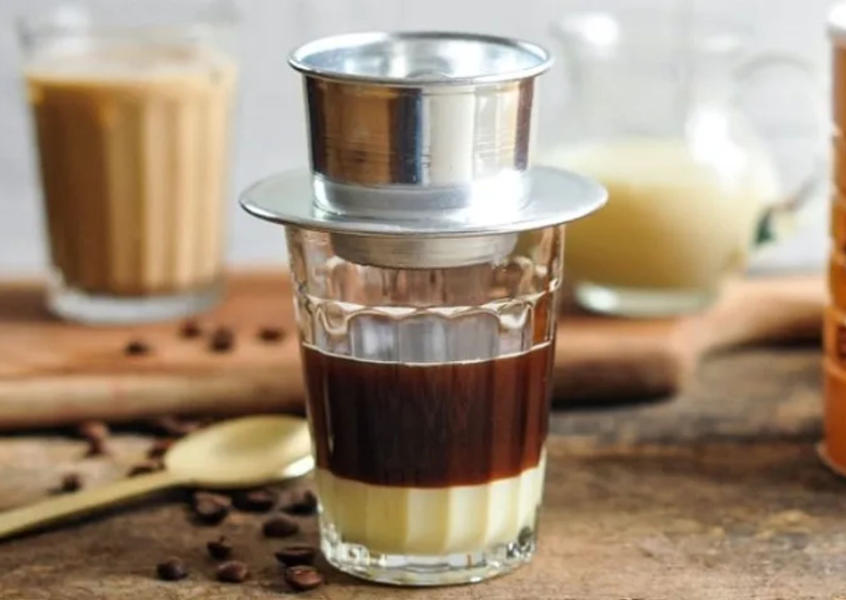
1. Vietnamese Coffee + Phin Filter
Vietnam is the world’s second-largest coffee producer, and the local coffee culture is unlike anything you’ll find elsewhere. Robusta beans from the Central Highlands are so bold, earthy, and rich that they are brewed slowly through a traditional metal drip filter called a phin. Buy a bag of ground beans from brands like Trung Nguyên or Cà Phê Phố, pair it with a phin filter, and you’ve given someone the ability to make a proper Vietnamese iced coffee (cà phê sữa đá) at home.
- Price: $3–$10 for coffee beans; $3–$5 for a phin filter
- Best places to buy: Specialty coffee shops, or Rang Rang Coffee in Hanoi’s Old Quarter
- Pro tip: Buy whole beans if possible because they stay fresher for the journey home.
2. Vietnamese Spice Sets
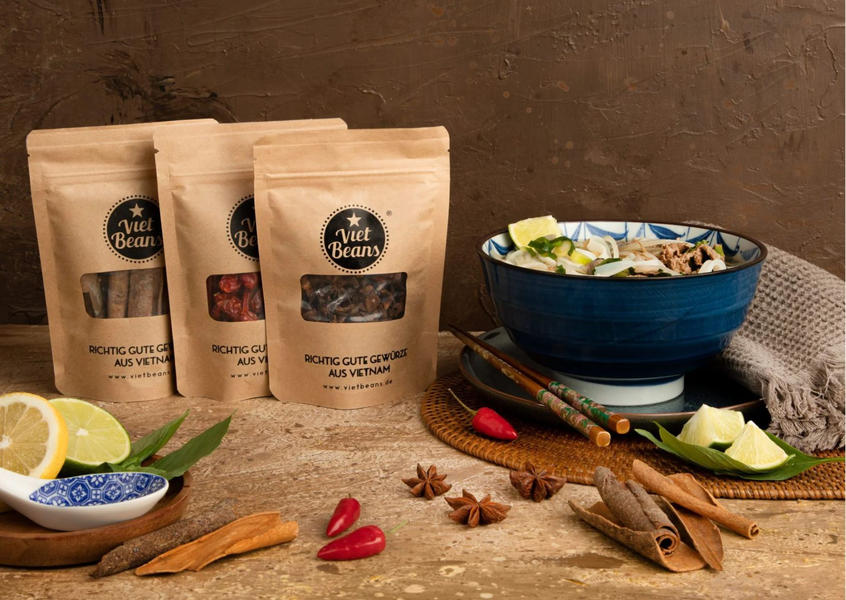
Vietnamese cuisine is built on spices that are genuinely exceptional in quality, including star anise, cinnamon, lemongrass, black pepper, and turmeric. The cinnamon from Quảng Nam province, for instance, is sweeter and more complex than the supermarket variety most people know. Spice sets make perfect gifts: they are lightweight and aromatic, and they let recipients recreate pho or bún bò Huế at home.
- Price: VND 20,000–150,000 (~$0.85–$6.50) per pack
- Best places to buy: Old Quarter spice shops (36 Hàng Đường, Hanoi), Ben Thanh Market, local supermarkets
- Pro tip: Buy from dedicated spice shops rather than tourist stalls because the quality is noticeably better and prices are lower.
3. Vietnamese Tea (Lotus & Jasmine)
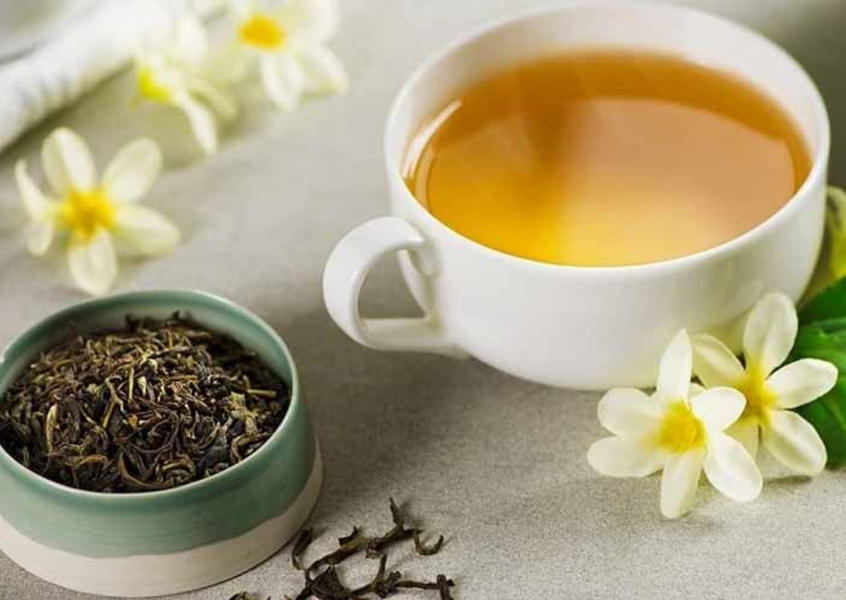
Vietnam produces exceptional teas, particularly lotus tea (trà sen), green tea leaves that have been hand-stuffed with lotus stamens overnight to absorb the fragrance. It’s a centuries-old craft from the villages around Hồ Tây (West Lake) in Hanoi. Jasmine tea and artichoke tea from Đà Lạt are also popular and beautifully packaged for travel.
- Price: $5–$20 per box depending on grade
- Best places to buy: Mạnh Hải Tea Shop in Hanoi, specialty tea shops around Hoan Kiem Lake
- Pro tip: Lotus tea is a Hanoi specialty. You should buy it here, not in the south, for the most authentic version.
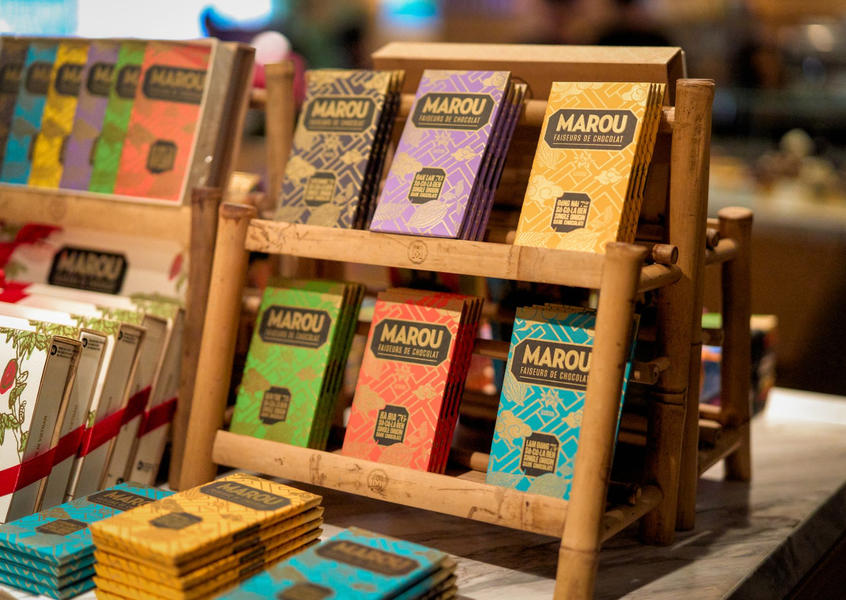
4. Maison Marou Chocolate (Ho Chi Minh City)
This isn’t your typical souvenir chocolate. Maison Marou sources single-origin cacao from different Vietnamese provinces. Each bar tastes noticeably different depending on the region. The New York Times called it some of the best chocolate in the world. It’s a premium gift that tells a story about Vietnamese agriculture and craftsmanship that most tourists don’t know exists.
- Price: VND 150,000–1,000,000 (~$6–$40)
- Address: 167–169 Calmette, District 1, Ho Chi Minh City
- Pro tip: You should visit the store itself. The smell of roasting cacao is unforgettable.
Wearables & Textiles
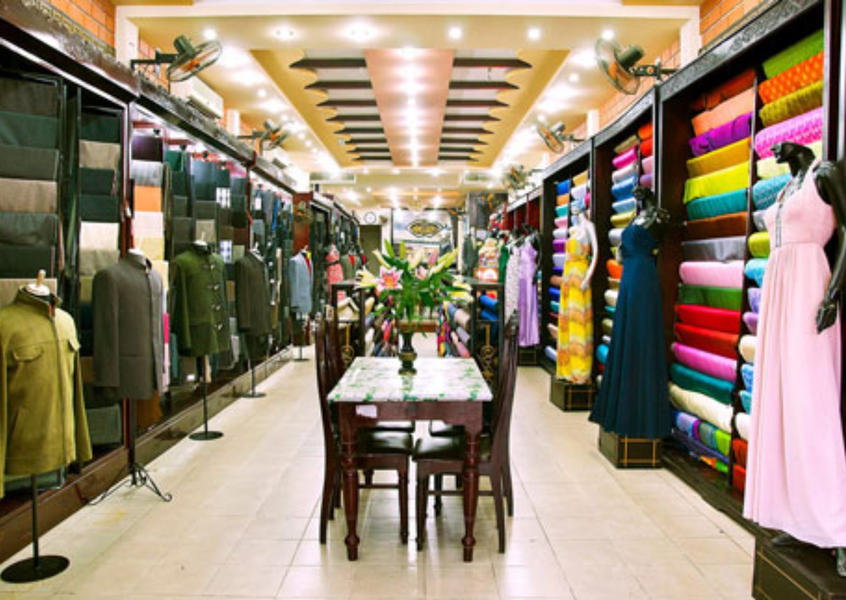
5. Silk — Scarves, Fabric & Ao Dai
Vietnam’s silk tradition stretches back centuries, centered around Vạn Phúc Silk Village near Hanoi and Hội An. The fabric is lightweight, beautiful, and immediately recognizable as Vietnamese. There are several options for you to choose, from simple scarves ($5–$15) to custom-tailored ao dai (the traditional Vietnamese dress), which can be made in 24–48 hours by Hội An’s famous tailors.
- Price: Scarves from $5; custom ao dai $50–$150+
- Best places to buy: Vạn Phúc Village (Hanoi), Hội An tailors, Hà Đông Silk Market
- Pro tip: If you want custom tailoring, build at least 2–3 days into your Hội An itinerary for fittings and alterations.
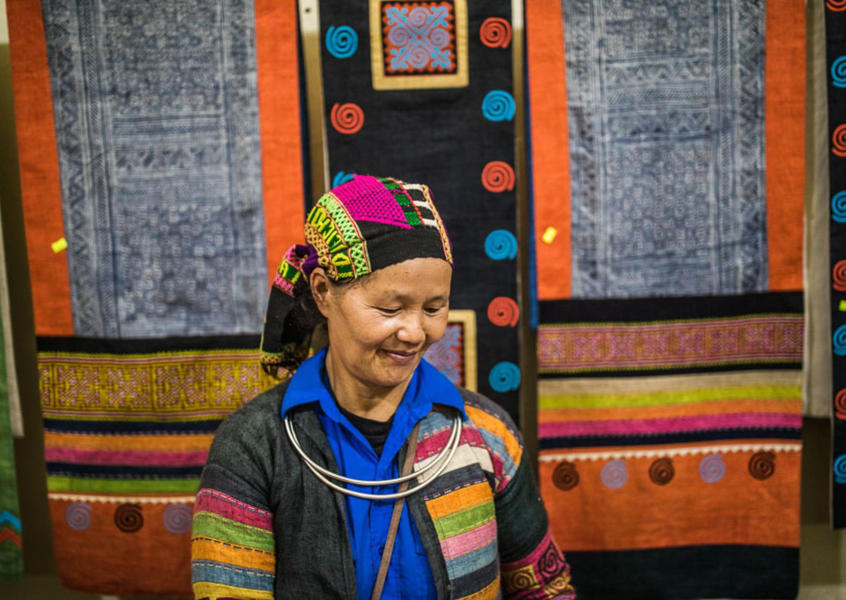
6. Ethnic Minority Handwoven Textiles
If you travel to Sapa, Ha Giang, and the northern highlands, ethnic minority communities such as Hmong, Dao, and Tay still produce hand-dyed and hand-woven textiles using traditional techniques. The patterns are unique to each community, dyed with natural indigo and plant-based pigments. These textiles are among the most culturally significant souvenirs you can bring home from Vietnam. Buying from recognized cooperatives directly supports the artisans and their way of life.
- Price: From $15 for fabric lengths; $20–$60 for bags, pouches, and clothing
- Best places to buy: Sapa Love Market, ethnic minority markets in Bắc Hà, cooperatives recommended by local guides
- Pro tip: Avoid buying mass-produced imitations in tourist markets. The stitching quality and weight of authentic handwoven fabric are distinctly different.
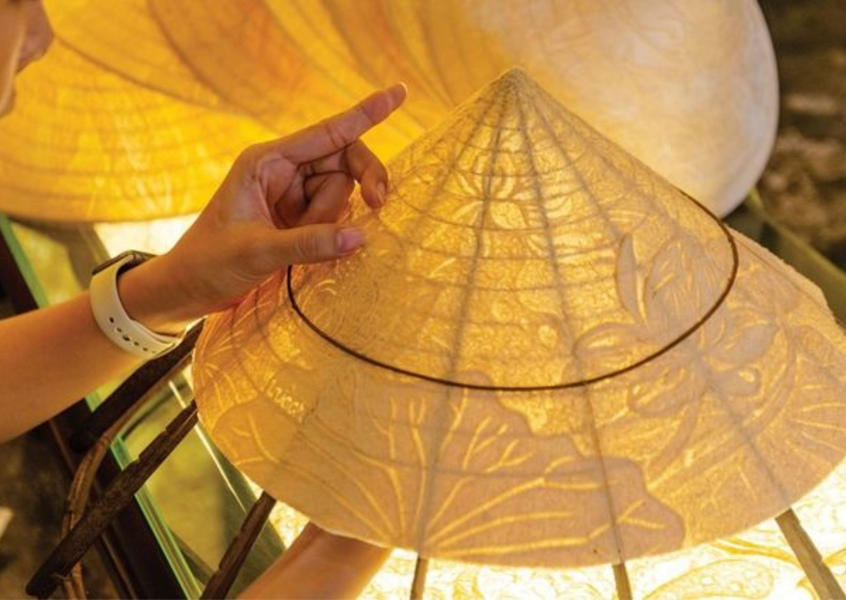
7. Non La (Conical Hat)
The non la is perhaps the most instantly recognizable symbol of Vietnam. A palm leaf hat worn by farmers, street vendors, and women across the country. It’s practical, poetic, and deeply tied to Vietnamese identity. The finest non la come from Huế, where artisans layer the leaves so thinly you can sometimes see silhouettes of poetry pressed between them (bài thơ, or “poem hats”).
- Price: $2–$15 depending on quality
- Best places to buy: Hue’s market, Mekong Delta region, most souvenir shops nationwide
- Pro tip: The Huế “poem hat” is worth seeking out. You should hold it up to the light to see the hidden imagery inside!
Art & Crafts
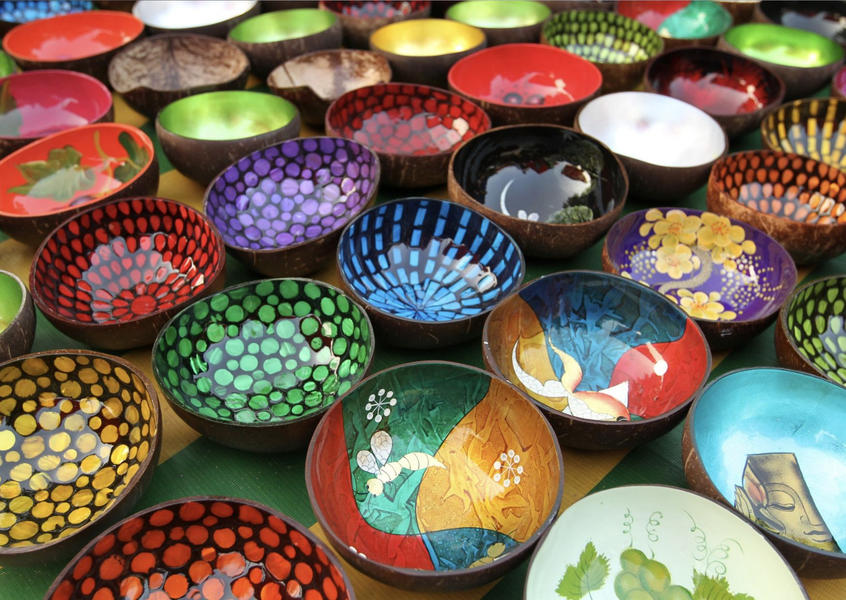
8. Lacquerware
Lacquerware is one of Vietnam’s oldest and most refined craft traditions. Artisans apply dozens of layers of lacquer (from the rhus tree) over bamboo, wood, or ceramic bases, a process that can take weeks or months for high-quality pieces. The result: bowls, vases, jewelry boxes, and paintings with extraordinary depth and luster. Modern Vietnamese lacquerware fuses traditional techniques with contemporary design beautifully.
- Prices: $10–$200+ depending on size and complexity
- Best places to buy: Craft shops in Hanoi’s Old Quarter, Hội An artisan workshops, Đồng Kỵ village near Hanoi
- Pro tip: Genuine lacquerware feels heavy for its size and has no visible seams. Cheap imitations are lighter and often smell of fresh paint.
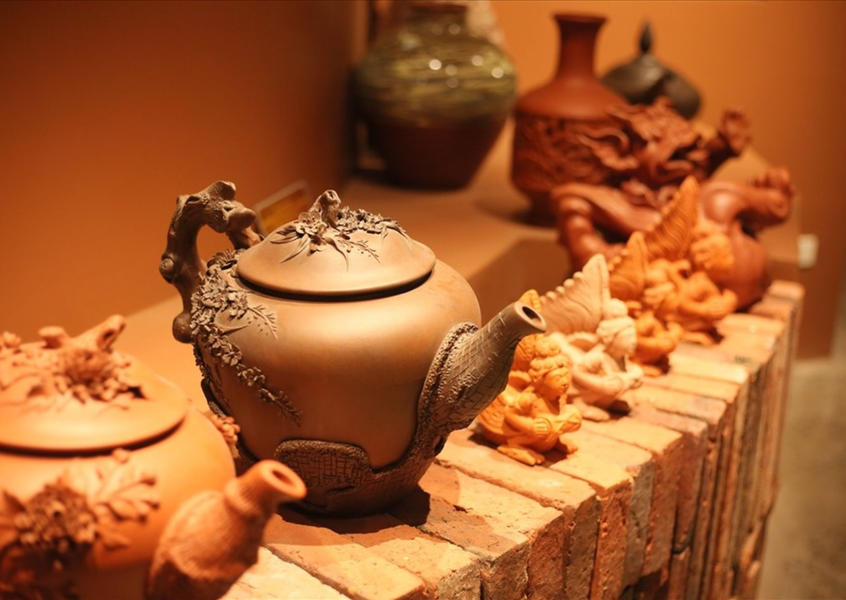
9. Bat Trang Ceramics
Bát Tràng, a village just 13km southeast of Hanoi, has produced ceramics for over 700 years. The village’s characteristic blue-and-white glaze and intricate hand-painted motifs reflect both Chinese influence and distinctly Vietnamese artistic sensibilities. You can buy finished pieces at the village market or commission custom items. Some workshops let visitors try their hand at the wheel.
- Price: $5–$100+ depending on piece
- Best places to buy: Bát Tràng Ceramic Village (half-day trip from Hanoi), Hanoi souvenir shops
- Pro tip: It’s worth spending half a day to visit the village. The kilns and workshops give context that makes the piece more meaningful.
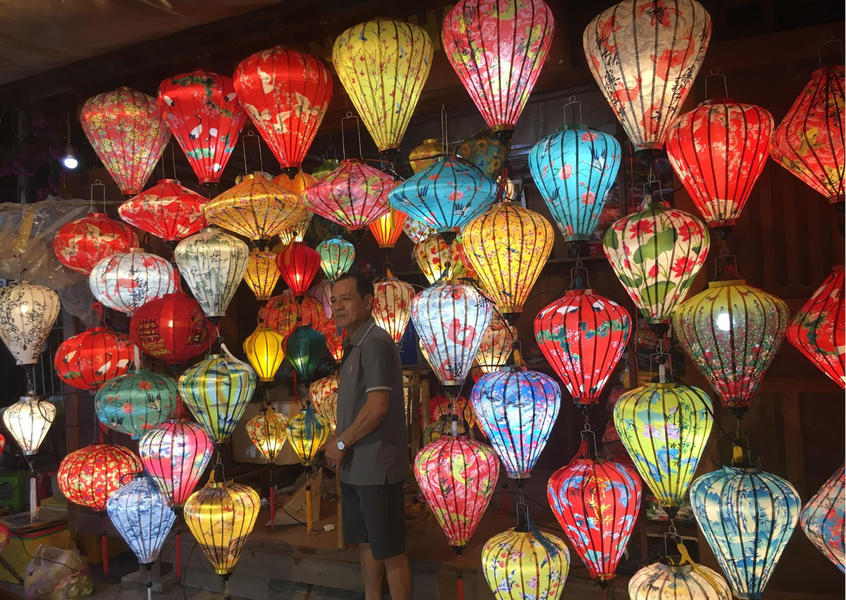
10. Silk Lanterns from Hội An
Hội An’s Ancient Town glows every night with hundreds of silk lanterns in every color: round, cylindrical, hexagonal, and star-shaped. They’re handmade by local artisans, and the craftsmanship is genuinely high quality. They pack flat and travel well, making them one of the most visually striking souvenirs you can bring home.
- Price: $3–$15 each
- Best places to buy: Hội An’s lantern workshops on Trần Phú Street, Hội An Night Market
- Pro tip: You should buy directly from the workshops rather than street stalls because the fabric quality of items in the workshops is better and artisans are happy to customize colors and shapes.
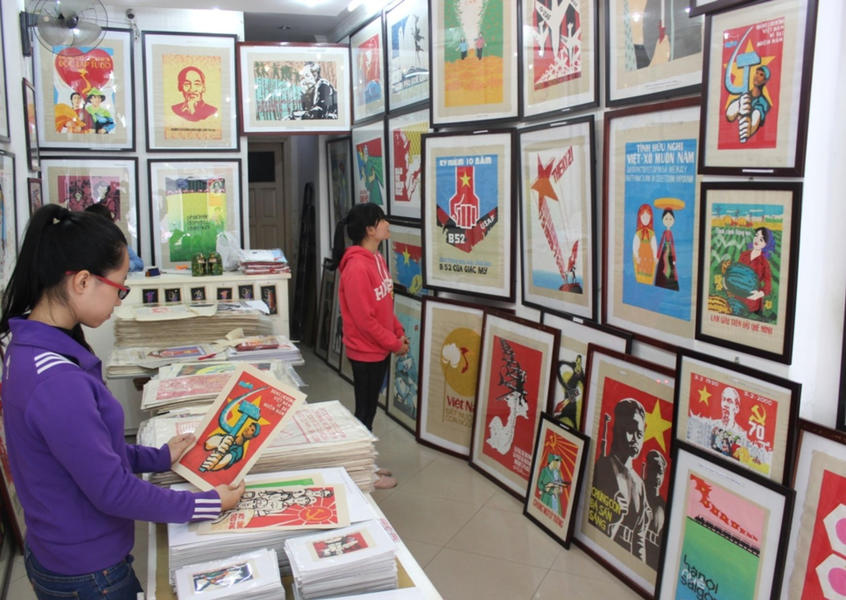
11. Propaganda Art Prints
Hanoi’s collection of original propaganda posters from the 20th century is a fascinating window into Vietnamese political history. With bold graphic design, vivid colors, and patriotic imagery, they’ve become internationally recognized as art objects. Quality reproductions are widely available and make striking wall pieces that invariably spark conversation.
- Price: $5–$30 for prints; $50–$500+ for originals
- Best places to buy: Galleries and poster shops in Hanoi’s Old Quarter, Hang Gai Street
- Pro tip: For originals, visit established galleries and ask for provenance. Reproductions are clearly labeled and perfectly acceptable.
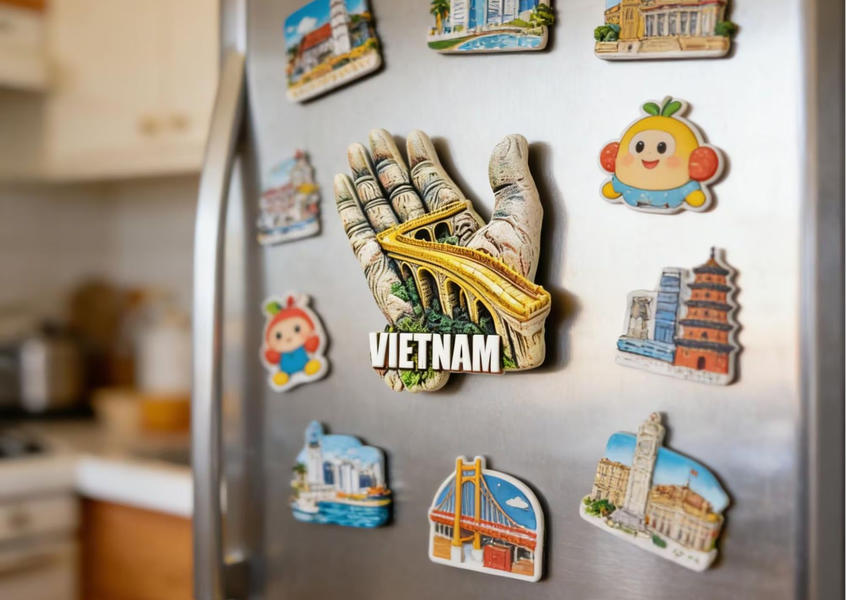
12. Vietnamese Enamel Fridge Magnets
Fridge magnets might sound like the most generic souvenir imaginable. However, Vietnam’s enamel pin magnets are genuinely different. Local designers have elevated the format into something collectible: hard enamel pieces featuring iconic Vietnamese imagery like the non la girl on a vespa, a steaming bowl of phở, a phin coffee glass, the Temple of Literature, Saigon Notre-Dame Cathedral, and the classic bánh mì.
The craftsmanship is noticeably higher than the plastic magnets flooding most tourist markets. The colors are vivid, the details are sharp, and the designs feel authentically Vietnamese rather than generic “Asia souvenir” aesthetic. Brands like Saigonir produce licensed, locally designed collections that are worth seeking out specifically.
- Price: VND 50,000–150,000 (~$2–$6) per piece; sets available
- Best places to buy: Saigonir stores in Ho Chi Minh City, souvenir shops in Hanoi’s Old Quarter, Hội An boutique gift shops, airport retail
- Pro tip: Stick to locally designed brands rather than generic market stalls. Look for hard enamel (smooth, glossy surface) over soft enamel (slightly recessed, less durable) for pieces that last.
Cultural Icons
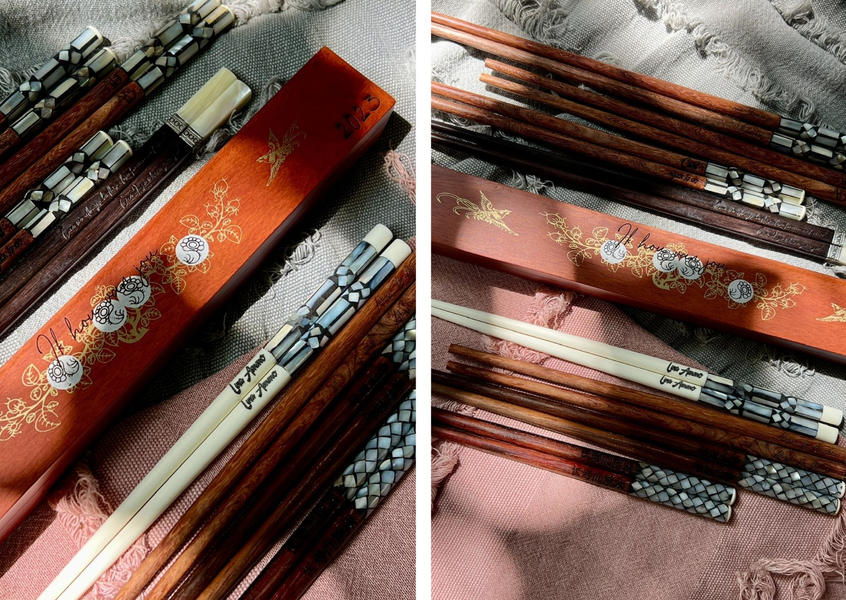
13. Vietnamese Chopsticks (Artisanal)
Mass-produced chopsticks are forgettable. Artisanal Vietnamese chopsticks, which are made from rosewood, bamboo, or lacquered hardwood and sometimes inlaid with mother-of-pearl, are genuinely beautiful objects that elevate a meal. They’re lightweight, affordable, and something people actually use.
- Price: $5–$30 per pair (decorative sets)
- Best places to buy: Craft shops in Hội An, Hanoi Old Quarter gift shops
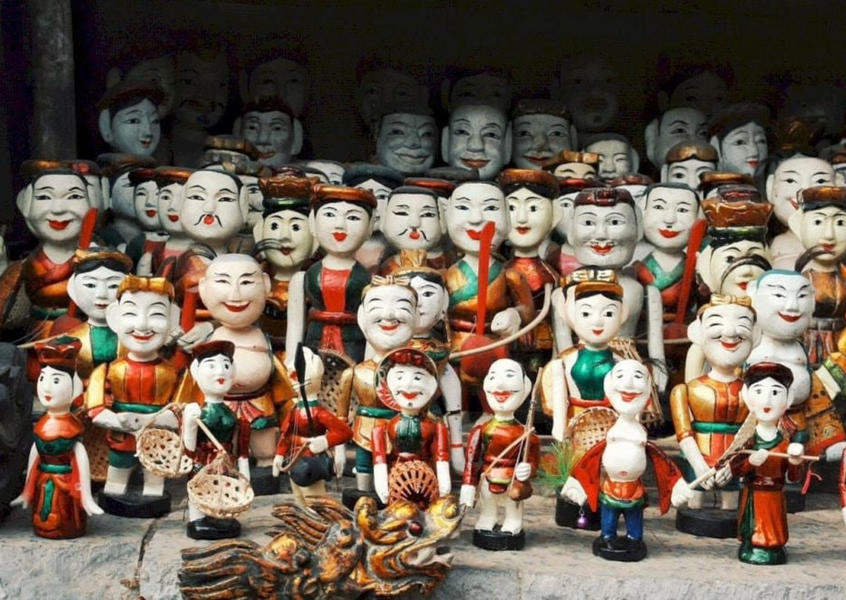
14. Water Puppet Art & Figurines
Vietnamese water puppetry (múa rối nước) is a 1,000-year-old art form unique to the Red River Delta. The carved wooden puppets, dragons, farmers, and fish are used in performances that tell stories from Vietnamese folklore. Miniature versions make unique, culturally meaningful gifts that few travelers think to buy.
- Price: $10–$50 for quality hand-carved pieces
- Best places to buy: Souvenir shops near the Thăng Long Water Puppet Theatre in Hanoi
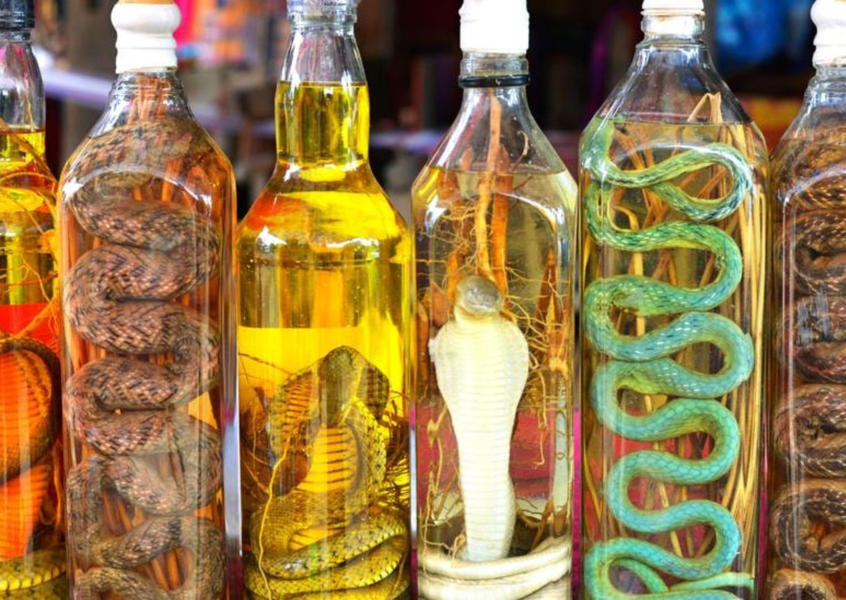
15. Snake Wine (Rượu Rắn)
Snake wine is not for everyone, but it’s undeniably memorable. Rice wine infused with whole cobras or scorpions is a genuine Vietnamese tradition, believed to have medicinal and energizing properties. It’s the ultimate conversation-piece souvenir. Just check customs regulations for your country before packing it.
- Price: $15–$60 depending on bottle size and ingredients
- Best places to buy: Specialty liquor shops, some traditional medicine markets
- Pro tip: Because this is a polarizing gift, it’s better to know your audience before buying.
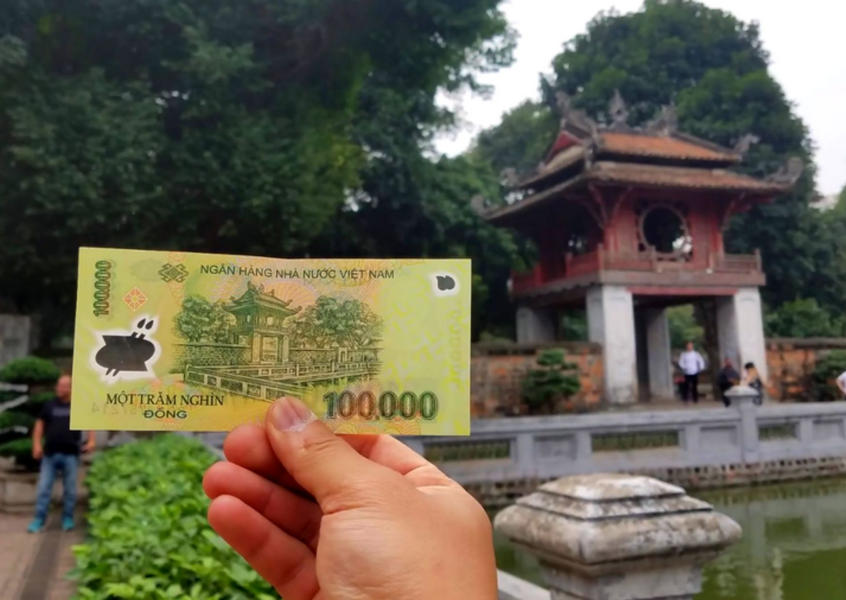
16. Vietnamese Dong (Currency) Framed Set
A framed collection of Vietnamese banknotes makes a surprisingly elegant display piece. Vietnamese currency features beautiful illustrations of natural landmarks, cultural sites, and historical figures. It’s essentially miniature artwork. It’s also one of the most affordable souvenir options that carries genuine cultural weight.
- Price: $5–$15 for a set at souvenir shops
- Best places to buy: Old Quarter souvenir shops, airport gift shops
Best Market and Shopping District by City
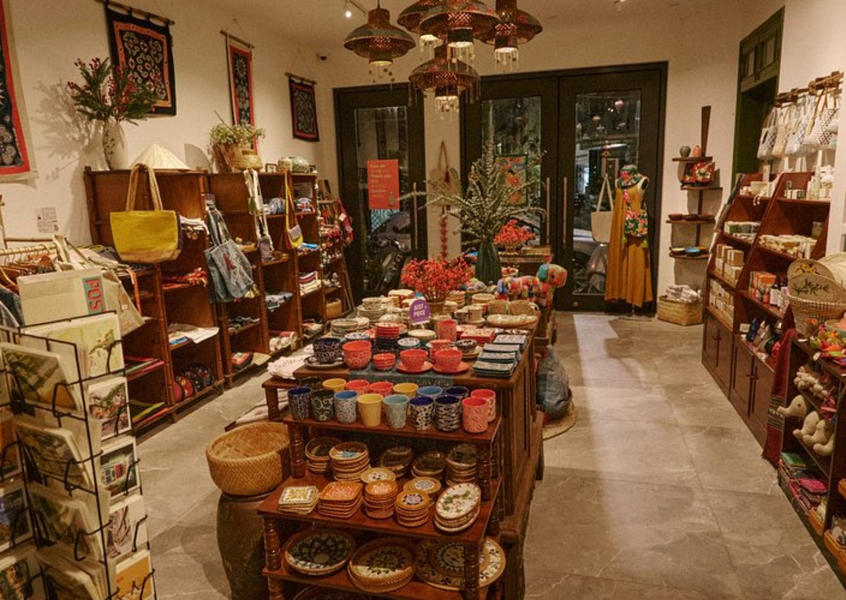
Vietnam is a long country, stretching 1,650 km from north to south, and what you find in Hanoi’s Old Quarter is rarely the same as what lines the shelves in Hoi An or Ho Chi Minh City. Each region has its own craft traditions, its own specialty ingredients, and its own market culture. Knowing where to shop is just as important as knowing what to buy.
Here’s a city-by-city breakdown of the best spots, based on what our DMC team recommends to travelers every single day.
| City | Best for | Key markets/streets |
| Hanoi | Lacquerware, silk, ceramics, coffee, propaganda prints | Hàng Gai Street, Đồng Xuân Market, Old Quarter |
| Hội An | Silk lanterns, custom tailoring, ceramics | Ancient Town, Trần Phú Street, Night Market |
| Ho Chi Minh City | Wide variety, food souvenirs, modern goods | Bến Thành Market, Bình Tây Market, Lê Công Kiều antique street |
| Sapa | Ethnic textiles, tribal crafts | Love Market, Bắc Hà Weekend Market |
| Đà Lạt | Tea, dried fruits, flower products | Đà Lạt Market |
| Huế | Conical hats, royal-influenced crafts | Đông Ba Market |
Smart Shopping Tips
A stall in the tourist center and a workshop two streets behind it might sell the same product at prices that differ by 300%. Before you open your wallet, here are the ground rules our guides give every traveler on day one of their tour.
- Avoid tourist traps without missing out: The most tourist-heavy stalls (especially in Ben Thanh and around major temples) often sell mass-produced goods at marked-up prices. Walk one or two streets behind the main drag, and quality goes up while prices drop.
- Bargaining is expected, but be respectful: In traditional markets, starting at 50–60% of the asking price is normal. In craft workshops and established shops, prices are usually fixed and fair. Read the context.
- Ask about origin: Authentic ethnic minority textiles feel heavier and show slight irregularities from handweaving. Ask the seller which community made the item. If they can’t tell you, the piece likely isn’t authentic.
- Buy early in your trip: If you fall in love with something in Hội An, don’t assume you’ll find it in Ho Chi Minh City. Vietnam’s regional specialties really are regional.
- Consider the weight: Lacquerware, ceramics, and bottled goods can be heavy. Build your souvenir strategy around what you’re willing to carry or ship items home from major cities.
Quick Answers: What tourists ask most about Vietnam souvenirs
What is the most popular souvenir from Vietnam?
Vietnamese coffee (with a phin filter) is consistently the most-loved souvenir. It’s lightweight, affordable, deeply tied to local culture, and something people can enjoy long after returning home. Silk lanterns from Hoi An and non la (conical hats) are iconic visual souvenirs.
What is unique to buy in Vietnam?
Lacquerware, hand-embroidered textiles from ethnic minority communities, propaganda art prints from Hanoi, and single-origin Vietnamese coffee are all genuinely unique to Vietnam. You won’t find them authentically replicated anywhere else.
How much should I budget for souvenirs in Vietnam?
A typical souvenir budget of $50–$100 USD goes a long way. Many meaningful items (coffee, spices, and silk scarves) cost $5–$20 each. Higher-end lacquerware or custom-tailored clothing in Hoi An can run $50–$200.
Where is the best place to buy souvenirs in Vietnam?
For variety: Ben Thanh Market (Ho Chi Minh City) and Dong Xuan Market (Hanoi). For authentic handmade goods: Hoi An’s artisan workshops, Bat Trang Ceramic Village near Hanoi, and ethnic minority markets in Sapa.
The best souvenirs from Vietnam aren’t just objects; they’re proof that you were somewhere real. That you walked through a village where Hmong women still dye fabric by hand with indigo. That you watched a craftsman apply the 30th layer of lacquer to a bowl he started three weeks ago. That you drank coffee so good it made you rethink everything you knew about the drink.
Planning a Vietnam trip for your clients? Viet Dan Travel offers tailor-made B2B tour packages across Vietnam. Our team handles everything from hotel contracting to cultural experiences, including curated shopping experiences that connect travelers with genuine Vietnamese craftsmanship. Contact our team for a custom Vietnam itinerary; our experts are willing to support you at any time!