
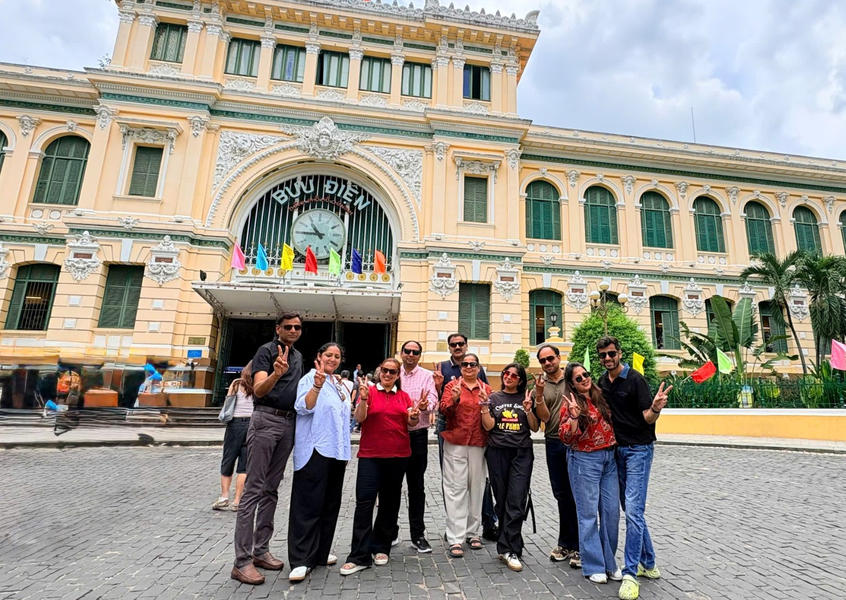
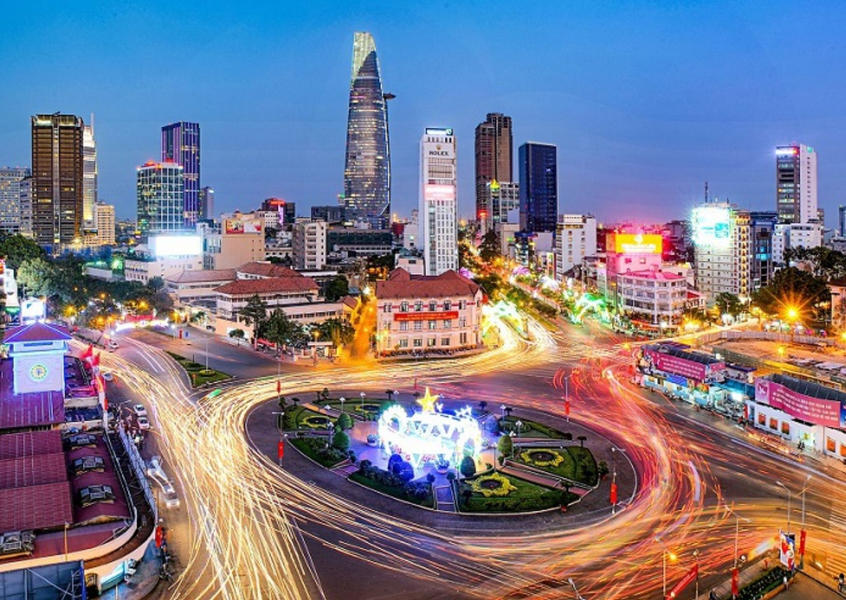
Ho Chi Minh City (Saigon) is a city that moves at its own extraordinary pace. With nearly 10 million residents, a skyline stitched together from French-colonial buildings and gleaming glass towers, and a street food scene that draws food journalists from around the world, this is one of Southeast Asia’s most layered destinations.
In this guide, Viet Dan Travel provides a comprehensive 3-day Ho Chi Minh itinerary, from traffic, opening hours, and heat to the spontaneous magic that happens when you leave a little room to get delightfully lost.
1. Is 3 days enough for Ho Chi Minh City?
It is fair to say that three days is a well-balanced duration for a first visit. It covers the core historic sites in District 1, one major day trip (Cu Chi Tunnels is the most popular choice), and the Mekong Delta. If you want to add Vung Tau Beach or deeper Mekong exploration, plan for 4–5 days total. Many travelers who stay 3 days say afterward they wished they had stayed longer. Nobody says they had nothing to do.
That said, the honest answer depends on what kind of traveler you are. If you move quickly, don’t linger over meals, and are comfortable making decisions on the fly, three days will feel full but manageable. If you prefer to slow down, sitting in a café for an hour watching the city go by, wandering down an alley because it looked interesting, or spending an extra 30 minutes at the War Remnants Museum because you weren’t ready to leave, then three days will feel slightly rushed by the end, and you will almost certainly book an extra night once you arrive.
Ho Chi Minh City has a specific quality that most travelers don’t anticipate: it rewards time spent doing nothing in particular. The city’s real character lives in its street-level texture. For example, the woman selling bánh mì from a cart she’s pushed to the same corner for 20 years, the mechanic shop that has spilled out onto the pavement, the narrow alley where four families share a courtyard, and someone is always cooking something. None of this appears in a Day 1 / Day 2 / Day 3 schedule, and yet it tends to be what people remember most. Three days gives you just enough time to finish the structured itinerary and still have one spontaneous afternoon where you put the map away.
2. Ho Chi Minh 3-Day Itinerary
As a reliable Vietnam DMC, the team at Viet Dan Travel has helped hundreds of international visitors build their itineraries from the ground up. This guide reflects what actually works in practice — accounting for traffic, opening hours, heat, and the spontaneous moments that happen when you leave a little room to wander.
At a glance:
- Best duration: 3 full days (arriving Day 1 morning, departing Day 4 morning)
- Best base: District 1 or District 3 – Walking distance to key sites
- Best season: November – April (dry season)
- Daily budget: $30–50 (budget) / $60–100 (mid-range) / $120–200+ (comfort)
2.1. Day 1: Saigon’s Historic Heart — A District 1 Deep Dive
Your first morning in Ho Chi Minh City sets the emotional tone for everything that follows. Starting before 8 AM, District 1 transforms dramatically between 7 AM and 10 AM, shifting from a quiet, mist-touched city waking up to a kinetic blur of motorbikes, coffee queues, and tour groups. Get ahead of it.
7:00 AM — Breakfast: Bánh Mì or Phở on the Street
Start with a proper Vietnamese breakfast. A bowl of Phở Bò (beef noodle soup) from a street vendor near Pham Ngu Lao Street costs around 30,000–50,000 VND (~$1.20–$2). If you prefer something quicker, Bánh Mì Huynh Hoa on Le Thi Rieng Street is famous citywide for its generously stuffed baguettes. Eating where locals eat at 7 AM is one of those unrepeatable Saigon experiences that no tour package can replicate.
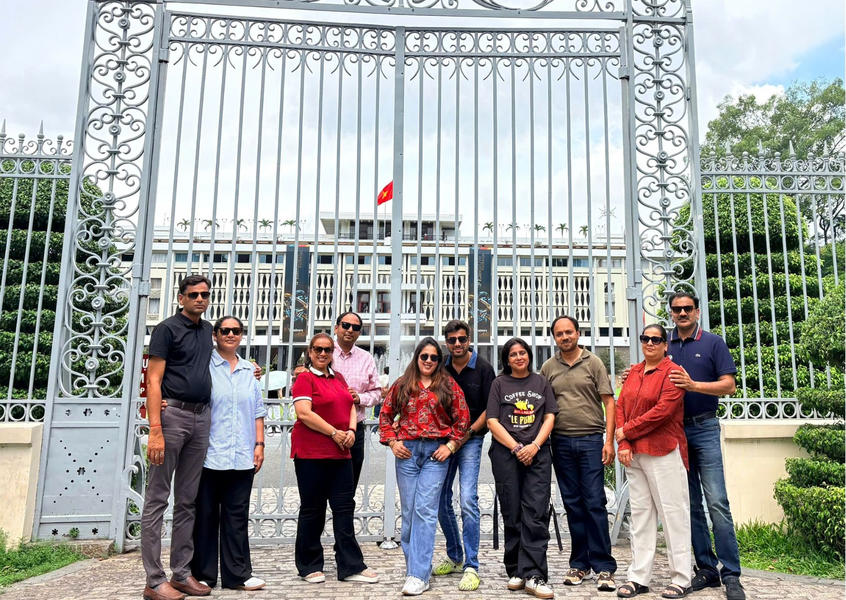
8:30 AM — Reunification Palace (Independence Palace)
This is the building where South Vietnam’s history effectively ended on April 30, 1975, when North Vietnamese tanks crashed through its gates. The palace is astonishingly well-preserved — you walk through the war rooms, the rooftop helipad, and the basement communications bunker exactly as they were left. Budget 60–90 minutes. Entry costs 40,000 VND (~$1.60). Opens at 7:30 AM.
10:15 AM — War Remnants Museum
The most visited museum in Ho Chi Minh City, and it demands serious emotional preparation. The exhibits document the Vietnam War from the Vietnamese perspective — photographs, captured weaponry, and the sobering Agent Orange gallery. Allow 90 minutes. Entry is 40,000 VND, and it opens at 7:30 AM. The museum sits approximately 600 meters from the Reunification Palace — easily walkable through tree-lined colonial streets.
12:00 PM — Lunch: Cơm Tấm (Broken Rice)
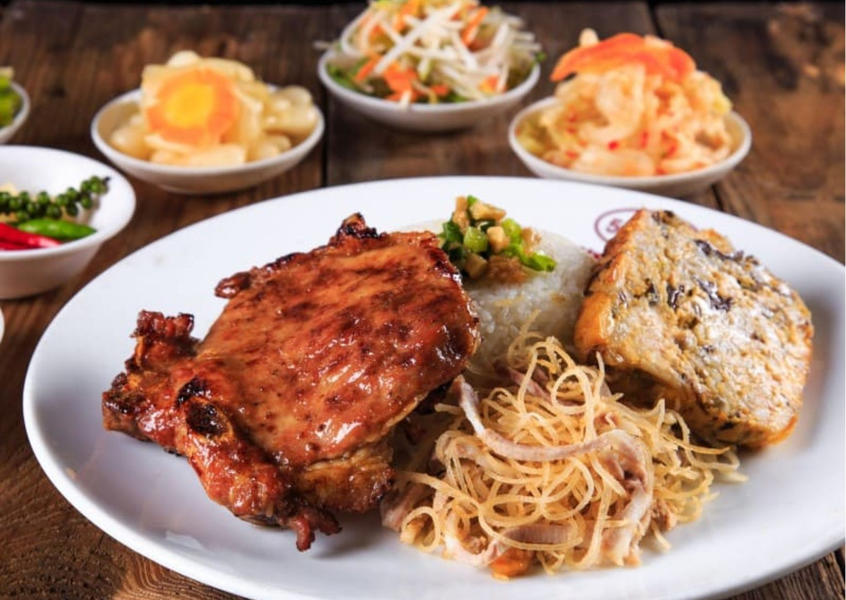
Cơm tấm is Saigon’s signature lunch dish — broken-grain rice served with grilled pork ribs (sườn nướng), a fried egg, pickled vegetables, and fish sauce. It costs around 50,000 VND and is deeply local. Walk two blocks south from the museums and avoid the tourist restaurants. Ask any local where they eat — this is always the right approach in Vietnam.
1:30 PM — Notre Dame Cathedral + Saigon Central Post Office
These two landmarks sit 50 meters apart on Paris Commune Square. The cathedral (built 1863–1880) has iconic red-brick twin spires that dominate the skyline. Directly opposite is the Saigon Central Post Office — a functioning post office inside an 1886 hall attributed to Gustave Eiffel, with magnificent vaulted ceilings and a painted map of old Saigon on the wall. Buy a postcard and mail it home. The experience of writing a postcard in a beautiful 19th-century postal hall is more memorable than it sounds.
2:30 PM — Ben Thanh Market + Surrounding Streets
Ben Thanh Market (Chợ Bến Thành), built in 1914, is touristy in the best way — a covered market selling lacquerware, silk, coffee, dried fruits, and street food. Prices are negotiable; start at 60% of the asking price. The streets surrounding the market, especially Phan Boi Chau, have better prices and a more authentic local feel. Budget about one hour.
4:30 PM — Jade Emperor Pagoda (Ngọc Hoàng Pagoda)
This is the most atmospheric temple in Ho Chi Minh City, and it tends to be missed on shorter itineraries. Built by the Chinese Cantonese community in 1909, its interior is a dense, incense-filled world of intricate carved deities, lotus ponds with resident turtles, and flickering lanterns. Barack Obama visited here in 2016. It’s free to enter. Take a Grab motorbike (~25,000 VND) from Ben Thanh — about 10 minutes.
6:00 PM — Sunset at Saigon Skydeck (Bitexco Financial Tower)
The 49th-floor observation deck of the Bitexco Financial Tower offers the best panoramic view of Ho Chi Minh City — the Saigon River curling around District 1, and the city lights coming on as the sky turns from orange to purple. Entry is 200,000 VND (~$8). Worth it for orientation and the photographs.
8:00 PM — Dinner + Bui Vien Walking Street
Bui Vien Street is Ho Chi Minh City’s famous backpacker street — neon lights, live music spilling from every bar, cheap beer at 10,000 VND, and the full international energy of budget travelers. It is chaotic and loud and definitely not “authentic Vietnam” — but it is authentic Saigon nightlife, and that is its own entirely valid thing. End your first day here with a cold Bia Saigon.
2.2. Day 2: Cu Chi Tunnels + Cao Dai Temple — Full-Day Excursion
Day 2 of your 3-day Ho Chi Minh itinerary takes you out of the city to two of the most remarkable sites in Southern Vietnam. The Cu Chi Tunnels (Địa đạo Củ Chi) represent one of the most extraordinary feats of wartime engineering in modern history. The Cao Dai Temple at Tay Ninh is a genuinely one-of-a-kind religious experience—a uniquely Vietnamese syncretic religion whose pantheon includes Victor Hugo, Sun Yat-sen, and the Buddha, housed in a temple that looks like no other building on earth.
Most tour operators combine these two sites into a single day trip. Departing from Ho Chi Minh City at around 7:30 AM, you can reach the Cao Dai Temple by 9:30 AM in time for the noon ceremony, then continue to Cu Chi for the afternoon.
What to know about the Cu Chi Tunnels:
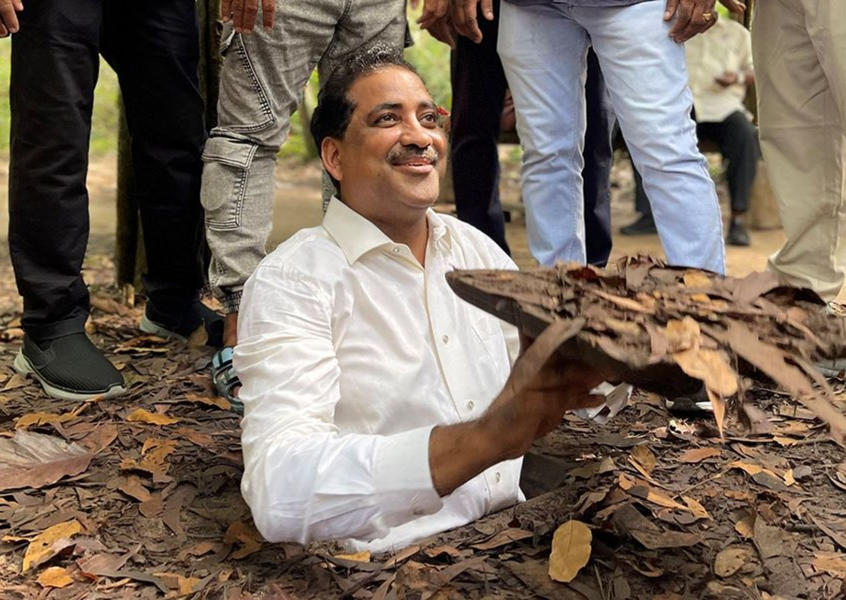
The Cu Chi Tunnel network stretches over 250 kilometers beneath the jungle northwest of Saigon. During the American War (1955–1975), Viet Cong guerrillas used these hand-dug tunnels to move troops, store supplies, house field hospitals, and launch attacks, including on Saigon itself during the 1968 Tet Offensive. There are two tunnel complexes open to visitors: Ben Dinh (smaller, closer, more visited by group tours) and Ben Duoc (larger, more authentic, deeper into the jungle). Viet Dan Travel strongly recommends Ben Duoc for travelers who want a less crowded, more immersive experience. Most group tours default to Ben Dinh, so Ben Duoc gives you something genuinely different.
The Day Trip Schedule
7:30 AM — Depart Ho Chi Minh City. Bring water, sunscreen, and shoes you don’t mind getting dirty.
9:30 AM — Arrive at Cao Dai Holy See Temple, Tay Ninh. This is the headquarters of Caodaism, founded in 1926. The temple is an extraordinary building featuring pink, blue, yellow, and white, with dragons spiraling up its columns and an all-seeing Divine Eye above the altar. The 12 PM noon ceremony is the most accessible for visitors: worshippers in white, blue, and red robes file in and perform ritual prayers. Respectful viewing from the upper gallery is permitted.
12:00 PM — Lunch near Tay Ninh. Try Bánh tráng trộn (rice paper salad), a Tay Ninh specialty, cheap and genuinely delicious at roadside restaurants.
1:30 PM — Arrive at Cu Chi Tunnels (Ben Duoc complex). The visit begins with a short orientation film, and then you walk through the jungle discovering trapdoors, booby trap demonstrations, a firing range (optional), and the tunnel sections themselves. A guide will explain the tunnel geography, the daily life of tunnel fighters, and the remarkable reality that people were born and died underground here. Plan 2 hours.
4:00 PM — Drive back to Ho Chi Minh City. Evening traffic is a dense factor.
7:00 PM — Saigon River Dinner Cruise. After an intense historical day, a relaxed dinner cruise on the Saigon River provides a beautiful contrast — city lights reflected in the water, live Vietnamese music, and a set menu of Southern Vietnamese dishes. Several operators run evening cruises from Bạch Đằng Wharf (Pier Bach Dang). Book in advance for weekend departures.
Important note on the tunnels: Visitors with claustrophobia or significant back problems should skip the tunnel-crawling section; the tunnels are tight (approximately 60–80 cm wide) and low. The above-ground sections of the site are equally interesting, and you do not need to enter the tunnels to have a meaningful visit.
2.3. Day 3: Mekong Delta Immersion
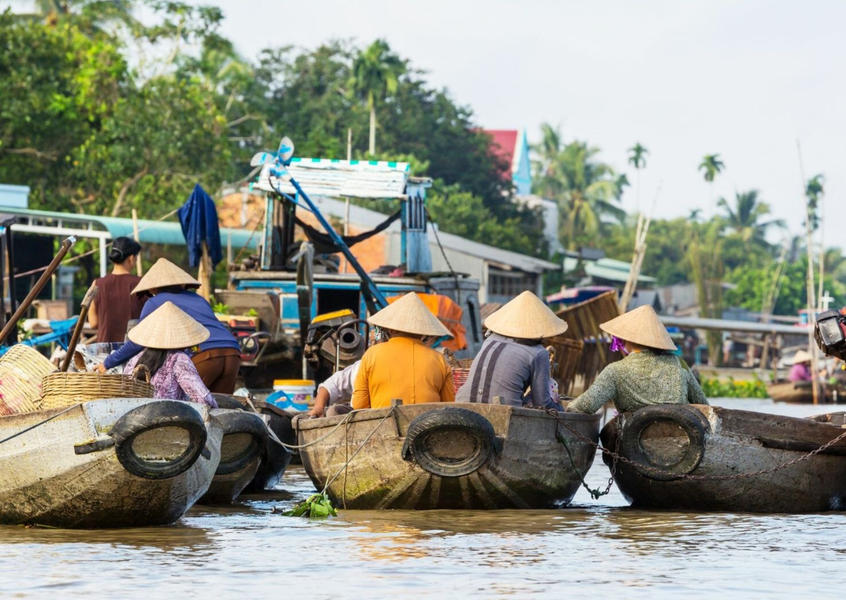
The Mekong Delta (Đồng Bằng Sông Cửu Long) is one of the world’s great river systems. This area covers a 39,000-square-kilometer network of channels, islands, and floating villages that produces more than half of Vietnam’s rice and much of its tropical fruit. For the final day of your 3 days in Ho Chi Minh, a Mekong Delta day trip represents the most dramatic shift in landscape and pace you can experience without leaving the region.
The closest access point is My Tho (Tiền Giang Province), about 70km south — roughly 1.5 hours by car. From there, boats take you onto the delta’s waterways. For a deeper experience, many visitors continue to Ben Tre Province, known as the “land of coconuts,” where small sampan boats thread through canals lined with coconut palms and cacao trees.
The Day Trip Schedule
7:00 AM — Depart Ho Chi Minh City. An early departure maximizes time on the water and avoids afternoon heat.
8:30 AM — Board boats at My Tho, Tien Giang Province. Local wooden boats navigate through the four main branches of the Mekong River to the river islands. Unicorn Island (Thoi Son) is the most popular first stop — fruit orchards, honey bee farms, and coconut candy workshops. The experience of drifting silently through narrow waterways lined with elephant-ear plants and papaya trees, hearing only the dip of paddles, is profoundly different from the Ho Chi Minh City experience.
10:30 AM — Transfer to a sampan (traditional flat-bottomed boat) for the narrower canal sections. This is the quintessential Mekong Delta image — a hand-paddled boat barely wider than the canal, overarching palm fronds, a local boatwoman in a conical hat. You are 2 hours from a 10-million-person city, and it feels like another world entirely.
12:00 PM — Lunch at a riverside restaurant or family home. The Delta’s specialties: elephant fish (cá tai tượng) deep-fried whole and served with rice paper for wrapping, fresh herbs, and star fruit; caramelized clay-pot fish (cá kho tộ); fresh coconut water straight from the shell. A typical set lunch costs 150,000–200,000 VND per person (~$6–8).
2:00 PM — Ben Tre Province: Coconut Candy Workshop. Ben Tre produces Vietnam’s finest coconut products — candy, oil, and rice wine. At a small family workshop, you see the entire production process by hand, taste samples, and pick up gifts. Ben Tre has a noticeably more genuine atmosphere than the My Tho tourist circuit.
3:30 PM — Depart for Ho Chi Minh City. Allow 2 hours for the return journey in afternoon traffic.
7:00 PM — Final Dinner: Southern Vietnamese cuisine. End your Ho Chi Minh 3 day itinerary at one of the city’s excellent restaurants. Cuc Gach Quan in District 3 serves traditional family-style recipes in a beautiful colonial villa — Anthony Bourdain visited here and called it one of his favorite meals in Vietnam. Nha Hang Ngon on Nam Ky Khoi Nghia offers a broad survey of Vietnamese regional dishes in an atmospheric French-villa courtyard. Book in advance for weekend evenings.
3. Practical information: Planning Your Ho Chi Minh 3 Days 2 Nights Itinerary
3.1. How to Get Around Ho Chi Minh City
The most practical transport for tourists within the city is Grab, which is the Southeast Asian equivalent of Uber. A Grab car from District 1 to the Jade Emperor Pagoda costs approximately 40,000–60,000 VND. Grab motorbikes (GrabBike) are even cheaper and faster in traffic. The Ho Chi Minh City Metro Line 1 opened in late 2024, connecting Ben Thanh Station to Suoi Tien in District 9, which is very useful if your hotel is near the line, but most tourist sites remain concentrated in District 1.
For day trips to Cu Chi Tunnels, Cao Dai Temple, and the Mekong Delta, a private car with a licensed English-speaking guide provides the best experience. A quality DMC can supply historical and cultural context beyond what any app-based tour offers.
3.2. Where to Stay
For this itinerary, base yourself in District 1. Everything on Day 1 is walkable or a short Grab ride away, and day trip departures are logistically simple from here.
- Budget travelers: Pham Ngu Lao Street area, hostels from $8–20/night
- Mid-range: District 1 center near Ben Thanh, boutique hotels from $35–80/night
- Comfort: Dong Khoi Street area, $90–180/night
- Luxury: Park Hyatt, Rex Hotel, or Caravelle Hotel, $180–400+/night
The Rex Hotel and the Caravelle Hotel are historic landmarks. Both of them were used by journalists and military officers during the Vietnam War, and staying in either is a layered experience beyond mere accommodation.
3.3. What to Eat
Southern Vietnamese cuisine is distinct from Northern (Hanoi) food in its preference for sweetness, abundance of fresh herbs, and liberal use of coconut. During your 3 days in Ho Chi Minh, these are the dishes you must eat:
- Phở Bò: beef noodle soup, best at 7 AM from a street vendor
- Bánh Mì: Vietnamese baguette sandwich, a French-colonial legacy transformed into something entirely its own
- Cơm Tấm: broken rice with grilled pork, Saigon’s quintessential lunch at $1–2
- Bún Bò Huế: spicy beef noodle soup, richer and more complex than phở
- Bánh Xèo: crispy sizzling crepe with shrimp, pork, and bean sprouts, eaten wrapped in lettuce
4. Budget breakdown for 3 days in Ho Chi Minh City
| Item | Budget | Mid-range |
| Accommodation (per night) | $10–20 | $50–100 |
| Food (per day) | $8–15 | $20–40 |
| Cu Chi + Cao Dai Day Trip | $15–20 (group) | $50–80 (private) |
| Mekong Delta Day Trip | $15–25 (group) | $65–90 (private) |
| Museum entries | ~$5 total | ~$5 total |
| Transport / Grab (3 days) | $5–10 | $15–25 |
| Total (3 days) | ~$80–130 | ~$250–450 |
5. FAQs
Is 3 days enough for Ho Chi Minh City?
Yes, three days is a well-balanced duration for a first visit. It covers the core historic sites in District 1, one major day trip (Cu Chi Tunnels is the most popular choice), and the Mekong Delta. If you want to add Vung Tau Beach or deeper Mekong exploration, plan for 4–5 days total. Many travelers who stay 3 days say afterward they wished they had stayed longer. Nobody says they had nothing to do.
Can I combine Cu Chi Tunnels and the Mekong Delta in one day?
It is possible but genuinely exhausting and not recommended. Both are full-day experiences in opposite directions from the city: Cu Chi is northwest, and Mekong is south. Combining them means 5+ hours of driving on top of the sites, leaving almost no time to absorb either one. Tour operators that offer this combination are typically doing a truncated version of both. If you only have 2 days for day trips, the optimal split is Day 2 = Cu Chi + Cao Dai Temple (northwest), Day 3 = Mekong Delta (south).
What is the best time of the year for Ho Chi Minh 3 day itinerary?
The dry season runs November to April, with December to March being the most comfortable with temperatures around 28–32°C, low humidity, and minimal rain. The wet season (May–October) brings heavy afternoon thunderstorms, usually 1–2 hours in the late afternoon. These are manageable but require flexible planning for outdoor activities like the Mekong Delta. February and August are peak travel months; book accommodation and tours well in advance.
How far is Ho Chi Minh City from the Mekong Delta?
The closest Mekong Delta province (Tien Giang / My Tho) is approximately 70km south, about 1.5 hours by car. Ben Tre is slightly further. Can Tho, the largest Mekong Delta city and the base for famous floating markets, is 165km away (~3 hours). For a day trip from Ho Chi Minh City, My Tho and Ben Tre are the standard destinations. Can Tho is better visited as part of a 2-day Mekong extension.
Is Ho Chi Minh City safe for tourists?
Ho Chi Minh City is generally very safe. Violent crime against foreigners is rare. The main risks are petty theft, particularly bag-snatching on motorbikes in busy areas (carry your bag on the side away from traffic), and scams around unofficial taxi services (always use Grab or Vinasun / Mai Linh taxis with meters running). Crossing roads requires confidence: walk slowly and steadily, maintain a predictable pace, and do not stop suddenly. Traffic moves around pedestrians rather than stopping for them.
Do I need a visa for Vietnam?
Many nationalities can enter Vietnam without a visa for stays of up to 45–90 days, depending on your passport. Citizens of the UK, USA, Canada, Australia, Germany, France, and many other countries are included. Check the current regulations at the official Vietnam immigration portal before your trip. An e-Visa ($25 USD) is available for nationalities not covered by visa-free arrangements.