
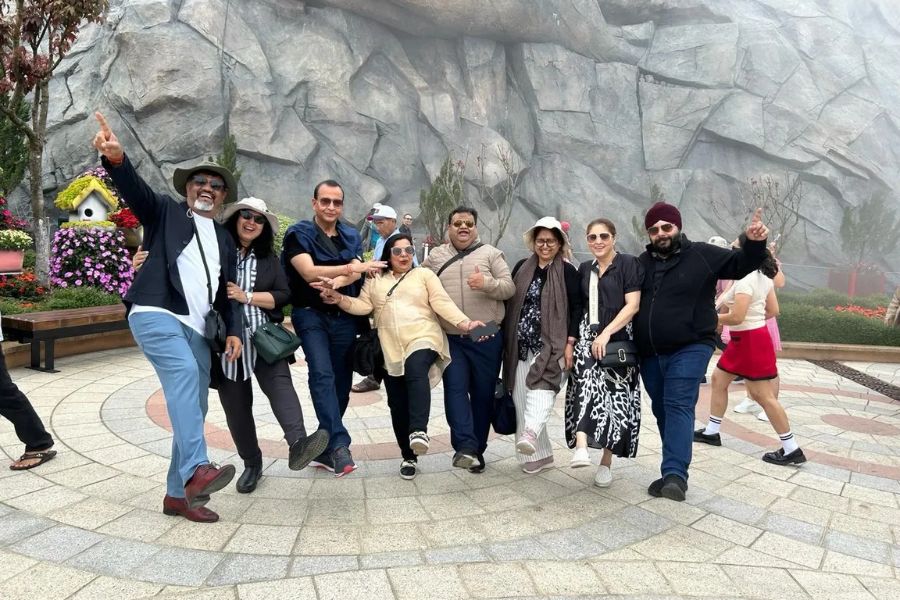
Sapa’s weather can shift from bright sunshine to thick mountain fog within a single afternoon, which is exactly why “when to go” is the first question every travel agent gets from clients planning northern Vietnam. The short answer: March to May and September to November offer the most reliable combination of clear skies, comfortable temperatures, and spectacular rice terrace views.
1. Quick Answer: Sapa by Travel Purpose
| Traveler Goal | Best Months | Why |
| Golden rice terrace photography | Mid-September to early October | Harvest season, terraces turn gold |
| Flooded/mirror-water terrace photography | May to early June | Fields are flooded before rice planting |
| Trekking & hiking | March–May, September–November | Dry trails, cool temperatures |
| Budget-conscious travel | June–August, December–January | Lower demand, better rates |
| Snow or frost experience | Late December–January | Occasional frost, rare snow above 1,500m |
| Group tours / MICE | March–April, October–November | Stable weather reduces itinerary disruption |
2. Sapa Season by Season
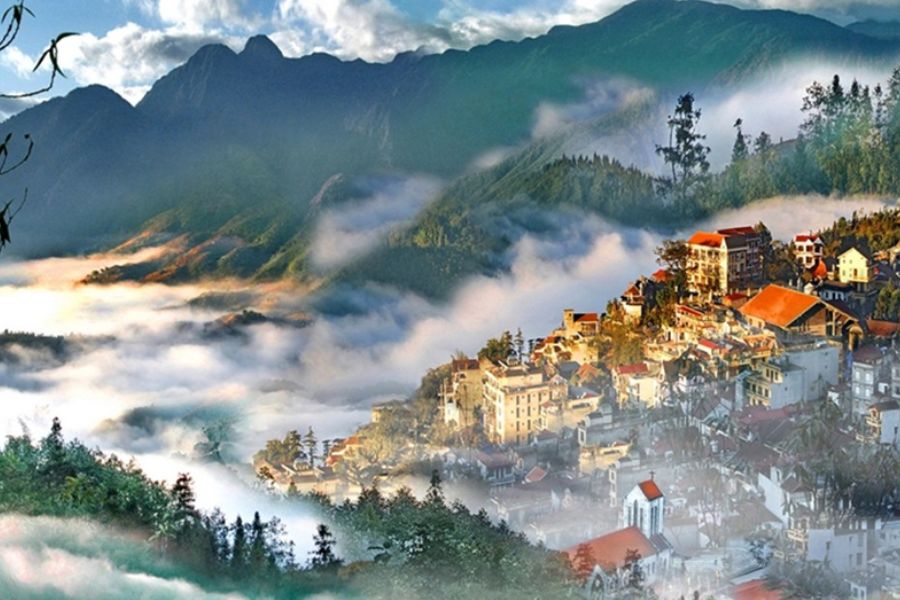
Sapa sits at roughly 1,500 to 1,600 meters above sea level in the Hoàng Liên Sơn range of Lào Cai Province, giving it a subtropical highland climate that is noticeably cooler than lowland Vietnam. The mean annual temperature in Sapa is 15.4°C, with a July maximum of around 29.4°C and a December minimum that can drop to -3.0°C. The coldest months run from December to March, and snow occasionally falls for one to three days during that window. Rainfall is substantial year-round, with the wettest period falling between May and September.
2.1. Spring (February to May)
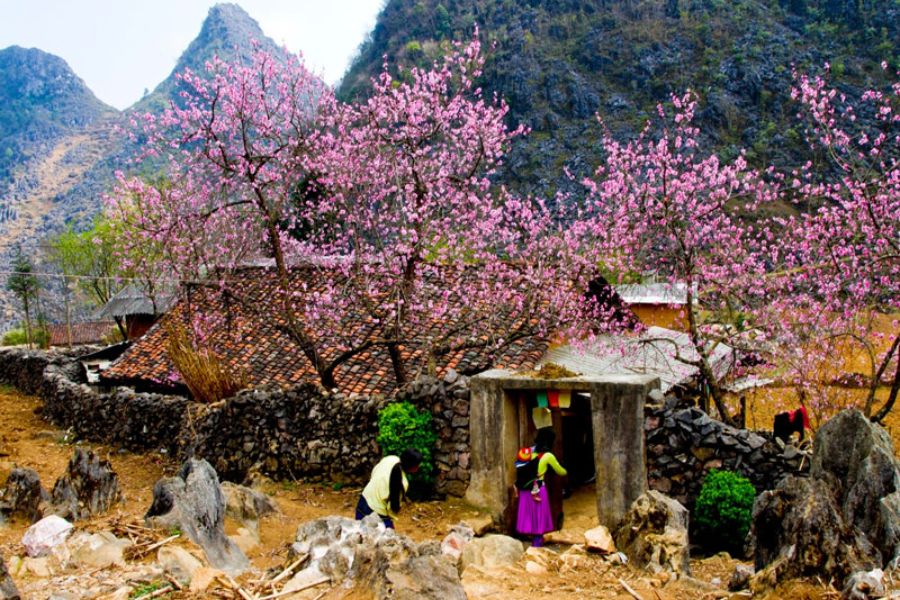
Spring is widely considered Sapa’s most photogenic shoulder season. This period brings blooming flowers across hillsides, valleys, and the town itself, including peach blossom, azalea, and delicate white plum blossom. It also coincides with several ethnic minority festivals; travelers can join the H’mong “Gau Tao” festival and the Giáy people’s Roóng Poọc festival during this time. By April and May, rice fields begin flooding ahead of planting, creating mirror-like reflections that photographers specifically travel to capture.
2.2. Summer/ Rainy Season (June to August)
Summer is Sapa’s warmest and wettest stretch. Sapa has a temperate climate with hot summers and dry winters relative to the rest of the year, though “hot” here still means cool by Vietnamese lowland standards. This is also monsoon season: summer can bring extreme weather such as floods and landslides, so agents should confirm road conditions and have contingency routing in place. July is the wettest single month, averaging about 465mm of rain across roughly 24 rainy days, with June and August close behind at 380–420mm. On the upside, this is also when Vietnamese domestic tourism peaks in June and July, so international group bookings benefit from earlier confirmation of accommodation.
2.3. Autumn (September to November)
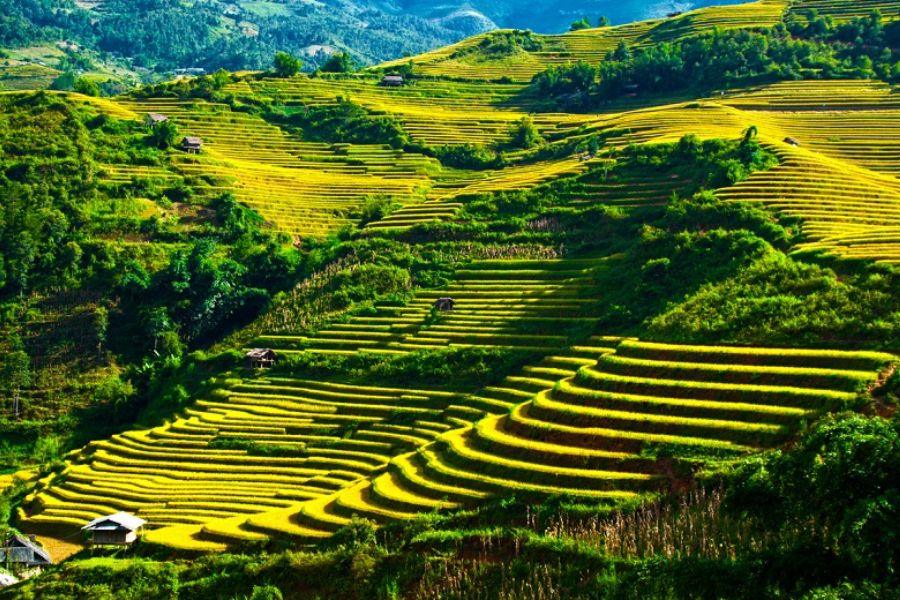
Autumn is the season most competitor content and most tour operators agree is optimal. From mid-September to early October, the terraced fields turn into a radiant golden sea during the rice harvest, and October is generally regarded as the single best month, combining dry weather, comfortable temperatures of roughly 14–19°C, and clear mountain views alongside the tail end of the golden harvest. November follows closely behind for trekking conditions, with even less rainfall.
2.4. Winter (December to January)
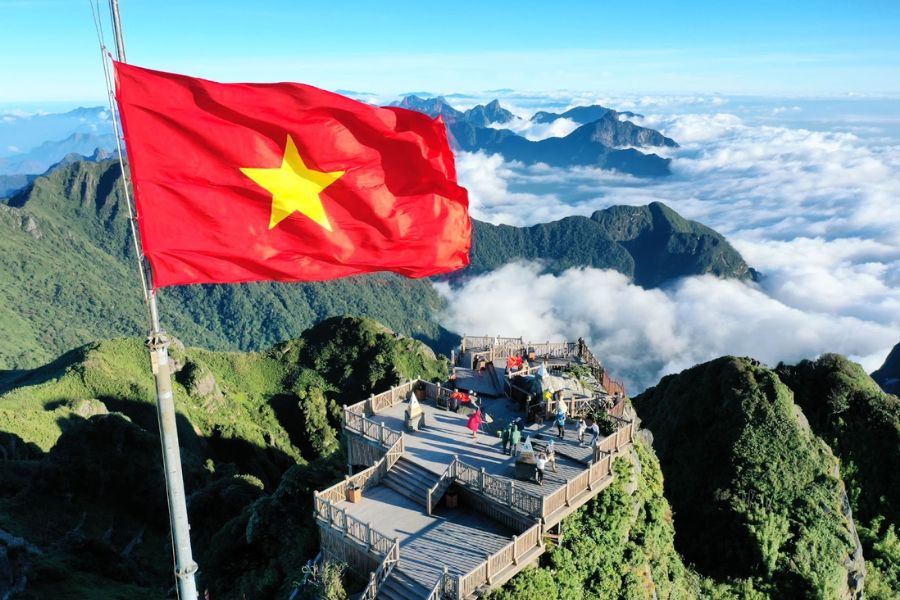
Winter is Sapa’s coldest and quietest season. Frosts are frequent, mist shrouds the area regularly, and the region records an average of 137 foggy days per year. The best spots to visit in winter are Fansipan Mountain and Ham Rong Mountain for high-altitude views, and Sapa’s Stone Church draws visitors for its Christmas lighting and atmosphere. This is the lowest season for crowds but requires the heaviest packing list, therefore, warm layers are essential.
3. Sapa Monthly Climate Reference
| Month | Avg. High | Avg. Low | Rainfall Level | Notes |
| January | ~19°C | ~10°C | Low | Coolest, occasional frost |
| February–April | Rising to mid-20s°C | 10–15°C | Low–moderate | Spring blossoms, festivals |
| May | ~26–27°C | 15–17°C | Rising | Terrace flooding begins |
| June | ~29°C (hottest) | ~22°C | High | Peak rain onset |
| July | ~29°C | ~22°C | Highest (~465mm) | Wettest month |
| August | ~28°C | ~21°C | High | Still monsoon-active |
| September | Mid-20s°C | Mid-teens°C | Moderate, declining | Early harvest begins |
| October | ~19–24°C | 14–19°C | Low | Best overall month |
| November | Upper teens–low 20s°C | Low teens°C | Low | Clear skies, cool nights |
| December | ~19°C | ~6–10°C | Low | Coldest, possible frost |
Note: Figures are historical averages compiled from multiple climate-data sources and should be treated as general guidance rather than exact forecasts; agents should check short-range forecasts closer to departure, especially for group logistics.
4. For Travel Agents: Booking Windows and Operational Considerations
Beyond the “pretty pictures” angle that dominates most Sapa content, three factors matter more to agents structuring itineraries for clients:
Peak-season lead time. September through November and the Tết (Lunar New Year) period in January or February see the highest demand for both accommodation and the Hanoi–Lào Cai overnight train. Booking well in advance is recommended for festival periods like Tết, and the same applies to golden-season October departures for groups above 10 pax.
Monsoon-season contingency planning. Between June and August, mountain roads around Sapa and the broader Lào Cai–Hà Giang corridor can be affected by landslides during heavy rain. Agents should build buffer days into itineraries scheduled in this window, particularly for group and MICE programs where schedule slippage is costly.
Cross-season flexibility for Indian and Middle Eastern source markets. Winter departures (December–January) often suit travelers coming from warmer climates who specifically want a cool-weather, even frosty, experience unavailable elsewhere in their itinerary. This is worth flagging as a selling point rather than a drawback when clients ask about “worst” months.
5. Getting to Sapa
The most popular and scenic route to Sapa is an overnight train from Hanoi to Lào Cai, followed by a taxi or bus to Sapa town, a journey of roughly 5–6 hours by road once combined. For groups flying into Hanoi (Nội Bài International Airport, the primary gateway for most Indian, Middle Eastern, and European source markets), Sapa is typically positioned as a 2–4 day extension either before or after a Hanoi city program, and pairs naturally with a Hạ Long Bay cruise or the Hà Giang Loop for travelers wanting a broader northern Vietnam circuit.
6. What to Pack by Season
Sapa’s temperature can swing more than 10°C between midday sun and evening chill, so packing right by season matters more here than almost anywhere else in Vietnam.
- Spring/Autumn (Mar–May, Sep–Nov): Light layers, a packable rain jacket, comfortable trekking shoes, sunscreen.
- Summer (Jun–Aug): Quick-drying clothes, a light raincoat or compact umbrella, sunscreen, and anti-mosquito spray; waterproof shoes for muddy trails.
- Autumn (Sep–Nov): A light-to-medium jacket, warmer layer for cooler evenings, standard hiking shoes.
- Winter (Dec–Jan): Long-sleeved shirts, sweaters, a proper jacket, and warm accessories like scarves, gloves, and socks, since Sapa in winter is freezing
Year-round: Cash in Vietnamese dong (many village shops don’t take cards), a daypack, and a power bank for full-day excursions.
Whichever season your clients choose, getting the timing right is only half the equation. The other half is having a ground partner who knows how to adapt an itinerary when Sapa’s weather does what mountain weather does. As a trusted Vietnam DMC with over a decade of on-the-ground experience across northern Vietnam, Viet Dan Travel helps travel agencies build Sapa itineraries with realistic timing, weather-smart routing, and reliable local logistics, from group treks through Muong Hoa Valley to seamless Fansipan cable car bookings. Get in touch with our team to request a tailored Sapa itinerary or quote for your next group.
7. Frequently Asked Questions
What is the single best month to visit Sapa?
October is generally considered the single best month, combining dry weather, mild daytime temperatures, and the closing weeks of the golden rice harvest.
When do the Sapa rice terraces look their most dramatic?
Two distinct windows: flooded, mirror-like terraces from roughly April to early June, and golden harvest terraces from mid-September through early October.
Is Sapa cold in winter?
Yes. December through February brings frequent frost and occasional light snow at higher elevations, with nighttime lows sometimes near freezing.
Should groups avoid Sapa during the rainy season?
Not necessarily, but June through August requires contingency planning for road conditions, as heavy monsoon rain can occasionally cause landslides on mountain routes.