
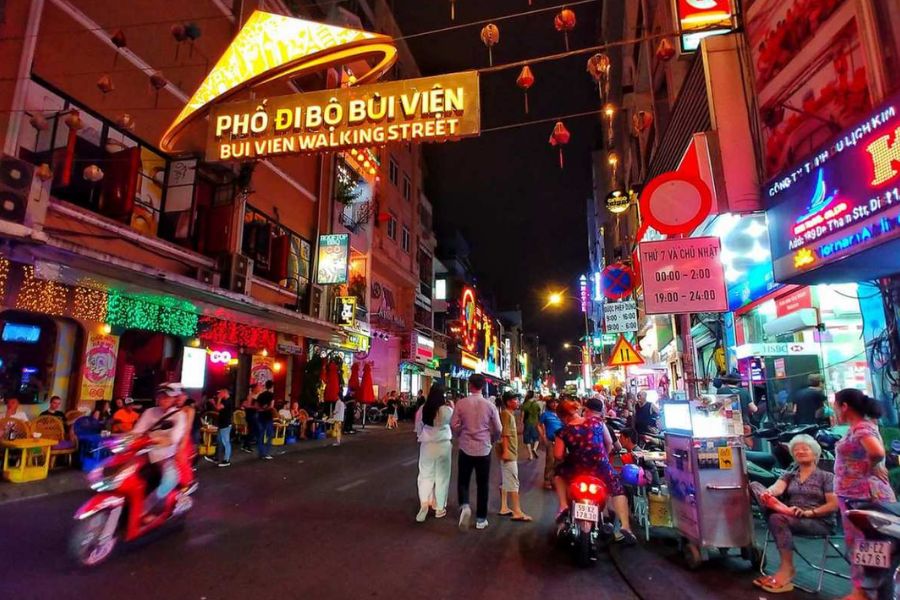
Ho Chi Minh City has two streets widely known as its “walking streets,” and travelers often use the generic term without knowing which one they mean. Nguyen Hue Walking Street functions as the city’s central plaza, connecting the Ho Chi Minh City People’s Committee Building to the Saigon River. Bui Vien Walking Street, by contrast, anchors the Pham Ngu Lao backpacker district and operates as Saigon’s most active nightlife strip. Both streets became official pedestrian-only zones through separate city planning decisions, with Nguyen Hue converted first and Bui Vien following as the second designated walking street in Ho Chi Minh City. Understanding this distinction matters for tour planning, because each street serves a different traveler segment and a different time of day.
1. Nguyen Hue vs. Bui Vien: Quick Comparison
| Feature | Nguyen Hue Walking Street | Bui Vien Walking Street |
| Length | ~900 meters | ~850 meters |
| Pedestrian-only hours | Daily access; fully car-free Sat–Sun nights | Fri–Sat, 7 PM–2 AM only |
| Main appeal | Culture, photography, family-friendly space | Nightlife, bars, backpacker energy |
| Best traveler fit | Families, senior travelers, daytime tours | Young travelers, nightlife seekers |
| Nearby landmarks | Saigon Opera House, Bitexco Tower, Saigon River | Ben Thanh Market, Pham Ngu Lao area |
2. Nguyen Hue Walking Street: Saigon’s Cultural and Photo Hub
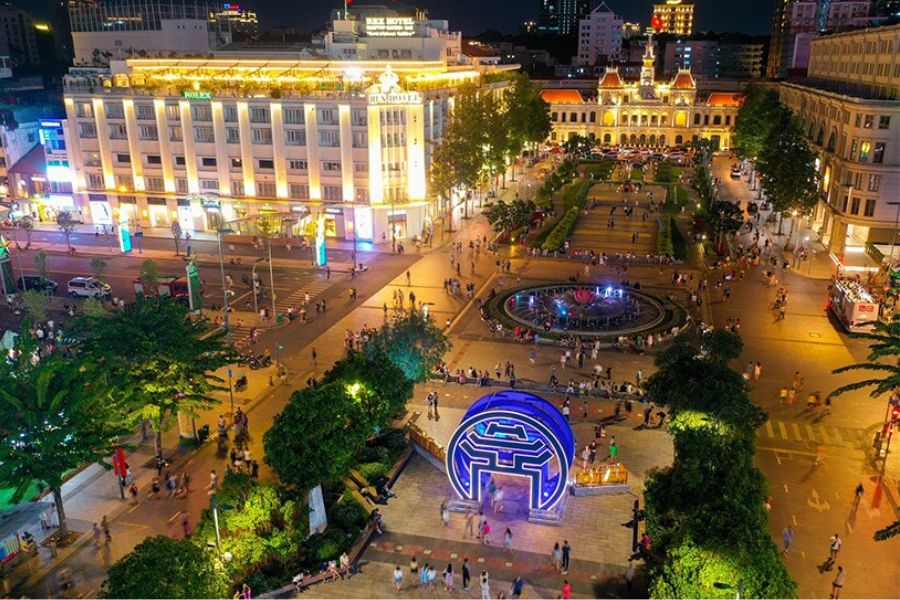
Nguyen Hue Walking Street stretches roughly 900 meters through the heart of District 1, running from the Saigon River to the People’s Committee Building. The street stays open to pedestrians throughout the day, though vehicles are only fully banned on Saturday and Sunday nights. This layout makes it suitable for daytime group visits as well as evening photo stops.
What visitors find here:
- Landscaped walkways, fountains, and shaded seating suited to families and older travelers
- The historic People’s Committee Building and the Ho Chi Minh statue as anchor landmarks
- The 42 Nguyen Hue Cafe Apartments, a converted apartment building filled with rooftop cafés popular for skyline photography
- A steady lineup of street performers, from musicians to dancers, especially on weekend evenings
- Easy walking access to Saigon Opera House, Bitexco Financial Tower, and Bach Dang Wharf
Because Nguyen Hue is open during daylight hours, it works well as a mid-tour stop between other District 1 attractions rather than requiring a separate evening slot.
3. Bui Vien Walking Street: Saigon’s Nightlife and Backpacker Strip
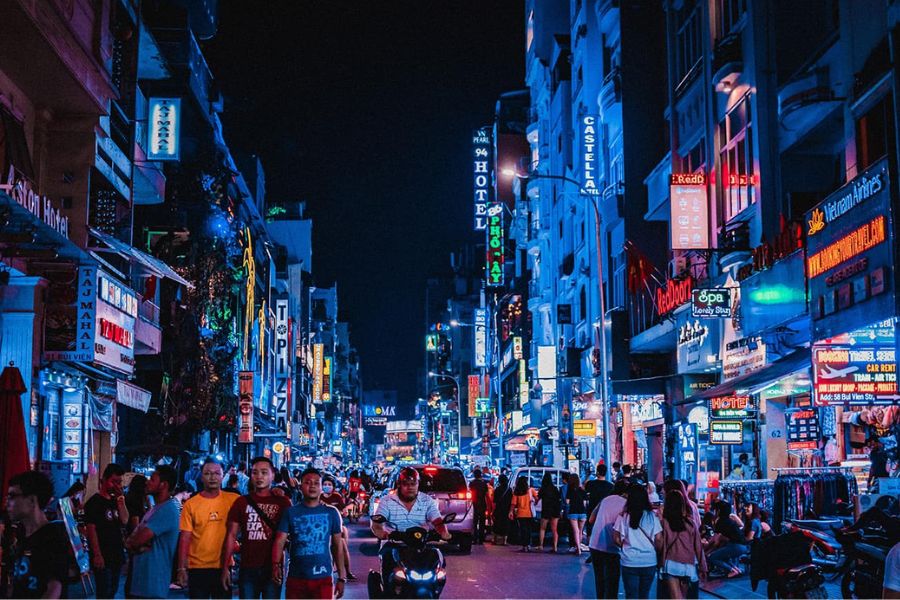
Bui Vien Walking Street runs about 850 meters through the Pham Ngu Lao ward, linking Nguyen Thai Hoc Street to Cong Quynh Street. Unlike Nguyen Hue, Bui Vien only becomes a true pedestrian zone on Friday and Saturday nights from around 7 PM to 2 AM; during the day and on weekdays, it functions as a regular traffic street lined with cafés and budget hotels.
What visitors find here:
- A dense cluster of bars, rooftop lounges, and live-music venues
- Street food stalls serving Vietnamese and Western dishes side by side
- Affordable guesthouses and hostels that make the area a natural base for backpacker itineraries
- A high concentration of international travelers, creating an easy environment for solo travelers to meet others
Bui Vien’s nightlife energy makes it a strong fit for evening free-time slots on group tours, particularly for younger or adventure-focused travelers rather than family groups.
4. Building These Streets Into a Group Itinerary for Indian Travelers
For travel agents and tour operators planning Vietnam packages for Indian clients, the two streets rarely conflict. They can be scheduled back to back within a single Saigon evening, since they are about a 10-minute walk or a short taxi ride apart.
Family and mixed-age groups: Place Nguyen Hue Walking Street in the late afternoon or early evening slot, paired with a Saigon Opera House photo stop and dinner at a nearby restaurant offering vegetarian or Indian-friendly menus.
Younger or independent-travel groups: Schedule Bui Vien Walking Street after dinner, ideally on a Friday or Saturday, to catch the full pedestrian-only atmosphere.
Vegetarian and Jain dietary needs: Both areas sit within walking distance of District 1 restaurants that regularly serve Indian and vegetarian menus, so agents can pre-book a group dinner before releasing clients for free time on either street.
Group logistics: Because Bui Vien’s car-free hours are limited to weekend nights, agents should confirm the day of the week before locking this stop into a fixed-departure tour schedule.
5. Frequently Asked Questions
Is there an entrance fee for Ho Chi Minh walking streets?
No. Both Nguyen Hue and Bui Vien Walking Streets are free, open public streets; costs only apply to food, drinks, or paid attractions along the way.
Which walking street is better for a first-time group tour?
Nguyen Hue Walking Street generally works better for first-time or mixed-age group tours, since it is open in daylight and centered on culture and photography rather than nightlife.
Can both walking streets fit into one evening itinerary?
Yes. The two streets are close enough to combine, typically starting at Nguyen Hue in the early evening and moving to Bui Vien later at night on Fridays or Saturdays.
Is Bui Vien Walking Street safe for tour groups?
Bui Vien is a well-patrolled, heavily touristed area, though standard nightlife precautions apply, agents should brief groups on valuables and set a clear meeting point and time.
What is the best time of year to visit Ho Chi Minh walking streets?
Both streets can be visited year-round, but the dry season from December to April offers the most comfortable walking conditions for evening group activities.
As a Vietnam DMC working with travel agents and tour operators across India, Viet Dan Travel builds Ho Chi Minh City itineraries that combine landmarks like Nguyen Hue and Bui Vien Walking Streets with vegetarian-friendly dining, licensed local guides, and reliable group logistics. Reach out through Viet Dan Travel to request a custom Saigon itinerary for your next group.