

The best time to visit Ha Long Bay is from March to May and September to November, when calm seas, clear skies, and comfortable temperatures between 20°C and 28°C make cruising, kayaking, and cave exploration most enjoyable. June through August brings the highest risk of tropical storms that can disrupt cruise schedules, while December through February offers cooler, mistier conditions with lower prices and fewer crowds. For travel agents booking clients into Ha Long Bay, the right season depends less on a single “perfect month” and more on matching weather patterns to what the traveler actually wants to do on the water.
Ha Long Bay, a UNESCO World Heritage Site in Quang Ninh Province, northern Vietnam, sits inside a humid subtropical climate zone with four distinct seasons. Unlike central or southern Vietnam, where the wet/dry split is simpler, Ha Long Bay’s weather shifts noticeably month to month, and that shift has direct operational consequences: cruise cancellations, visibility on the water, and comfort for outdoor activities like kayaking or trekking on Cat Ba Island.
1. Ha Long Bay climate overview
Ha Long Bay’s year breaks into four practical windows for trip planning:
- Spring (March to May): Warming temperatures, rising humidity, mostly calm seas. Late spring (April to May) can bring occasional light rain and haze.
- Summer (June to August): Hot, humid, and the peak of typhoon risk in the Gulf of Tonkin. Also the busiest period for domestic Vietnamese tourism.
- Autumn (September to November): Widely considered the most balanced season, with cooling temperatures, drier air, and some of the clearest skies of the year for photography.
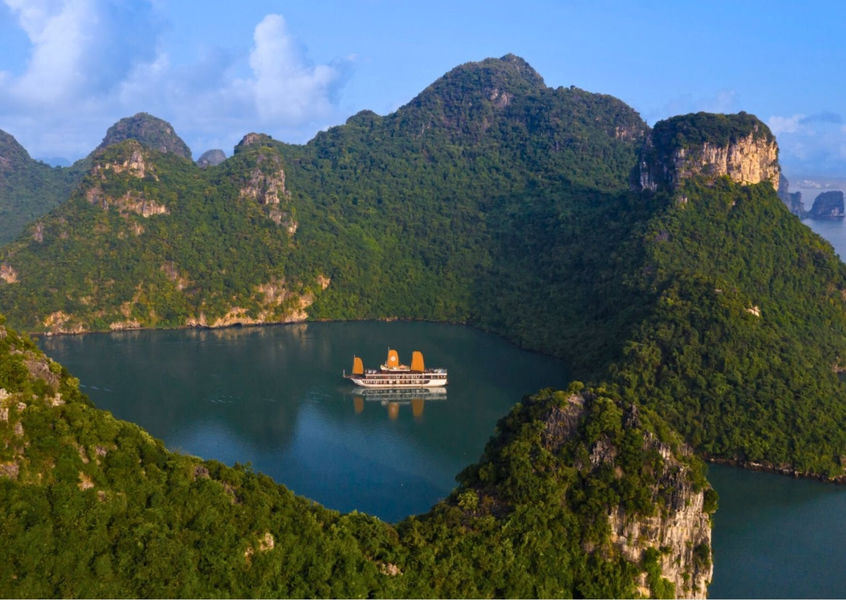
- Winter (December to February): Cool, dry-ish, and often shrouded in a light mist that gives the karst islands a moody, atmospheric look, though it can limit visibility and water activities.
2. Best time to visit by traveler purpose
Different client profiles need different seasonal advice. This is where a travel agent’s recommendation adds more value than a generic “best month” answer.
For photography and clear-sky views: October and November deliver the sharpest visibility and most reliable blue skies, making them the top choice for clients prioritizing photos of the limestone karsts.
For swimming and kayaking: April, May, September, and early October offer warm water and manageable humidity without the heaviest storm risk of peak summer.
For budget-conscious clients: The low season (July to August) and the winter shoulder months (December to February) typically see cruise and hotel rates drop 10 to 20 percent, though summer carries higher cancellation risk from storms.
For families traveling with children: Late September through November balances comfortable temperatures with lower humidity and calmer seas, reducing the chance of a rough first boat experience.
For honeymoon and luxury cruise bookings: Autumn (September to November) and early spring (March to April) pair well with premium cabin availability before the year-end holiday rush.
For MICE groups and corporate incentive travel: Agencies booking larger groups should prioritize late September through November and March through April. These windows offer the most predictable weather for full-day itineraries, multi-boat charters, and outdoor team-building activities, while also avoiding the domestic peak season crowding (June to August) that competes for cruise cabin inventory and private charter availability.

3. Typhoon season: what agents need to know before booking
June through September is the Gulf of Tonkin’s typhoon season, and it’s the single most important operational factor for anyone booking Ha Long Bay on behalf of clients. Storms can force cruise operators to cancel or reroute sailings with as little as 24 to 48 hours’ notice, particularly for overnight cruises. For itineraries booked during this window, it’s worth building in a buffer day near Ha Long Bay or a fallback plan (such as Cat Ba Island or an extended Hanoi stay) so a weather cancellation doesn’t collapse the client’s overall schedule. Reputable ground operators will rebook or offer a full refund when a cruise is cancelled for safety reasons, so confirming an operator’s storm policy before final payment is a standard part of due diligence.

4. Peak season vs. shoulder season: pricing and availability
Cruise and hotel rates in Ha Long Bay follow demand rather than weather alone. June through August is peak for domestic Vietnamese travelers, which drives up rates and cabin scarcity even though the weather itself carries higher risk. International high season for luxury cruises tends to run September through April, with the tightest premium-cabin availability around the Lunar New Year (Tet) and Christmas/New Year weeks. March to May and September to November remain the sweet spot for international agents: strong weather odds, easier group cabin allocation, and pricing that sits below the December to February holiday spike.
Note: Rates referenced in trip planning should always be treated as starting-from figures to verify directly with the DMC before quoting a client, since cruise pricing shifts by operator, cabin category, and season.
Quick recommendation summary
| Priority | Recommended Months |
| Best overall weather | March to May, September to November |
| Best visibility for photos | October, November |
| Lowest prices | July to August, December to February |
| Best for MICE / large groups | September to November, March to April |
| Avoid if possible | Late June to September (typhoon risk) |
5. Frequently asked questions
What is the best month to visit Ha Long Bay?
October and November generally offer the most reliable combination of clear skies, comfortable temperatures, and low storm risk, making them the top-ranked months for most travelers.
Is Ha Long Bay worth visiting in winter?
Yes. December through February brings cooler temperatures and occasional mist, which some travelers find atmospheric, along with lower prices and thinner crowds, though water-based activities may be more limited.
When is typhoon season in Ha Long Bay?
Typhoon season runs roughly from June through September, with the highest storm frequency in July and August. Cruises booked in this window should always have a contingency plan.
Can a Ha Long Bay cruise be cancelled due to weather?
Yes. Licensed operators may cancel or delay sailings, particularly overnight cruises, when storm warnings are issued, and most will offer rebooking or a refund in that case.
What is the cheapest time to visit Ha Long Bay?
Rates tend to be lowest during the domestic low season (July to August) and again in the winter months (December to February), though each comes with trade-offs in weather reliability or comfort.
As a trusted Vietnam DMC with ground teams in Hanoi and Ho Chi Minh City, Viet Dan Travel helps trade partners build Ha Long Bay itineraries around real seasonal risk rather than generic month lists, from single FIT bookings to multi-boat MICE charters. Agencies planning group or corporate travel to Ha Long Bay can reach out for current cruise availability and season-specific contingency planning.