
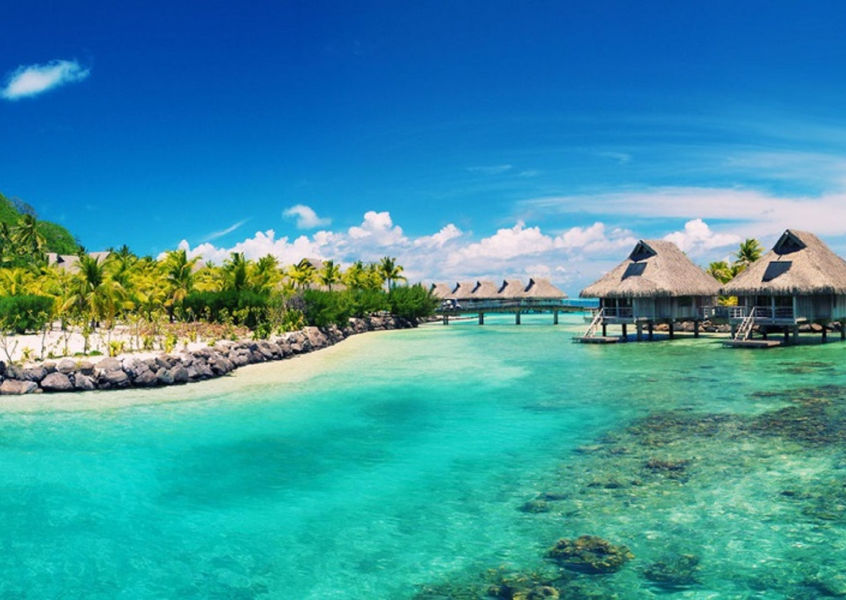
Planning a trip to Phu Quoc and wondering when to go? The answer depends on more than just weather, it shapes which beaches you can swim at, whether your yacht charter runs smoothly, how much you pay for a private villa, and whether you’ll be navigating crowds at every turn. This guide, Viet Dan Travel breaks down every season on Vietnam’s largest island so you can make a genuinely informed decision, whether you’re planning a luxury honeymoon, a private group escape, or an island-hopping itinerary.
1. When is the best time to visit Phu Quoc Vietnam?
The best time to visit Phu Quoc Vietnam is November to April, when the island enters its dry season with calm seas, clear skies, and temperatures hovering between 25–30°C. Within that window, December through February represents the absolute peak: water visibility reaches 15–25 metres, the west-coast beaches are at their finest, and the island’s luxury resorts deliver genuinely top-tier experiences.
For travellers who want fewer crowds and lower rates without sacrificing the experience entirely, November and March–April are strong shoulder alternatives. And even the rainy season from May to October has its own appeal, particularly for those looking at nature immersion, waterfall hikes, or budget-forward travel.
2. Phu Quoc Climate
Phu Quoc Island sits in the Gulf of Thailand, approximately 15 km from the Cambodian coast. Unlike much of mainland Vietnam, which stretches across multiple climate zones, the island operates on just two distinct seasons driven by monsoon winds:
- Dry Season (November to April): Dominated by the northeast monsoon. Average temperatures range from 25°C to 32°C, humidity stays moderate, and rainfall averages below 130mm per month. The west-coast beaches are sheltered and calm.
- Wet Season (May to October): Southwest monsoon brings frequent tropical showers and higher humidity (85–90%). Rainfall peaks between July and September, sometimes exceeding 500mm per month. West-coast beaches can become rough; east-coast beaches like Sao Beach and Khem Beach become the better options.
Average annual temperature: 27°C. The island’s position in the Gulf means it is generally warmer and calmer than coastal Vietnam’s north or central regions.
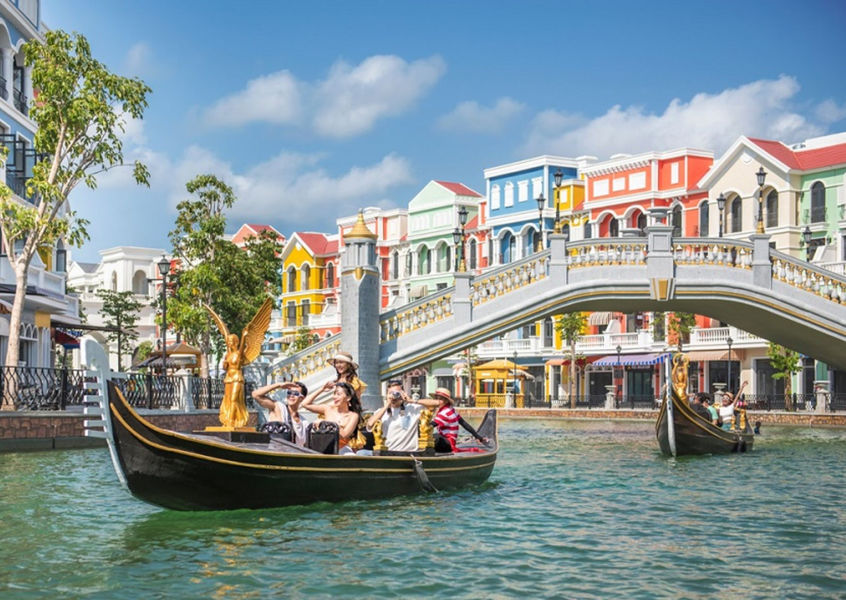
3. Month-by-month breakdown: Best time to visit Phu Quoc Island Vietnam
3.1. November: The sweet spot opens
- Temperature: 26–30°C
- Rainfall: ~130mm
- Seas: Calming, mostly good for water activities
November marks the start of Phu Quoc’s ideal travel window. Rainfall drops significantly from October’s highs, and by mid-month you’ll find mostly sunny days with only occasional brief showers in the late afternoon. The island retains its lush green from the wet season, making photography conditions exceptional. Crowds are lighter than peak months, and room rates have not yet climbed to their December highs.
3.2. December to February: Peak Season (Best overall)
- Temperature: 24–30°C
- Rainfall: 20–50mm
- Seas: Calm, excellent visibility
- Ideal for: Snorkelling, diving, yacht charters, honeymoons, luxury resort stays
These three months represent Phu Quoc at its finest. Skies are clear, seas are calm, and water visibility around the southern coral reefs peaks at 15–25 meters. These are the best conditions of the year for snorkeling and scuba diving. Evening temperatures dip pleasantly to around 24°C, making nights comfortable without air conditioning at full blast.
This is also the prime window for private yacht charters around the An Thoi Archipelago, as sea conditions are reliable enough to navigate the 22 surrounding islands without disruption. Island-hopping tours, sunset cruises, and open-water diving are all operating at full capacity.
For Indian travelers, December to February aligns perfectly with major holiday windows such as post-Diwali travel, Christmas and New Year vacations, and the January festival season. Luxury resorts along Khem Beach and the northern tip of the island fill up quickly; advance bookings of 60–90 days are standard for peak periods.
3.3. March: Final peal window
- Temperature: 27–33°C
- Rainfall: ~58–80mm
- Seas: Still calm
- Ideal for: Diving, snorkelling, quieter beach days
March closes out the premium beach window with consistently good sea conditions and temperatures beginning to climb toward 33°C by mid-month. Rainfall is low (58–80mm), and water clarity remains excellent. Crowds thin slightly from February highs, which means more breathing room at popular spots like Sao Beach without sacrificing weather quality.
3.4. April: Transition month with value
- Temperature: 27–35°C
- Rainfall: ~80–130mm
- Seas: Mostly calm with increasing swell
- Ideal for: Budget-conscious luxury, resort-focused trips, spa retreats
April sees the first hints of the coming wet season. Humidity rises noticeably, temperatures peak at 33–35°C, and afternoon rain showers begin to appear. That said, mornings are typically dry and pleasant. For travelers seeking lower rates and fewer crowds while still accessing reasonable beach conditions, April is a genuine option, particularly for those staying at properties with strong indoor facilities (spas, pools, restaurants).
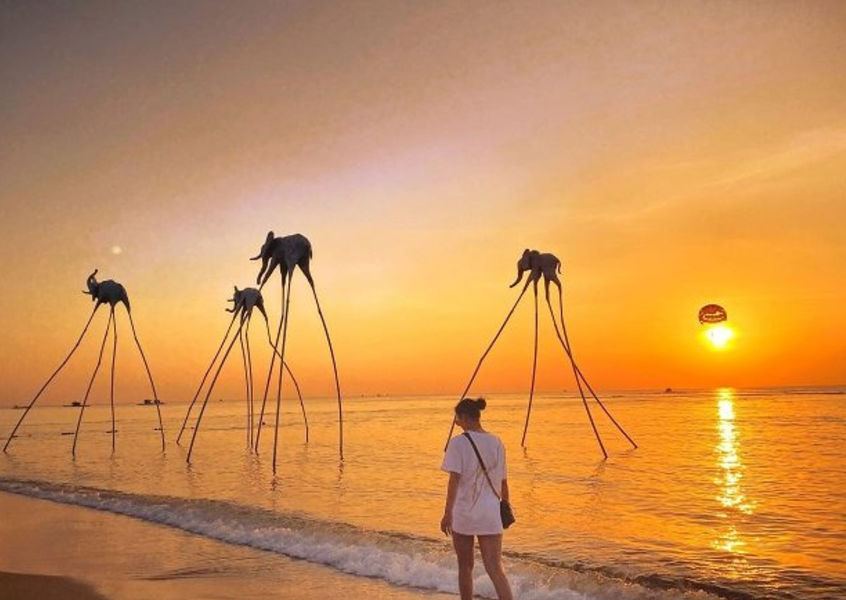
3.5. May to June: Start of the rainy season
- Temperature: 28–32°C
- Rainfall: 200–350mm
- Seas: Rough on west coast; east coast calmer
- Ideal for: Nature tourism, budget travel, resort relaxation, cultural exploration
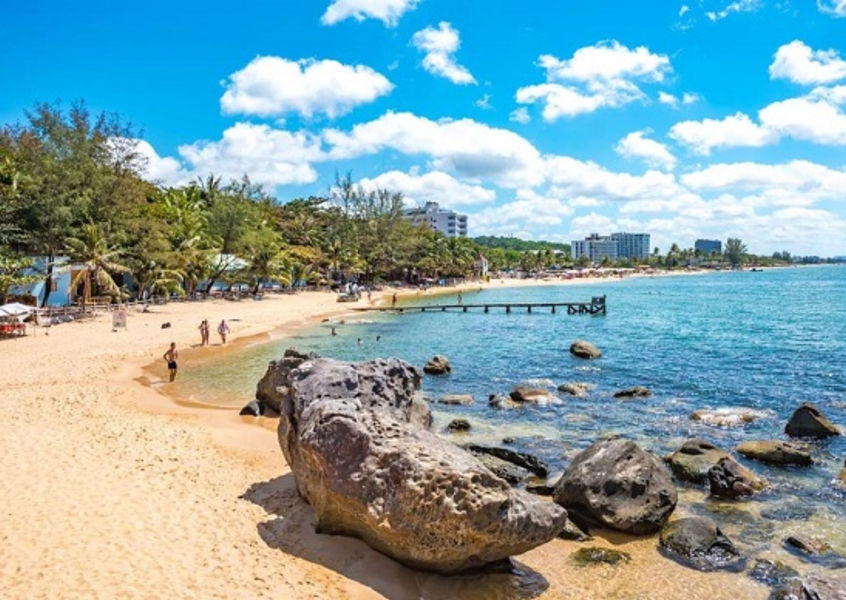
May marks the official start of the wet season. Short afternoon showers become the norm. The island turns a deep, verdant green. Tourist numbers drop significantly. Visitor volumes at popular beaches can fall by 60–70% compared to peak season and hotel rates drop accordingly. East-coast beaches like Sao Beach and Khem Beach handle the monsoon better than the west coast.
This period suits travellers who prioritise nature immersion: Phu Quoc National Park (covering nearly 70% of the island) is at its most alive, waterfalls like Suoi Tranh are running full, and the forest trails see fewer visitors. Pepper farm tours, fish sauce factory visits, and cultural day trips around Duong Dong town remain entirely viable.
3.6. July to September: Deep wet season
- Temperature: 27–31°C
- Rainfall: 400–545mm
- Seas: Rough, many boat tours limited
- Best for: Budget travel, resort stays, wildlife, nature photography
The wettest months of the year. Rainfall averages 400–545 mm per month, seas are rough on the west coast, and some boat tours and ferry services operate on reduced schedules. That said, rain typically falls in concentrated bursts rather than all-day drizzle. During this time of the year, mornings are often clear, and afternoons bring dramatic cloud formations that produce memorable sunsets.
This is the quietest and most affordable period on the island. Travelers who don’t require beach-focused activities and are happy to combine resort time with indoor experiences, spa days, wildlife safaris at Vinpearl Safari, and cultural visits find strong value in this window. It is not recommended for itineraries built around snorkeling, diving, or island-hopping.
3.7. October: The season turns
- Temperature: 27–32°C
- Rainfall: ~200–350mm, decreasing
- Seas: Improving, east coast fine
- Ideal for: Shoulder travel, photography, value seekers
By October, rainfall begins tapering off. Phu Quoc is blanketed in post-monsoon green with lush forest, full waterfalls, and less obvious tourist infrastructure. Late October starts to offer reasonable beach days again, particularly on the east coast, while the west coast gradually calms toward November. Rates are still low, and the island feels refreshingly unhurried.
Season comparison at a glance
| Period | Weather | Seas | Crowd Level | Rates | Best For |
| Nov–Apr (Dry) | Sunny, low humidity | Calm | Moderate–High | Higher | Beach, diving, yacht, honeymoon |
| Dec–Feb (Peak) | Ideal | Excellent | High | Highest | Luxury travel, snorkelling, island hopping |
| May–Jun (Shoulder) | Warm, showers | Rough (west) | Low | Lower | Nature, budget, resorts |
| Jul–Sep (Wet) | Heavy rain | Very rough | Lowest | Lowest | Budget, wildlife, spa, culture |
| Oct (Transition) | Improving | Calming | Low | Low–Mid | Photography, value |
4. Best time by activity
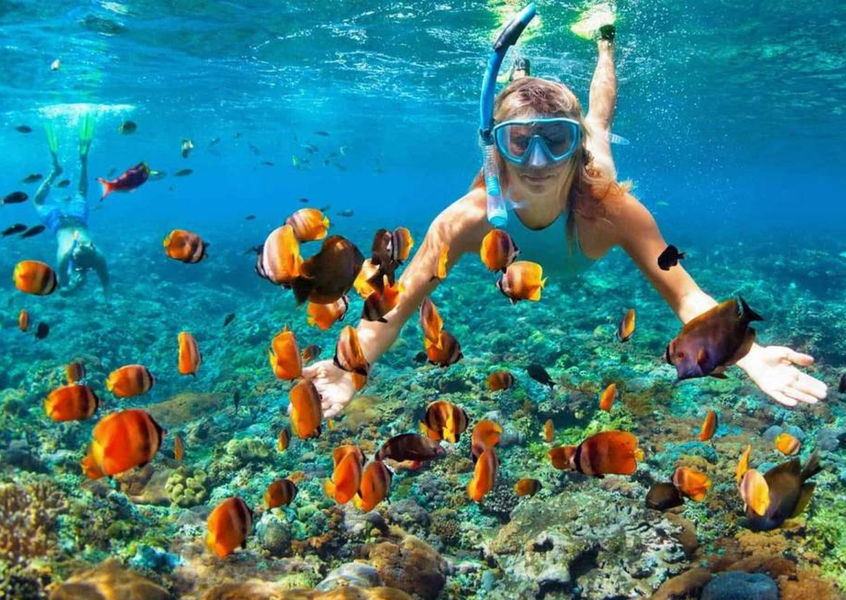
Snorkelling & Scuba Diving
The best time to visit Phu Quoc for underwater activities is November through April. Peak visibility of 15–25 meters occurs in December through February around the An Thoi Archipelago and Fingernail Island. The single best month for diving is January, when seas are at their calmest and visibility is consistently at its maximum.
Private Yacht Charters & Island Hopping
December to March offers the most reliable conditions for a private yacht experience around Phu Quoc’s 22 surrounding islands. Sea conditions are predictable, weather windows are long, and sunset charter timing aligns with the island’s famously vivid west-coast evenings. Charters operating out of An Thoi Port connect to Hon Thom, Hon May Rut, and other archipelago islands with ease during this period.
Luxury Resort Stays
Year-round viable. Phu Quoc’s five-star properties (InterContinental, Premier Village, JW Marriott, Fusion Suites) are designed with pool and indoor facilities that make them functional in any season. However, peak season (December–February) delivers the complete experience: beachfront access, outdoor dining, in-water villas, and sunset terraces all operating at their best.
Beach Relaxation (West Coast: Long Beach, Bai Dai)
November to April exclusively. West-coast beaches are exposed to southwest monsoon swells from May to October and are not suitable for swimming during the wet season.
Beach Relaxation (East Coast: Sao Beach, Khem Beach)
Sao Beach and Khem Beach on the southeast coast have gently sloping sand and shallow waters that naturally break incoming waves, making them usable even during the wet season (May–October). Khem Beach, operated largely by private resort properties, maintains a sheltered feel year-round.
Phu Quoc National Park & Waterfall Treks
May to October, when the forest is at its most alive and waterfalls like Suoi Tranh are running at full force. The 4-metre cascade surrounded by jungle pools is genuinely impressive in the wet season. Dry-season trekking is also viable; trails are drier and easier to navigate.
Cultural & Festival Experiences
- The dry season hosts Phu Quoc’s major cultural calendar. Key events include:
- Dinh Than Duong Dong Festival (10th–11th of the first lunar month): Honors the island’s guardian spirits
- Thuy Long Thanh Mau Festival (15th of the first lunar month): Sea goddess ceremony
- Phu Quoc Boat Racing Festival (April 30th): Traditional boat races marking Vietnam’s Reunification Day
- Dinh Cau Festival (15th–16th of the 10th lunar month): The island’s most important cultural event, honoring sea spirits
5. A note for Indian travelers
For Indian travelers planning their first visit to Phu Quoc or returning for a more private luxury experience, the seasonal calendar aligns particularly well with India’s major holiday windows:
- Diwali (October–November): Late October to early November catches Phu Quoc right at the season-turn. Weather improves rapidly through November, making this a strong option for those seeking to extend Diwali breaks into a proper island escape. Rates are still reasonable, crowds are thin.
- Christmas & New Year (December–January): This is Phu Quoc’s most popular period for Indian honeymooners and luxury group travellers. December and January offer the island’s finest conditions. Booking accommodation and private yacht experiences 60–90 days in advance is essential for this window.
- Holi & School Holidays (March): March is an excellent choice for families and couples who missed the peak season. Weather remains excellent, water activities are fully operational, and the island is slightly less busy than January and February.
- Summer Holidays (May–June): While technically the start of the rainy season, May and early June remain viable for resort-focused family holidays. Rates drop significantly, and the east-coast beaches including Sao Beach and Khem Beach continue to offer good swimming conditions. Families staying at large resort properties with water parks and theme parks (VinWonders, Vinpearl Safari) experience minimal disruption from seasonal rain.
Visa Note for Indian Nationals: Indian passport holders currently enjoy a 30-day visa exemption for direct arrivals, making Phu Quoc one of the most accessible Vietnam island destinations for Indian travellers regardless of season.
6. Best time to visit Phu Quoc Island from DMC perspective
Most “best time to visit Phu Quoc” articles present weather data and leave it there. As a specialist DMC operating on the ground in Vietnam, here is what actually shapes the decision for discerning travellers:
Peak season booking pressure is real. December and January require advance planning at a level most first-time visitors underestimate. Luxury villa inventory at properties like Premier Village Phu Quoc or JW Marriott Phu Quoc fills months out. Private yacht charters from reputable operators go on the same basis. If you’re planning a 7–10 night private stay with curated experiences, 90 days’ lead time is the minimum for peak season.
The shoulder months offer disproportionate value. November, particularly the first two weeks and the second half of March offer conditions that approach peak-season quality at meaningfully lower price points. For private travellers with flexibility, this is often the optimal window.
East coast vs. west coast matters more than most guides explain. The two coastlines behave very differently in the wet season. A traveller who books a villa on Khem Beach (east coast) in June has a fundamentally different experience than one staying on Long Beach (west coast) at the same time. This is the kind of detail a DMC with local knowledge builds into itinerary design from the start.
Rain rarely ruins a well-planned itinerary. Wet-season showers on Phu Quoc are typically intense but brief — a feature of tropical monsoon climates, not an all-day washout. Travellers with access to a private pool, a spa menu, and an indoor dining programme find the rhythm of a wet-season day entirely workable. The key is an itinerary designed around the conditions, not against them.
7. Practical planning guide
How many days do you need?
A focused beach-and-diving trip can be done in 4–5 days. A comprehensive itinerary that includes island hopping, national park trekking, cultural visits (fish sauce factory, pepper farm, Dinh Cau Temple), and resort time works best over 7–10 days. Private luxury travellers often extend to 10–14 days when combining Phu Quoc with Hanoi or Ho Chi Minh City.
How to get to Phu Quoc
Phu Quoc International Airport (IATA: PQC) is the primary entry point. Direct international flights operate from several Asian hubs. From India, connections via Ho Chi Minh City (Tan Son Nhat Airport) or Hanoi (Noi Bai Airport) are the most common routing. Domestic flight time from Ho Chi Minh City is approximately 1 hour 20 minutes; from Hanoi, roughly 2 hours.
High-speed ferry services also connect Phu Quoc to Ha Tien and Rach Gia on mainland Vietnam — an option for travellers entering overland from Cambodia.
What to pack by season
- Dry season: Light clothing, reef-safe sunscreen, polarised sunglasses, a light layer for evenings
- Wet season: Quick-dry fabrics, a compact rain jacket, insect repellent, water shoes for waterfall hikes
8. FAQs
When is the best time to visit Phu Quoc Vietnam overall?
November to April, with December to February being the peak window for beach conditions, water clarity, and outdoor activities.
When is the best time to visit Vietnam if I’m combining Phu Quoc with other destinations?
If your itinerary includes both Phu Quoc and northern Vietnam (Hanoi, Ha Long Bay),
November to March works well across the board. Central Vietnam (Hoi An, Da Nang) is best avoided in November due to its own rainy season but fits well from February to May. A well-structured DMC itinerary accounts for these regional climate differences.
Is Phu Quoc worth visiting in the rainy season?
Yes, with the right expectations and itinerary. Resort-focused holidays, spa retreats, wildlife visits, and cultural day trips work well in the wet season. Snorkelling, diving, and island hopping are better saved for the dry season.
What is the water temperature in Phu Quoc?
Sea temperatures average 28°C year-round, with slight variation across seasons. February typically records peak water clarity alongside warm temperatures, which is the optimal combination for snorkeling.
When do Indian tourists visit Phu Quoc most often?
December, January, and February are the most popular months for Indian travelers. November and March are increasingly popular among those seeking the quality of peak season with fewer crowds and more availability.
How far in advance should I book a private tour to Phu Quoc?
For peak season (December–February): 60–90 days minimum for private yacht charters and premium resort bookings. For shoulder season (November and March): 30–45 days is generally sufficient. Shoulder and wet season bookings (April–October) can often be arranged on shorter notice.