Recently, Vietnam has become one of the most favorite tourist destinations among Indians. But here is what many Indian travel agents discover only after their first few bookings: selling Vietnam is easy; selling it well is a skill. The difference between a client who comes back for the Mekong Delta and one who complains about the food options often comes down to how the trip was designed.
This guide is written from the perspective of a DMC in Vietnam that has worked with Indian travel agents for nearly 20 years. These are the things we wish every agent knew before their first Vietnam sale.
1. Understand what Indian travelers actually want in Vietnam
Before you can sell Vietnam confidently, you need a clear picture of what the Indian market is really looking for. It is fair to say that it is not the same as what a Western traveler seeks.
Indian travelers to Vietnam typically want:
- Value without compromise: They compare Vietnam against Bali, Thailand, and Singapore constantly. Your pitch needs to communicate why Vietnam wins on value, such as longer itineraries and more diverse landscapes and lower daily costs, without sounding like a budget product.
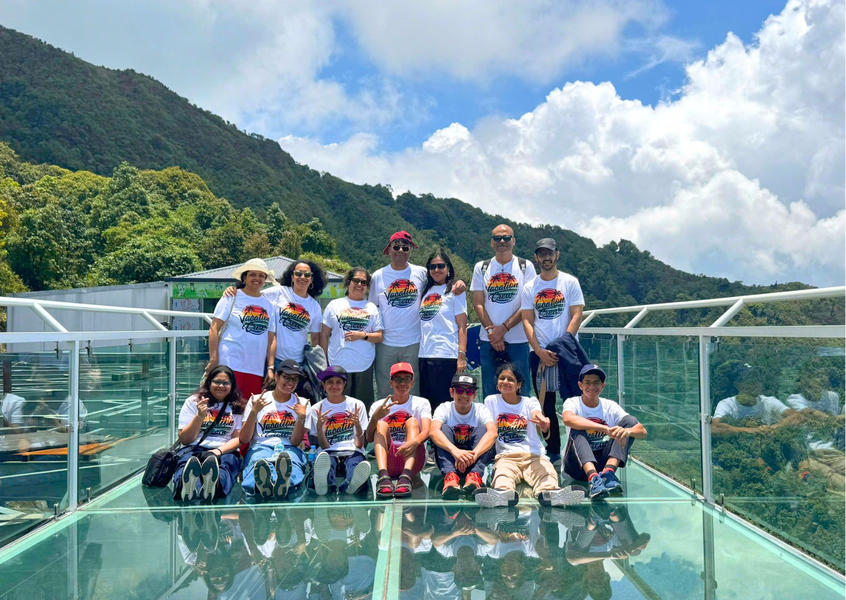
- Photogenic landmarks: Halong Bay, the Golden Bridge at Ba Na Hills, Hoi An’s lantern-lit streets, and the rice terraces of Sapa are the visual currency that drives bookings. Indian travelers consider Instagram-worthiness is a genuine decision factor.
- Cultural depth with comfort: Indian families and honeymooners want authentic experiences, but they still expect reliable hotels, clean transport, and smooth logistics. Adventure should be optional, not accidental.
- Indian-friendly food options at every meal: This is a non-negotiable for a large portion of Indian travelers, especially families and vegetarian clients. More on this below.
Many agents sell Vietnam as a “cheap destination.” The agents who build loyal client bases position it as a diverse destination, one country where clients can experience a UNESCO-listed bay, a French colonial city, a mountain hill tribe village, and a modern beach resort, all in one trip. That positioning commands better margins and generates better reviews.
2. Which tours to sell in Vietnam by Season
Vietnam’s geography creates a climate paradox that confuses first-time agents. Hence, it leads to client complaints when not handled correctly. Vietnam is a long, narrow country stretching over 1,600 km north to south. This means the north, center, and south have entirely different weather patterns at the same time of year.
Here is a quick reference for Indian agents:
| Season in India | Best Vietnam Region to Sell |
| October – April (Indian peak travel season) | – North Vietnam (Hanoi, Halong Bay, Sapa): dry and cool season.
– South Vietnam (Ho Chi Minh City, Mekong Delta): dry season. |
| May – September (Indian monsoon, some agents’ slow period) | – Central Vietnam (Da Nang, Hoi An, Hue): generally dry.
– South Vietnam remains workable. |
| Diwali / Year-end (November) | Peak for all regions. Book early, secure hotels months ahead. |
The practical tip: When a client says, “We want to go to Vietnam in August,” do not just confirm and send a generic north-south itinerary. August means heavy rain in Halong Bay. Redirect them to Da Nang–Hoi An in the center, which is in its dry season. This one adjustment turns a potentially disappointing trip into a great one.
3. Build Itineraries that convert experience, not just impress
Many agents make the mistake of designing Vietnam itineraries that look impressive on paper but leave clients exhausted. Vietnam’s geography rewards a regional approach, not a north-to-south sweep in 7 days.
The most effective structures for the Indian market:
7 nights/ 8 days (most popular)
- Option A: North-focused — Hanoi (2N) + Halong Bay overnight cruise (2N) + Ninh Binh (1N) + Sapa (2N)
- Option B: South + Central — Ho Chi Minh City (2N) + Mekong Delta day trip + Da Nang (1N) + Hoi An (2N) + Ba Na Hills
10-12 nights (high-value family groups and honeymooners)
- Full country experience: Hanoi → Halong Bay → Da Nang/Hoi An → Ho Chi Minh City → Mekong Delta
Quick checklist of what converts:
- Day-by-day clarity with start/end times reassures Indian families
- An overnight Halong Bay cruise is a must-include: it is the single most-sold
- experience for Indian clients and justifies the entire Vietnam pitch.
- Ba Na Hills & Golden Bridge should be in every Da Nang itinerary: Indian clients photograph it extensively.
Seasonal tips: If your client is traveling in June–August and the Da Nang International Fireworks Festival (DIFF) is running, include it. This event is a genuine highlight that Indian travelers rave about. It is the kind of experience clients do not know to ask for but remember for years.
>>> Explore this tour detailed itinerary: Fireworks, Heritage & Culture – Danang 2026 Tour
4. Master the Indian-specific requirements
This is where many agents hand off responsibility to their DMC and hope for the best. The agents who consistently get 5-star reviews take ownership of the following:
4.1. Food
Vietnamese cuisine is predominantly non-vegetarian and uses fish sauce extensively. For Indian clients, especially Gujaratis, Jains, or anyone observing vegetarian diets, a standard Vietnamese menu is simply not suitable.
What you need to confirm with your DMC before booking:
- Are Indian restaurants available at every stop in the itinerary?
- For Halong Bay cruises, what is the vegetarian/jain meal option on board?
- Do day-tour and activity providers allow outside food, or do they provide alternatives?
- Is there a Hindi-speaking helpline or support contact in Vietnam?
A reliable DMC in Vietnam will have standing relationships with Indian restaurants in Hanoi, Ho Chi Minh City, Da Nang, and Hoi An and will proactively arrange these without prompting. This is one of the clearest signals of a DMC that genuinely knows the Indian market.
4.2. Visa
As of 2025, Indian passport holders can apply for a Vietnam e-Visa online for stays up to 90 days (single or multiple entry). The process is straightforward but requires exact passport details, a clear passport photo, and accurate travel dates.
Common agent mistakes to avoid:
- Submitting applications with names that do not exactly match the passport
- Incorrect date ranges that do not account for arrival time (Vietnam is UTC+7, 1.5 hours ahead of India)
- Not checking that clients’ passports have 6+ months validity beyond the return date
4.3. Currency and Payments
Vietnamese Dong (VND) is the local currency. US dollars are accepted at many tourist sites and larger hotels, but for markets, street food, and local transport, VND is essential. Guide your clients to exchange currency either before departure (limited availability in India) or at authorized exchange counters on arrival. ATMs are widely available in major cities.
4.4. Cultural Etiquette
Vietnam is a country with deep Buddhist and Confucian traditions. A few specific points relevant for Indian travelers include the following:
- Temple visits require covered shoulders and knees. Advise clients to pack a light scarf
- Removing shoes before entering pagodas is expected
- Photography restrictions exist at some war memorials, clients should follow guide instructions
- Bargaining is acceptable in markets but should be done with a smile, not aggression
5. Communicate pricing the right way to Indian clients
Indian travelers are sophisticated price researchers. By the time they contact a travel agent, many have already seen OTA prices, compared offers from multiple agents, and formed a rough budget expectation. The agents who win are those who reframe the conversation from price to value.
Here are some practical pricing communication tips:
- Lead with the experience and close with the number: Instead of “Vietnam: 7 nights from ₹65,000 per person,” try: “A private Halong Bay cruise with sunrise views, two nights in a boutique Hoi An resort, and the Golden Bridge at Ba Na Hills, fully escorted, including Indian meals, from ₹65,000.” The experience justifies the cost.
- Be transparent about what is included: Indian clients are trained to look for hidden costs. List clearly: what the package includes (accommodation, transfers, guided tours, Indian meals) and what it excludes (international flights, personal shopping, tips, visa fees). This reduces post-booking friction significantly.
- Upsell through upgrades, not additions: Upgrading a Halong Bay cruise from a mid-range to a premium junk boat is easier to sell than adding a new city to the itinerary. Premium accommodations, private guides, and sunset dinners on Halong Bay are natural upsell points that Indian honeymoon and anniversary clients will respond to.
- Group bookings are your fastest growth lever: Vietnam is ideal for group travel such as family groups of 15–30 people, corporate incentive trips, and friend groups celebrating milestones. A single well-managed group booking in Vietnam can generate the revenue of 8–10 FIT bookings. Position Vietnam actively to your corporate and social group clients.
6. Choose the right Vietnam DMC
Every agent selling Vietnam relies on a ground operator in Vietnam. The DMC you choose is, in effect, your product. A weak DMC, one that overpromises, under-delivers, or does not understand Indian preferences, will cost you clients. A strong DMC makes you look exceptional without effort.
What to look for in a Vietnam DMC for the Indian market:
- Dedicated experience with Indian travelers, not just “we handle all nationalities.” Look for a DMC that can articulate specific Indian market preferences and has testimonials from Indian travel agents.
- 24/7 in-country support during tours: something will always go a bit different than planned. A DMC with local ground staff who can respond in real time is the difference between a small hiccup and a client crisis.
- Transparent B2B net rates: you should always know your net cost and control your own margin. Avoid DMCs that insist on selling directly to your end client.
- Flexibility on vegetarian and Jain menus: If a DMC say “we’ll try our best” on Indian food, that is not good enough. The right DMC will give you specific restaurant names and confirmed options.
- VNAT license: Vietnam’s National Administration of Tourism issues international tour operator licenses. Ask for the license number and verify. This protects you and yoru clients legally.
Viet Dan Travel has operated as a dedicated Vietnam DMC for Indian travel agents for nearly 20 years. We work exclusively B2B, we do not market directly to end travelers, and your client relationship stays yours. Our operations span Hanoi, Ha Long Bay, Da Nang, Hoi An, and Ho Chi Minh City, with a dedicated team for Indian group and FIT inquiries.
>>> Read 8 Red Flags When Choosing a Vietnam DMC for more helpful information when seeking for your trusted DMC in Vietnam.
7. FAQs
Is Vietnam visa-on-arrival available for Indian passport holders?
Indian travelers can apply for a Vietnam e-Visa online for stays up to 90 days. Visa-on-arrival is also available at major international airports but requires a prior approval letter arrangement. The e-Visa is simpler and recommended for most clients.
What is the best time of the year to send Indian clients to Vietnam?
October to April is generally the strongest season. November and December align with Diwali holidays and year-end travel and see the peak Indian tourist volume. December–March is excellent for the full north-to-south itinerary with reliable weather across all regions.
How many days is the ideal Vietnam trip for Indian travelers?
7–8 nights is the sweet spot for first-time visitors. This allows adequate time in 2–3 regions without feeling rushed. For repeat visitors or multi-destination travelers, 10–12 nights opens up Sapa, the Mekong Delta, and secondary destinations.
Are vegetarian options widely available in Vietnam for Indian clients?
Vietnamese cuisine is predominantly non-vegetarian. However, major tourist cities such as Hanoi, Ho Chi Minh City, Da Nang, and Hoi An all have established Indian restaurants. A good DMC will pre-arrange Indian meals at each stop for group tours and FIT bookings.
How do I handle a client complaint about food during a Vietnam trip?
The best way is to prevent it entirely through proper briefing before departure and confirmed Indian meal arrangements with your DMC. If an issue arises on the ground, your DMC should have a 24/7 in-country support line. Ensure you have that contact number before your client departs.