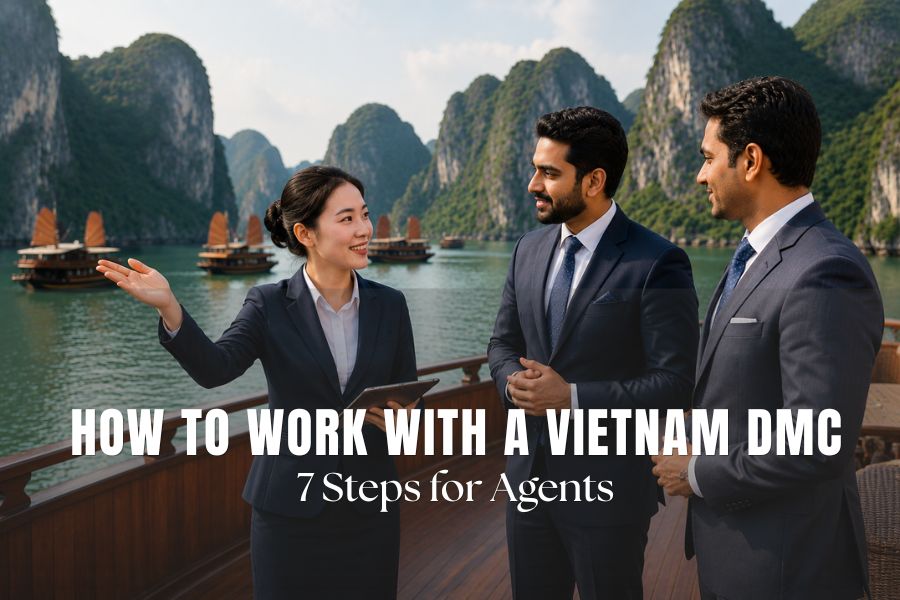
A client walks into your agency wanting two weeks in Vietnam, and you can already picture the itinerary in your head. What you cannot picture, sitting in an office in Mumbai or Warsaw, is how a rooming list actually gets confirmed with a hotel in Hoi An, or who you call at 11pm if a coach breaks down between Hanoi and Halong Bay. That gap is exactly what working with a Vietnam DMC solves, and getting the process right from the first email changes how smoothly every program runs. This guide walks through the seven stages of that working relationship, from preparing your first brief to closing out a program after your clients fly home.
The Vietnam DMC working relationship at a glance
The table below summarizes each stage of working with a Vietnam DMC, useful as a quick reference when training new staff at an agency or when comparing how different DMCs handle each phase.
| Stage | What the agent does | What a reliable Vietnam DMC does | Typical timeframe |
| Brief preparation | Defines dates, group profile, budget, dietary needs | Before first contact | |
| Licensing check | Verifies tour operator license and legal entity | Provides license number and entity documentation | Before sending RFP |
| RFP and quote | Sends structured RFP | Returns itinerary specific quote | 24 to 48 hours |
| Contract and payment | Confirms terms, deposit, invoice details | Issues net rate invoice under licensed entity | Before final booking |
| Onboarding | Registers on partner portal or app | Grants portal access, sets escalation contacts | Before first departure |
| Live program | Monitors client satisfaction remotely | Manages rooming, transport, on ground issues | Throughout the trip |
| Post trip review | Shares feedback, plans next booking | Reviews performance, offers improved terms for volume | After each program |
Step 1: Prepare your brief before you reach out
Before contacting any Destination Management Company in Vietnam, an agent needs a brief that goes beyond dates and headcount. A vague request produces a vague quote, and a vague quote is the first sign of friction later in the relationship.
A workable brief for a Vietnam DMC typically includes the following:
- Travel dates and flexibility around them
- Group size, nationality mix, and any VIP or senior travelers in the group
- Preferred hotel category and any brand loyalty programs to consider
- Budget band per person, land only or including international flights
- Dietary requirements, including vegetarian, Jain, or halal meal needs
- Special interests such as MICE team building, wellness, or heritage sightseeing
- Any known constraints, for example a fixed departure city or a visa deadline
Viet Dan Travel, operating under Viet Vision Travel and Trading Joint Stock Company, works with agents across India, the Middle East, and Europe, and the briefs that produce the fastest, most accurate quotes are always the ones with this level of detail filled in from the start.
Step 2: Verify licensing and legitimacy before you send an RFP
Vietnam’s inbound tourism sector has grown quickly, and not every company calling itself a DMC is legally licensed to operate ground services for international visitors. Before an agent invests time drafting a full RFP, a short verification step protects both the agency and its clients.
Under Vietnamese law, a legitimate inbound Destination Management Company must hold an International Tour Operator License issued by Vietnam’s tourism authority. Viet Dan Travel operates under License No. 01-239/TCDL-GP LHQT, held by the parent legal entity Viet Vision Travel and Trading Joint Stock Company. Because trading names and legal entity names often differ in Vietnam, this mismatch is one of the most common reasons international partner banks flag a wire transfer as suspicious. Agents can check a DMC’s licensing and legal entity details directly against a dedicated reference page, which is exactly why Viet Dan Travel maintains a Legal Entity and Banking Information page for partners to verify before any payment is made.
Other quick checks worth doing at this stage include how many years the company has operated in Vietnam, whether it has a physical office (Viet Dan Travel operates from Hanoi and Ho Chi Minh City, with a representative office in Mysore for the Indian market), and whether existing partners can be contacted for a reference.
Step 3: Send your RFP and read the quality of the response
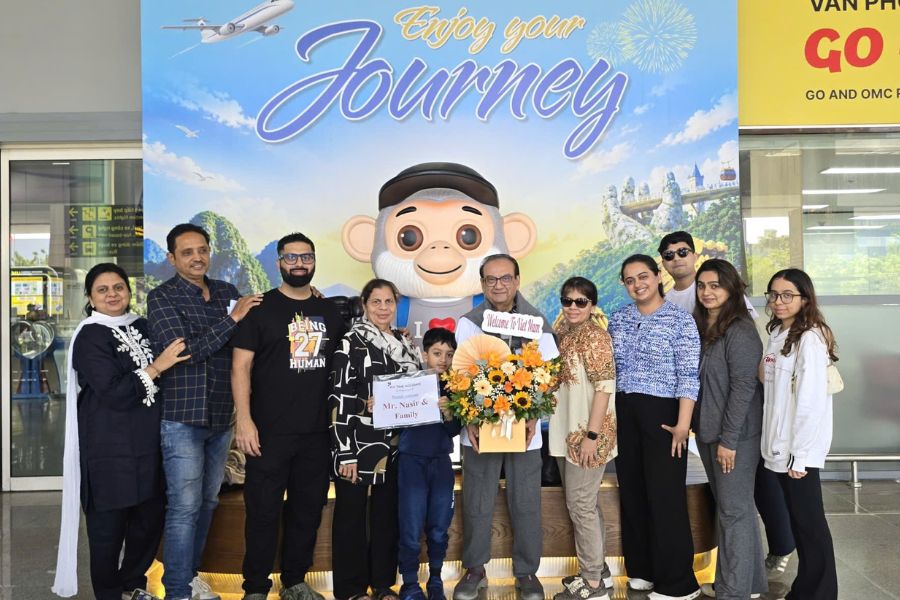
Once a DMC passes the licensing check, the next step is sending a structured RFP rather than a casual inquiry email. A structured RFP gets a structured, comparable answer, which matters when an agent is evaluating two or three DMCs side by side.
A credible response from a Vietnam DMC should arrive within an agreed turnaround, typically 24 to 48 hours for a standard B2B request, and should address every point raised in the brief rather than returning a generic template. Watch for these signals in the response:
- The itinerary references actual named hotels and specific routes, not placeholder text
- Pricing reflects the exact group size and season quoted, not a rounded estimate
- The response answers dietary, cultural, or accessibility notes raised in the brief
- Follow up questions from the DMC show they understood the client profile, not just the dates
Response speed is a reasonable proxy for how the DMC will behave later. A partner that takes four days to answer a first inquiry is unlikely to respond faster during an actual crisis on the ground.
Step 4: Confirm scope, contract terms, and payment structure
Once a proposal is accepted in principle, the working relationship moves from inquiry to commercial commitment. This is the stage where ambiguity causes the most damage later, so it deserves careful attention rather than a quick email confirmation.
Most reputable Vietnam DMCs, including Viet Dan Travel, operate on a net rate model. The agent receives a wholesale net price and sets their own selling price and margin to the end client, with no markup visible to the traveler. Payment terms usually follow a deposit on confirmation and a balance settled before arrival, and this is the point where an agent should confirm the legal entity name on the invoice matches the licensed operator, not just the trading brand.
Before moving to onboarding, an agent should have written clarity on:
- Final itinerary with named suppliers, not draft placeholders
- Cancellation and amendment policy, including deadlines and any penalties
- Currency of quotation, since many DMCs price in USD or a blended VND, USD, and INR reference for Indian partners, always with a note that unconfirmed rates are for reference only
- Who owns responsibility for weather-related changes, medical incidents, or supplier failures during the trip
Step 5: Onboard into the DMC’s working system
A professional Vietnam DMC does not run its partner relationships purely through email threads. Most offer a B2B portal or agent app for itinerary references, quotation requests, and document sharing, and getting set up in that system early avoids delays once a program is live.
Onboarding at this stage typically covers registering your agency’s contact details and entity information, gaining access to the partner portal or app, and agreeing on communication channels for two different scenarios: routine planning questions versus urgent, in-country issues. A well-organized DMC will give an agent a clear escalation path before the first group ever departs, not after something has already gone wrong.
Step 6: Manage the program while your clients are in Vietnam
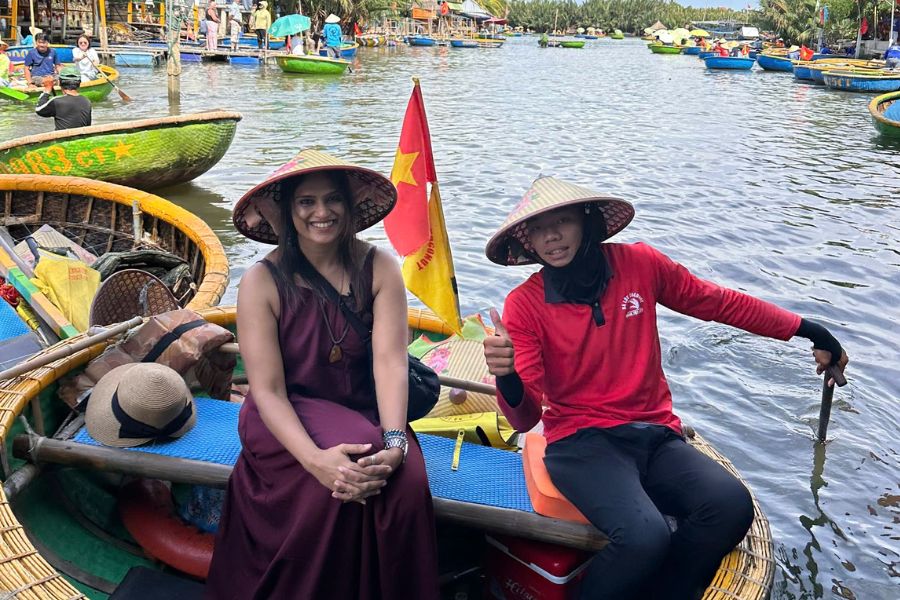
This is the stage where the value of working with an established Vietnam DMC becomes most visible, even though it is the part clients never see. Once a group lands, the DMC becomes the operational extension of the agent’s brand on the ground.
During a live program, the DMC typically handles rooming list accuracy at check-in, real time flight monitoring for delays or schedule changes, coordination between transport, guides, and hotels across multiple cities, and immediate escalation if something falls outside the plan, whether that is a missed transfer, a supplier issue, or a medical situation. Agents should expect same day, and ideally same hour, response from their DMC during an active emergency, since anything slower directly affects the agent’s own reputation with the end client.
Step 7: Review after the trip and build the long term relationship
The working relationship does not end when the group flies home. A short post trip review, covering what worked, what needs adjusting for the next group, and any feedback from travelers, is what turns a single successful booking into a repeat, long term partnership.
Agents who send consistent volume and communicate clearly tend to receive priority allocation during peak season, faster quote turnaround, and sometimes improved net rates over time. This is one of the reasons Viet Dan Travel, backed by Viet Vision Holdings, has maintained long running partnerships with agencies across India, the Middle East, and Europe rather than treating each booking as a one-off transaction.
Frequently asked questions
Does a Vietnam DMC ever contact my clients directly?
No. A properly structured B2B Vietnam DMC works only with the travel agent or tour operator, never with the end traveler. The agent’s relationship with their client stays entirely intact throughout the program.
How long does it usually take to get a first quote from a Vietnam DMC?
For a standard leisure group with a clear brief, most established DMCs respond within 24 to 48 hours. Complex multi city or large MICE programs can take 24 to 60 hours depending on how many suppliers need to be checked before pricing is confirmed.
What happens if there is a problem while my clients are already in Vietnam?
A reliable DMC has a local team on call throughout the group’s stay, with same day response expected for urgent issues such as a missed transfer, a hotel error, or a medical situation. This is one of the clearest indicators of whether a DMC partnership is worth continuing.
Can I negotiate better rates over time with a Vietnam DMC?
Yes. DMCs working on a net rate model often extend improved pricing or priority allocation to agents who send consistent volume and maintain a clear, professional working relationship over multiple seasons.
If your agency is preparing its first brief for Vietnam, Viet Dan Travel’s B2B team can walk through your requirements directly and return a scoped proposal built around your client profile. Get in touch to start your first RFP or explore becoming a partner through the agent portal.