Choosing the right city for a corporate meeting, incentive trip, conference, or exhibition can make or break the entire program. Vietnam has quietly become one of Southeast Asia’s fastest-growing MICE markets, with the sector projected to reach USD 7.71 billion in 2026 alone. But “Vietnam” isn’t one destination; it’s eight distinct cities and regions, each suited to a different type of event. This guide breaks down exactly which destination fits which purpose, what each venue can actually handle, and how to plan the logistics from booking to boarding.
1. Why Vietnam Is Gaining Ground as a MICE Destination
Vietnam’s rise in the regional MICE rankings isn’t accidental. Three forces are driving it at once: infrastructure, accessibility, and cost.
On infrastructure, Sun Group’s APEC 2027 program in Phu Quoc introduced a convention center with an 11,050 square meter column-free ballroom connected by a light rail link, cutting down logistical friction for large-scale exhibitions. Metro and airport upgrades are also underway across the country, with Ho Chi Minh City’s metro Line 1 extension expected by Q2 2026, set to shorten cross-district travel time for multi-venue events.
On accessibility, Vietnam’s e-visa reforms extended validity to 90 days and broadened exemptions, which has reduced administrative friction and planning lead time for corporate organizers. This matters enormously for agents booking groups of 100+ delegates who can’t afford visa delays.
On demand, the country is now handling incentive and conference groups ranging from 500 to 5,000 participants, with multinational names like AWS, Google, Prudential, and HSBC choosing Vietnam for large-scale programs. Growth is not limited to the two major cities either: Da Nang, Phu Quoc, Nha Trang, and Ninh Binh are all seeing strong demand as infrastructure investment reaches beyond Hanoi and Ho Chi Minh City.
For Indian corporates specifically, the shift is measurable. Direct flights from Bengaluru and Hyderabad, introduced by Vietnam Airlines, boosted Indian delegate numbers into Vietnam through 2024 and 2025, and Vietnam has entered the shortlist of common outbound incentive destinations for Indian companies alongside Dubai, Singapore, and Thailand.
2. Top MICE Destinations in Vietnam at a Glance
| Destination | Best For | Signature Venue | International Airport | Ideal Season |
| Hanoi | Large conferences, government-level summits, formal business events | National Convention Center, Sofitel Metropole, Lotte Hotel Hanoi | Noi Bai (HAN) | October to April |
| Ho Chi Minh City | Corporate meetings, trade exhibitions, financial sector events | Saigon Exhibition and Convention Center (SECC) | Tan Son Nhat (SGN) | November to April |
| Da Nang | Coastal conferences, incentive trips with beach team-building | InterContinental Danang Sun Peninsula Resort, riverside convention hotels | Da Nang International Airport (DAD) | February to August |
| Phu Quoc | High-end executive retreats, large-scale exhibitions | Sun Group APEC Convention Center (11,050 sqm ballroom) | Phu Quoc International Airport (PQC) | November to March |
| Ha Long Bay | Unique incentive experiences, cruise-based gala dinners | Luxury cruise ships on Ha Long Bay | Van Don International Airport (VDO) or via Hanoi | October to April |
| Nha Trang | Mid-size incentive groups, beach resort conferences | Beachfront resort convention halls | Cam Ranh International Airport (CXR) | January to August |
| Hoi An | Boutique corporate retreats, cultural team-building | Heritage-style resort venues near the Ancient Town | Da Nang International Airport (DAD) | February to August |
| Ninh Binh | Small executive offsites, wellness-focused retreats | Countryside resorts near Trang An | Via Hanoi (Noi Bai), a 2-hour drive | October to April |
Pricing for venues, accommodation, and full-package MICE programs varies significantly by group size, season, and inclusions. Figures anywhere in this guide are starting-point estimates only; always confirm current rates and availability directly with your Vietnam B2B DMC before quoting a client.
2.1. Hanoi: Vietnam’s Political and Conference Capital
Hanoi, the capital of Vietnam, is often described as the country’s “conference capital”. The city has established itself as a prime destination for MICE tourism in Southeast Asia, having hosted major international events such as the World Economic Forum ASEAN in 2018 and the 2019 US-North Korea Hanoi Summit.
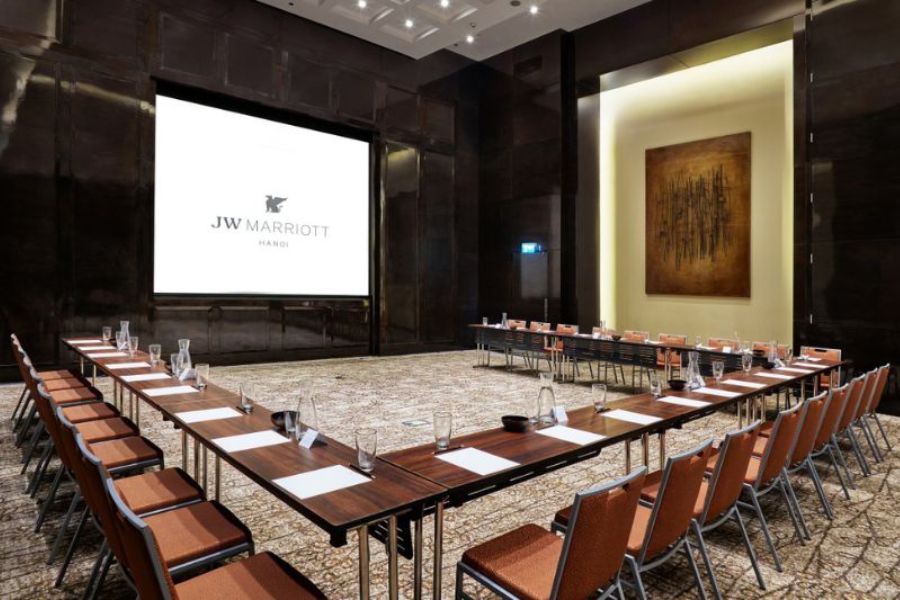
For agents, this history matters because it signals venue capability at a government level, which translates directly into private-sector confidence. The National Convention Center in Hanoi, alongside five-star properties such as the Sofitel Legend Metropole and Lotte Hotel Hanoi, offers multifunctional meeting rooms capable of hosting hundreds to thousands of participants.
Hanoi’s other advantage is geographic centrality within northern Vietnam. As the gateway to northern Vietnam, the city offers easy access to iconic destinations like Halong Bay, Sapa, and Ninh Binh, which makes it a natural base for programs that combine a formal conference day with an excursion or gala dinner elsewhere.
Best suited for: formal conferences, government or institutional-level summits, programs of 200 to 2,000 delegates that need a Western-standard convention center plus a strong cultural add-on program (water puppetry, Old Quarter walking tours, French colonial architecture).
2.2. Ho Chi Minh City: The Commercial and Trade Exhibition Hub
Ho Chi Minh City is Vietnam’s economic engine, and its MICE profile reflects that. As Vietnam’s largest economic powerhouse, the city stands out as a premier destination for MICE event planning, with a dynamic business environment, world-class venues, and extensive transport connectivity. Ho Chi Minh City has been awarded Top Business Tourism Destination in Asia and Top Festival and Events Destination in Asia.
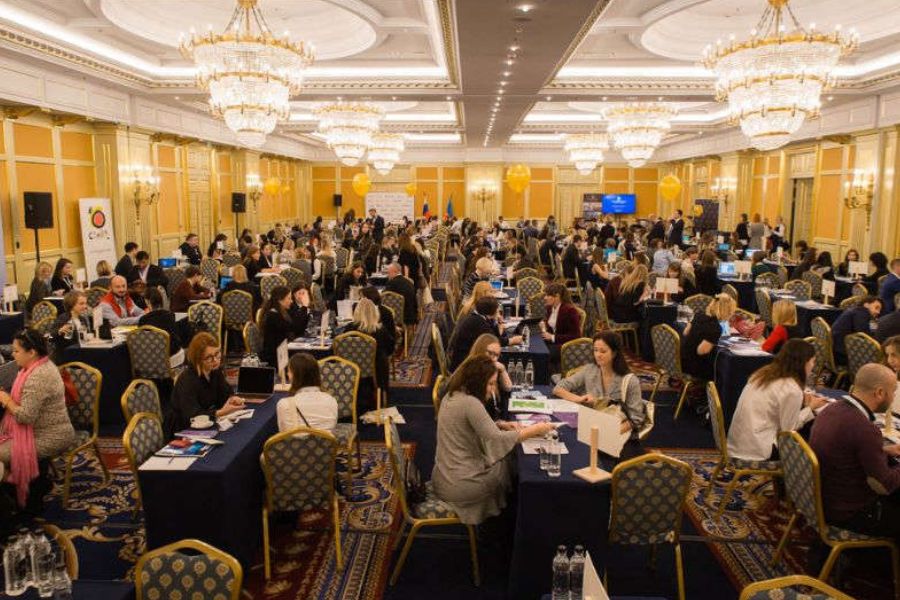
Due to the excellent MICE services in Ho Chi Minh City, thousands of MCIE group choose the city for trade exhibitions, financial services conferences, and product launches where the audience is corporate decision-makers rather than incentive travelers looking for leisure. The Saigon Exhibition and Convention Center (SECC) is the anchor venue for large-format trade shows, supported by international five-star hotel chains concentrated in District 1.
Best suited for: B2B trade exhibitions, financial and tech sector conferences, product launches, programs where delegates value fast airport access and dense hotel inventory over scenic backdrops.
2.3. Da Nang: Coastal Business with a Beach Team-Building Edge
Da Nang has evolved rapidly from a beach holiday town into a legitimate conference destination. The city has become one of Vietnam’s premier locations for luxury conference resorts, offering a seamless blend of modern business facilities and coastal landscapes, supported by an international airport, top-tier hotels, and state-of-the-art convention centers.
What differentiates Da Nang from Hanoi and Ho Chi Minh City is the built-in leisure component. Companies can organize leadership retreats at the scenic Son Tra Peninsula, run team-building activities on My Khe Beach, or host gala dinners on luxury cruises along the Han River. This blend of formal meeting space and resort-style leisure is exactly what makes Da Nang popular for incentive programs that still need a conference component.
Best suited for: mid-size incentive groups (50 to 500 delegates) that want a conference morning followed by beach or river-based team activities in the afternoon.
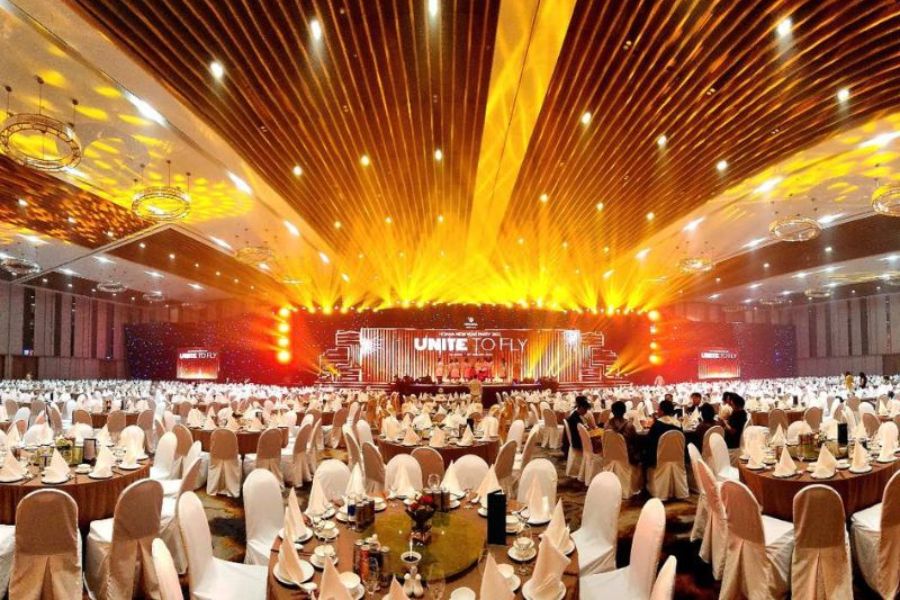
2.4. Phu Quoc: Large-Scale Exhibitions and Executive Retreats
Phu Quoc Island has moved into a different tier entirely with the 2026-2027 infrastructure buildout. Sun Group’s APEC 2027 program introduced a convention center with an 11,050 square meter column-free ballroom and a light rail link, reducing logistical challenges for large-scale exhibitions. This single development pushes Phu Quoc from a purely leisure island into serious contention for exhibitions and conferences requiring thousands of attendees under one roof.
At the same time, the island retains its reputation for seclusion and privacy, which is why Phu Quoc offers a secluded, high-end setting for executive retreats alongside its new exhibition capacity.
Best suited for: large exhibitions of 1,000+ attendees needing a single column-free space, and separately, small executive board retreats of under 30 people wanting complete privacy.
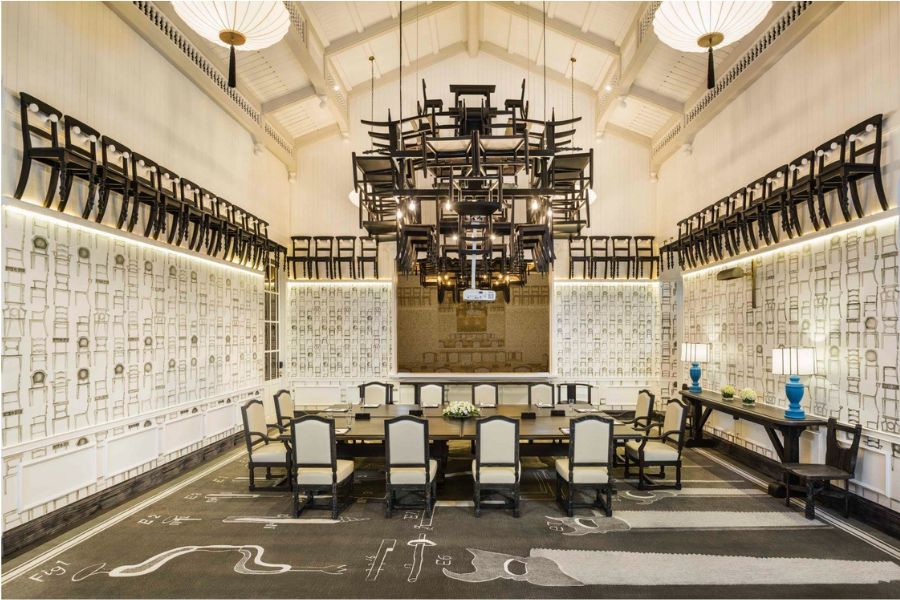
2.5. Ha Long Bay: Incentive Travel with a Signature Landscape
Ha Long Bay is less a conference destination and more an incentive experience destination. This UNESCO World Heritage Site, home to thousands of towering limestone karsts and emerald waters, provides one of Vietnam’s most recognizable natural backdrops, and it is used almost exclusively for gala dinners, incentive cruises, and reward trips rather than formal conferences.
Ha Long Bay provides spectacular landscapes for unique incentive travel programs, typically built around an overnight luxury cruise with an onboard dinner, cabin accommodation, and morning excursions to caves or floating villages. For agents building a multi-city itinerary, Ha Long Bay pairs naturally with a Hanoi conference day, since the drive or new Van Don airport connection is short.
Best suited for: reward and incentive add-ons of 1 to 2 nights following a Hanoi-based conference, group sizes of 20 to 150 on private or shared luxury cruise charters.
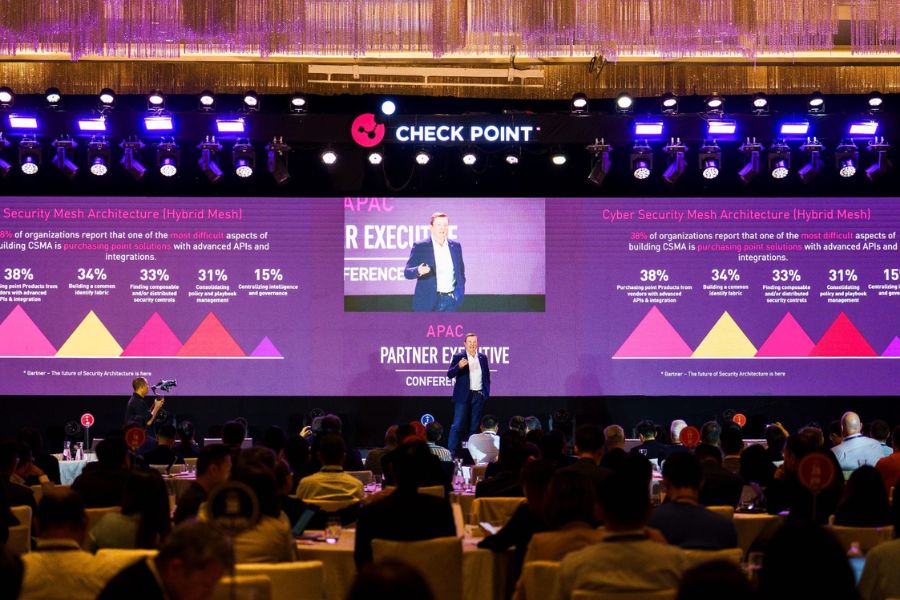
2.6. Nha Trang: Beach Resort Conferences at Scale
Nha Trang sits between Da Nang and Phu Quoc in positioning: a well-established beach resort city with a longer track record of hosting mid-size corporate groups. Its convention-capable resorts along the coastline can handle meeting blocks of several hundred delegates while keeping the entire program within a single resort footprint, which simplifies logistics considerably for planners managing groups without a lot of ground transport.
Best suited for: single-resort MICE programs of 100 to 800 delegates where the client wants meetings, meals, and leisure all within walking distance, minimizing the need for external transfers.
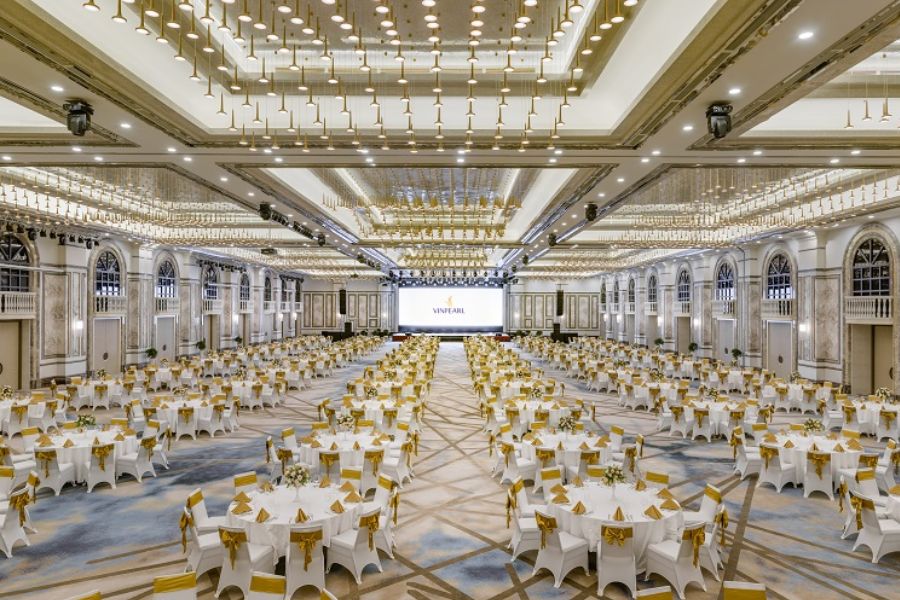
2.7. Hoi An: Boutique Retreats with Cultural Depth
Hoi An offers a fundamentally different value proposition: intimacy and cultural richness over scale. Popular tourist spots like Hoi An sit alongside Hanoi, Ho Chi Minh City, Ha Long Bay, and Da Nang as excellent options for MICE travel, but Hoi An in particular draws smaller, higher-touch corporate groups looking for heritage architecture, lantern-lit evening events, and boutique resort settings rather than large-format convention halls.
Best suited for: boutique retreats and leadership offsites of 20 to 100 people, cultural team-building activities (lantern making, cooking classes, Ancient Town tours), and programs where atmosphere matters more than delegate volume.
2.8. Ninh Binh: The Wellness and Small-Group Offsite Option
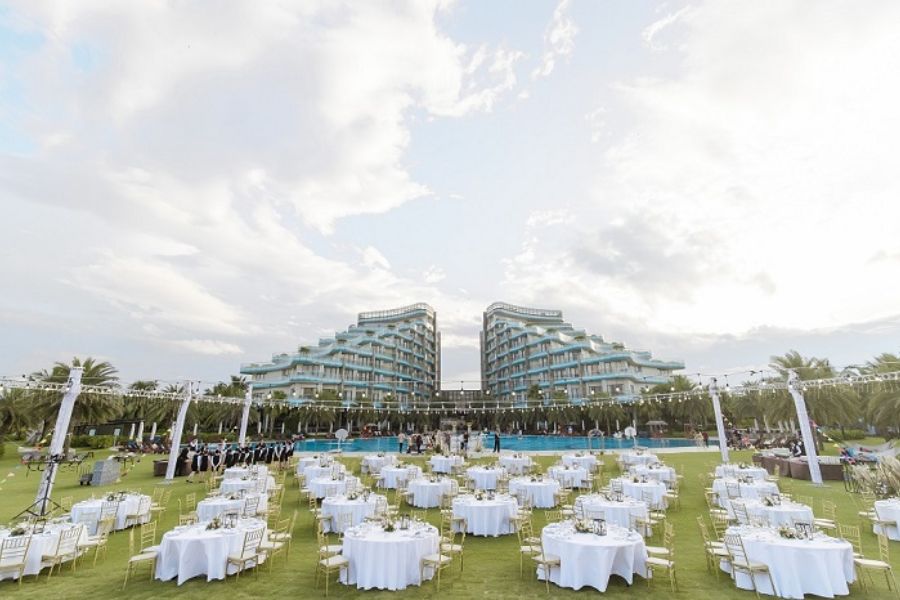
Ninh Binh has emerged as an alternative for companies wanting to move meetings out of the city entirely. Its karst limestone landscape and river systems around Trang An provide a countryside setting roughly two hours from Hanoi, positioning it as a day-trip or overnight offsite destination rather than a standalone conference hub. It works well for wellness-oriented corporate retreats, small leadership team offsites, and post-conference relaxation days appended to a Hanoi program.
Best suited for: small executive offsites and wellness retreats of under 50 people, typically as an extension to a Hanoi-based conference rather than a standalone MICE destination.
3. Planning a MICE Trip to Vietnam from India
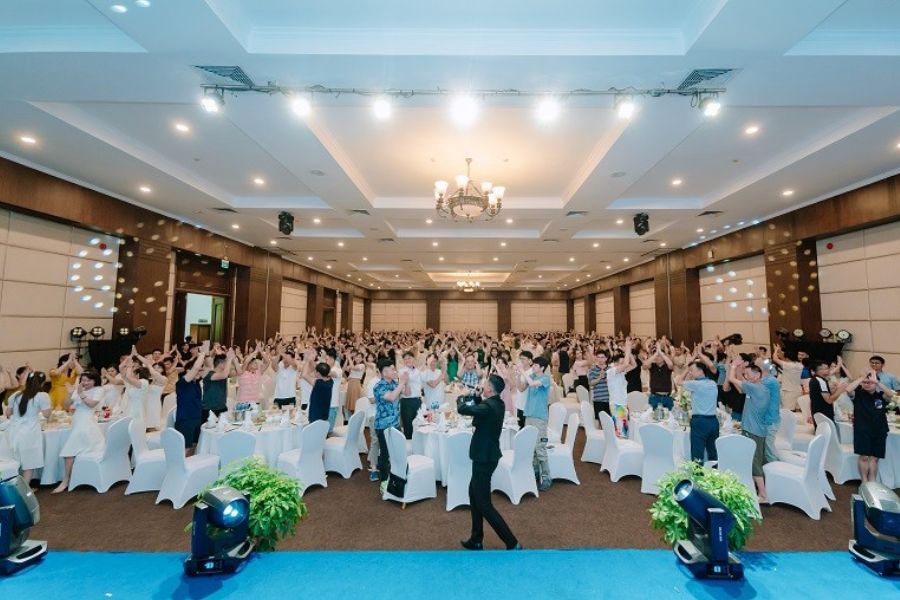
Indian corporate travel to Vietnam has grown from a marginal niche into a mainstream outbound MICE option. By 2026, Singapore, Thailand, Bali, Malaysia, Vietnam, and European cities have all become common corporate incentive destinations for mid-to-large Indian companies, a marked shift from a decade ago when the overwhelming majority of Indian corporate incentive trips went domestic or to Dubai. Vietnam is not yet the default choice the way Dubai is, but it has entered serious contention as companies look for destinations beyond the well-trodden Gulf and Southeast Asian circuit.
Flight connectivity: Direct flights connect major Indian cities to Vietnam’s two main international gateways. Air India operates nonstop routes from Delhi and Mumbai to both Hanoi and Ho Chi Minh City, with Delhi to Hanoi averaging around 4 hours 30 minutes and Delhi to Ho Chi Minh City around 5 hours. As of 2025, four airlines, Vietnam Airlines, VietJet Air, IndiGo, and Air India, operate direct flights from India, connecting Delhi, Mumbai, Kolkata, and Bengaluru to Noi Bai International Airport in Hanoi and Tan Son Nhat International Airport in Ho Chi Minh City. This direct connectivity is a meaningful planning advantage over destinations that require a layover in Bangkok or Singapore.
Budget benchmarks: Economy fares from Mumbai to Hanoi or Ho Chi Minh City on budget carriers start from roughly USD 115 to 120 one-way based on recent fare data, while full-service carriers position in the mid-range with complimentary meals and entertainment included. For group bookings of 30 or more delegates, DMCs and airlines typically negotiate block fares well below published rates, so treat any per-person figure here as a rough planning reference rather than a quote.
Visa: Indian passport holders require an e-visa or visa on arrival depending on entry point, and Vietnam’s extended 90-day e-visa validity has simplified pre-trip administration for corporate groups compared to shorter-validity regimes elsewhere in the region.
Timing around Indian holidays: Demand on the India-Vietnam corridor spikes during the Indian festive season in October and November, coinciding with Dussehra and Diwali, as well as the December to January Christmas and New Year period. Planners booking incentive trips or conferences during these windows should lock venues and flights at least 8 to 10 weeks out to avoid rate increases and availability shortages.
4. Why Work with a Vietnam-Based DMC for MICE Planning
None of the venue capacity or flight connectivity above matters if the on-ground execution falls apart. A destination management company handles the layer that international corporate travel managers and event planners cannot manage remotely: venue contracting and site inspections, government permit coordination for large gatherings, local vendor management for audiovisual and catering, transport logistics between multi-city itineraries, and real-time problem solving during the event itself.
For agents and corporate travel managers based outside Vietnam, particularly across the Indian, Middle Eastern, and Southeast Asian source markets, working through an established ground operator removes the guesswork of negotiating directly with unfamiliar venues in a different language and regulatory environment. This is the gap that generic consumer-facing MICE content consistently misses: it describes destinations beautifully but rarely addresses who actually executes the program on the ground.
5. Frequently Asked Questions
Which city in Vietnam is best for a large corporate conference?
Hanoi and Ho Chi Minh City are the two strongest options for large-format conferences, with Hanoi favored for formal, government-adjacent, or culturally-themed programs and Ho Chi Minh City favored for trade exhibitions and financial sector events.
Can Vietnam host MICE groups of more than 1,000 people?
Yes. Phu Quoc’s newly built convention center offers an 11,050 square meter column-free ballroom, and Hanoi’s National Convention Center along with Ho Chi Minh City’s SECC can also accommodate large-scale conferences and exhibitions in the thousands.
What is the best season to organize a MICE trip to Vietnam?
Northern destinations like Hanoi, Ha Long Bay, and Ninh Binh are most comfortable from October to April. Central and southern destinations including Da Nang, Hoi An, Nha Trang, and Phu Quoc have longer favorable windows extending through the summer, though rainy season timing varies by exact location.
Do Indian companies need a visa to organize MICE events in Vietnam?
Yes, Indian passport holders require an e-visa or visa on arrival. Vietnam’s e-visa now carries 90-day validity, which simplifies planning lead time for corporate groups compared to shorter visa windows.
Is it better to book MICE venues directly or through a DMC?
For groups outside Vietnam, working through a local DMC is generally more efficient, since the DMC handles venue negotiation, permits, vendor coordination, and on-ground problem solving in the local language and regulatory context, which is difficult to replicate remotely.
Planning a MICE program in Vietnam takes more than picking a scenic city. It requires matching group size, event format, and budget to the right destination, then executing flawlessly on the ground. If you’re an agent or corporate travel manager evaluating Vietnam for your next conference or incentive trip, Viet Dan Travel can help you shortlist the right destination and handle the full ground logistics from there.